Last updated November 17, 2026







Free written scope consultation - allowances, timeline, and change-order rules on paper before a single trade is scheduled
General Contractor Warning Signs Every Homeowner Should Know
The contractor who says “we don’t need to put that in writing, we’re neighbors” is the same one who disappears after the deposit clears. That phrase alone should end the conversation. Here’s the uncomfortable truth we’ve learned from years of work in Sunrise Manor: most contractor red flags don’t look like red flags at first. They look like flexibility, friendliness, or a price that beats everyone else. Homeowners miss them because they’re scanning for obvious crooks, not reading patterns. This guide reframes warning signs as patterns, not single moments, so you can spot the difference before money changes hands.
Quick Answer
The biggest contractor warning signs are pressure to skip written contracts, bids far below every other quote, requests for large upfront payments, vague crew descriptions, and reluctance to show license and insurance proof. Individually these look minor. As a pattern, they signal cash flow trouble, inexperience, or worse. A legitimate licensed contractor will put everything in writing, verify every crew member, and never rush you into a deposit.
Styles & brands we work with
- Kitchen remodeling
- Bathroom remodeling
- Home additions & ADU
- Roofing
- Windows & doors
- Driveway & pavers
- Fence
Table of Contents
- Why Warning Signs Show Up as Patterns, Not Moments
- The Math Behind Dangerously Low Bids
- How to Verify a Nevada Contractor License in Under 10 Minutes
- Vague Contract Language vs. Enforceable Contract Language
- The Crew Transparency Test
- Payment Schedule Red Flags
- Sunrise Manor-Specific Warning Signs
- Common Mistakes to Avoid
Why Warning Signs Show Up as Patterns, Not Moments
A single odd comment doesn’t make a bad contractor. A pattern of small inconsistencies does. In our experience across Sunrise Manor remodels, the projects that go sideways were rarely torpedoed by one dramatic betrayal. They eroded through dozens of tiny accommodations the homeowner made because the contractor seemed nice.
Consider the homeowner who agrees to a verbal estimate. Then agrees to a slightly larger deposit. Then agrees to skip permits to save time. Each “yes” feels reasonable in isolation. Stacked together, they form the shape of a job with no legal or financial safety net.
Here’s the framework we recommend: track every concession you’re asked to make over the life of the bidding process. If you’ve said yes to three or more of the following, stop and re-evaluate before signing anything.
- A price quoted verbally instead of in writing
- A deposit larger than 10-15% of the project total
- A request to skip a permit that your municipality normally requires
- No names or roles for the crew members who will enter your home
- Reluctance to provide a license number or proof of insurance
- Pressure to decide today because “the price changes tomorrow”
- No written guarantee terms, or a guarantee described only in conversation
One item is a question worth asking. Three is a pattern worth walking from. For homeowners in Sunrise Manor, where summer heat pushes HVAC and roofing crews into peak season overload, unscrupulous operators exploit urgency harder than in slower markets. That pressure makes these pattern checks more valuable, not less.
The Math Behind Dangerously Low Bids
An unusually low bid is statistically more dangerous than a high one. Here’s why: contractors who win jobs at 20-30% under market aren’t running charities. They’re either inexperienced, cutting corners on materials, or planning to recover the gap through change orders once work begins. That recovery math is not hypothetical. A $45,000 kitchen remodel quoted at $32,000 has $13,000 of margin to find somewhere. It almost always gets found.
Compare two realistic bids for the same Sunrise Manor kitchen:
- Bid A (market rate): $46,500. Line-item pricing for demolition, cabinetry (KraftMaid or Wellborn), countertops (Cambria or Silestone), electrical rough-in, plumbing relocation, tile, and finishes. Payment schedule: 10% deposit, milestone draws, 10% at final walkthrough.
- Bid B (low): $34,200. Single-line price. No breakdown. Deposit required: 40% upfront. “We can work out details as we go.”
Bid B looks like a $12,300 savings. By week four, the homeowner receives change orders for cabinet upgrades, electrical work “not included in the original scope,” and permits that were “assumed the homeowner would pull.” By month three, Bid B has climbed to $52,000 and the homeowner has no contractual leverage to push back.
We’ve seen this exact scenario play out in Sunrise Manor more times than we’d like. The homeowner starts with a low price and ends up paying more than the honest bid, plus lost months. Specification-grade product names like Cambria, Silestone, and Kohler in a bid are usually a sign the contractor priced real materials. Blanket phrases like “quality countertops” and “premium fixtures” are not.
How to Verify a Nevada Contractor License in Under 10 Minutes
Most homeowners skip license and insurance verification entirely. It takes under 10 minutes and eliminates the majority of the worst-case scenarios. Here’s the exact sequence:
- Check the Nevada State Contractors Board license lookup. Search the contractor’s name or license number. Confirm the license is active, the classification matches your project type (residential remodeling is a B or B-2 classification), and there are no disciplinary actions listed.
- Ask for the certificate of insurance and call the carrier. Don’t accept a photocopy at face value. Call the number on the certificate and confirm the policy is current and covers general liability at a limit that matches your project scale.
- Ask for the workers’ compensation policy and confirm it too. If the contractor has employees, they’re legally required to carry workers’ comp in Nevada. If they don’t, you could be exposed if someone is injured on your property.
- Match the name on the license to the name on the contract. A contractor operating under a different business name than the one on the license is a red flag.
- Check for a physical Nevada business address. A P.O. box with no verifiable address has no skin in the game.
Nevada’s licensing system is public and searchable. If a contractor pushes back on giving you their license number, that’s your answer. Legitimate contractors hand it over without hesitation. We build license and identity verification into our crews through Mason Remodeling Sunrise Manor home because homeowners deserve to know exactly who is working in their house.
Vague Contract Language vs. Enforceable Contract Language
The contract is where amateur contractors reveal themselves. Vague clauses are not just sloppy – they’re the mechanism by which disputes become unwinnable. Compare these real patterns homeowners bring to us.
Vague contract language (red flag)
- “Contractor will provide all materials as needed.” – No materials list, no brands, no grades.
- “Work to be completed in a timely manner.” – No start date, no completion date, no penalties.
- “Countertops: quality stone.” – Which stone? Cambria? Silestone? What thickness? What edge profile?
- “Payment schedule to be determined.” – This means the contractor will invent it as they go.
- “Contractor not responsible for damage to existing finishes.” – Blanket waiver covering careless work.
Enforceable contract language (checklist)
- Itemized line-by-line scope with brand names, model numbers, and quantities.
- Specific start date, defined milestones, and a completion date with clear consequences for delay.
- Exact payment schedule tied to milestones, not to calendar dates.
- Written change-order procedure: every change requires a signed written amendment with a fixed price before work proceeds.
- Named licensed contractor and license number on the contract itself.
- Written guarantee terms: what is covered, what is excluded, and for how long (365 days from completion, for example).
- Lien waiver disclosures and a clear statement of who pulls permits.
Use this list as an actual checklist. Compare any contract you receive line by line. If more than two items from the vague column appear, don’t sign until they’re corrected in writing.
The Crew Transparency Test
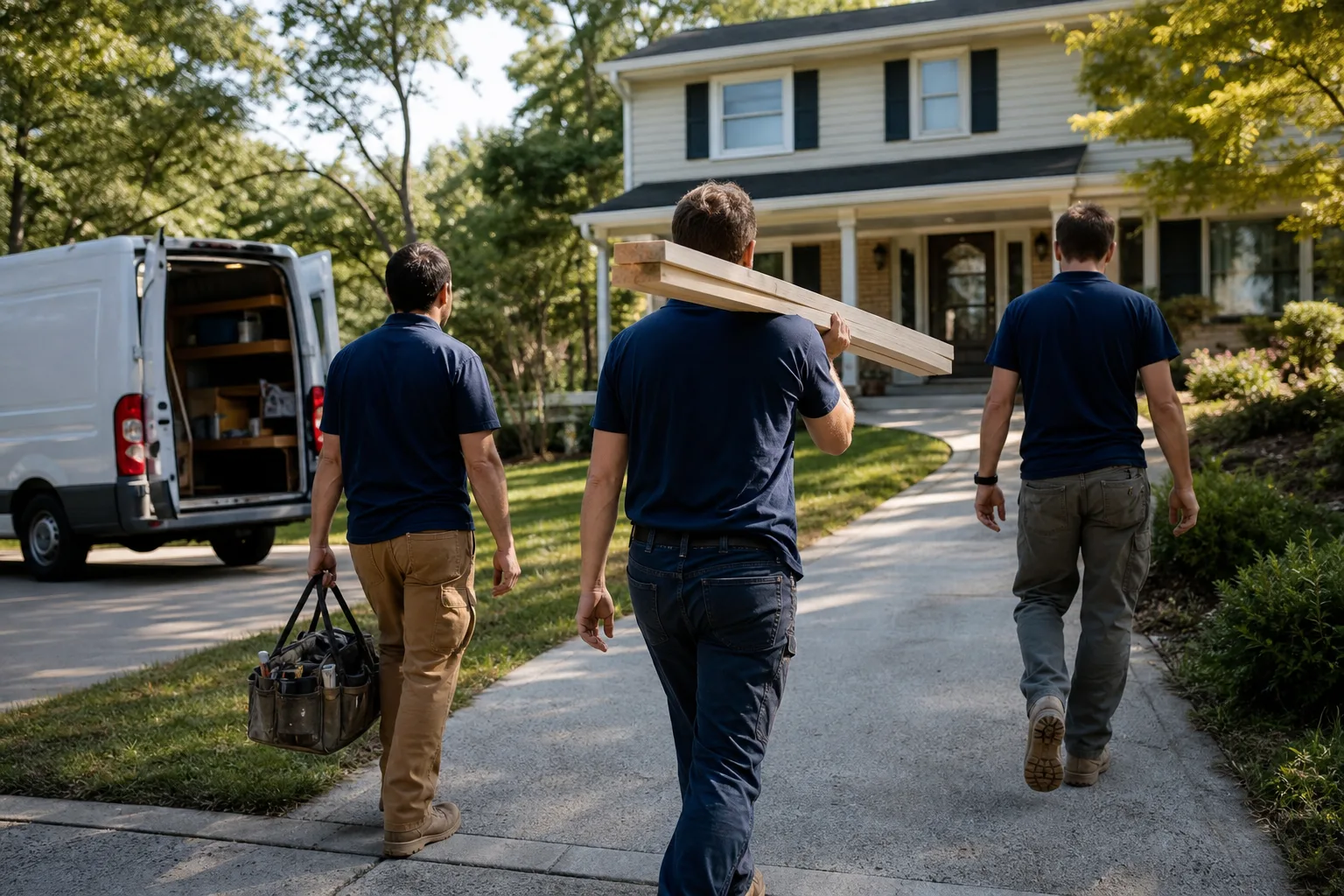
Ask any contractor you’re considering: “Who will be in my home, and can you tell me their names and roles before the work starts?” A legitimate remodeler should be able to answer that question before the first crew member arrives. If the answer is “whoever’s available that day” or “a crew we subcontract,” that’s the crew transparency test failing.
In our experience, the contractors most careful about crew transparency tend to be the most careful about the work itself. It’s a proxy for how they handle everything else. Ask these specific questions:
- Are crew members employees or day labor? If subcontractors, do you verify their licenses and insurance separately?
- Is every crew member background-checked?
- Will I receive the technician’s name and photo before the visit?
- Will they wear a uniform and carry a photo ID badge?
- Who is my point of contact if something goes wrong at 8 p.m. on a Saturday?
The Threshold Standard, the verification process our crews follow, is our answer to this test. Every technician is background-checked, identity-verified, and introduced to the homeowner by name and photo before the visit, with a photo ID badge at the door. For a homeowner in Sunrise Manor who is often home alone during the workday, this isn’t a feature. It’s a baseline. The same standard applies whether we’re doing a bathroom remodeling in Sunrise Manor or a full general contractor project in Sunrise Manor.
Payment Schedule Red Flags
Any contractor demanding more than 10-15% upfront on a large project is signaling cash flow problems. That’s not a pricing policy, it’s a distress signal. A well-run contracting business funds the early stages of a project from operating capital and uses homeowner payments to cover materials and labor as they occur, tied to real milestones.
Here’s a healthy payment structure for a typical Sunrise Manor whole-home remodel, and the warning pattern to compare it against:
- Healthy: 10% at signing (covers mobilization and permit applications), 25-30% at demolition and rough-in completion, 25-30% at drywall and inspection, 20-25% at final trades, 10% retained until final walkthrough and punch-list completion.
- Warning: 30-50% at signing, before any permits are pulled or materials ordered.
- Warning: Cash-only payments with no receipt.
- Warning: Payments to a personal account rather than a business account.
- Warning: “Pay for the next phase now or we can’t continue” mid-project, before the prior phase is complete.
If a contractor asks for a large deposit, ask what specifically it covers. Legitimate contractors can tell you: permit fees, material deposits with a supplier, insurance binding, and initial labor. If the answer is vague, the deposit is funding their previous job, not yours.
Sunrise Manor-Specific Warning Signs
Some warning signs show up harder in Sunrise Manor than in surrounding areas. The combination of intense desert heat, older housing stock in certain pockets, and a steady stream of out-of-state contractors who pass through for a season creates specific risks worth knowing.
Watch for contractors who promise work without pulling permits, which happens more often in neighborhoods with older unpermitted additions already in place. In areas with ranch-style homes from the 1960s and 1970s, a contractor who says “we’ll just match the old work” without looking at what the old work actually is will leave you with code violations. Sunrise Manor inspectors do catch unpermitted work at resale, and the cost to remediate falls on the homeowner.
Watch for contractors who quote HVAC-adjacent work (attic insulation, ductwork, window replacement) without addressing Sunrise Manor’s 110-degree summer peak. A contractor who doesn’t factor local climate into material selection is quoting you a job destined to fail. Watch for crews who show up driving unmarked personal vehicles with no business signage or vehicle identification. Reputable contractors make identification part of their process.
Sunrise Manor homeowners remodeling for family comfort, safety, or aging in place shouldn’t be guessing who walks through the door. That’s why we deliver a written price before any work starts, on kitchen remodeling in Sunrise Manor and every other project, and back it with the 365-Day Done Right Promise.
Common Mistakes to Avoid
- Signing the first contract you see. Get at least three written bids. The lowest isn’t always the best, and the highest isn’t always the safest. Compare line by line, not bottom line to bottom line.
- Skipping the license check because the contractor “seems honest.” Honest and licensed are different questions. Nevada’s online lookup takes five minutes and occasionally reveals disciplinary history that would have changed everything.
- Paying cash without a receipt. Cash is fine when it comes with a written receipt and clear documentation. Cash without a paper trail is how disputes become unwinnable.
- Assuming a handshake verbal guarantee means anything. Guarantees must be written with specific terms: what’s covered, what’s excluded, and how long. “We stand behind our work” is not a guarantee.
- Letting crew members into your home without verifying who they are. Ask for names, photos, and badge verification before the visit. This is a reasonable request, and a legitimate contractor will meet it without hesitation.
- Accepting “we’ll match the original finishes” without a visual or spec confirmation. In Sunrise Manor’s older homes, “matching” often means “approximating” unless it’s spelled out in writing.
- Skipping the walkthrough at the end. Do a formal punch-list walkthrough with the contractor before final payment. Anything not yet correct goes on the list, and the final 10% waits until it clears.
When to Call a Professional
Call a professional general contractor in any of these situations: you’re planning a project that touches structural walls, plumbing, or electrical; your home is older than 30 years and you don’t know what’s behind the walls; you’re remodeling for aging-in-place or accessibility; you’ve received a bid without line-item detail and want a second opinion; or a previous contractor has left work incomplete and you need a full assessment.
Mason Remodeling Sunrise Manor offers free estimates in Sunrise Manor, written line-item pricing before any work begins, and a 365-Day Done Right Promise on completed projects. Call (855) 606-6122 to schedule your estimate. A live person answers, day or night, and there’s no pressure and no countdown.
See the difference
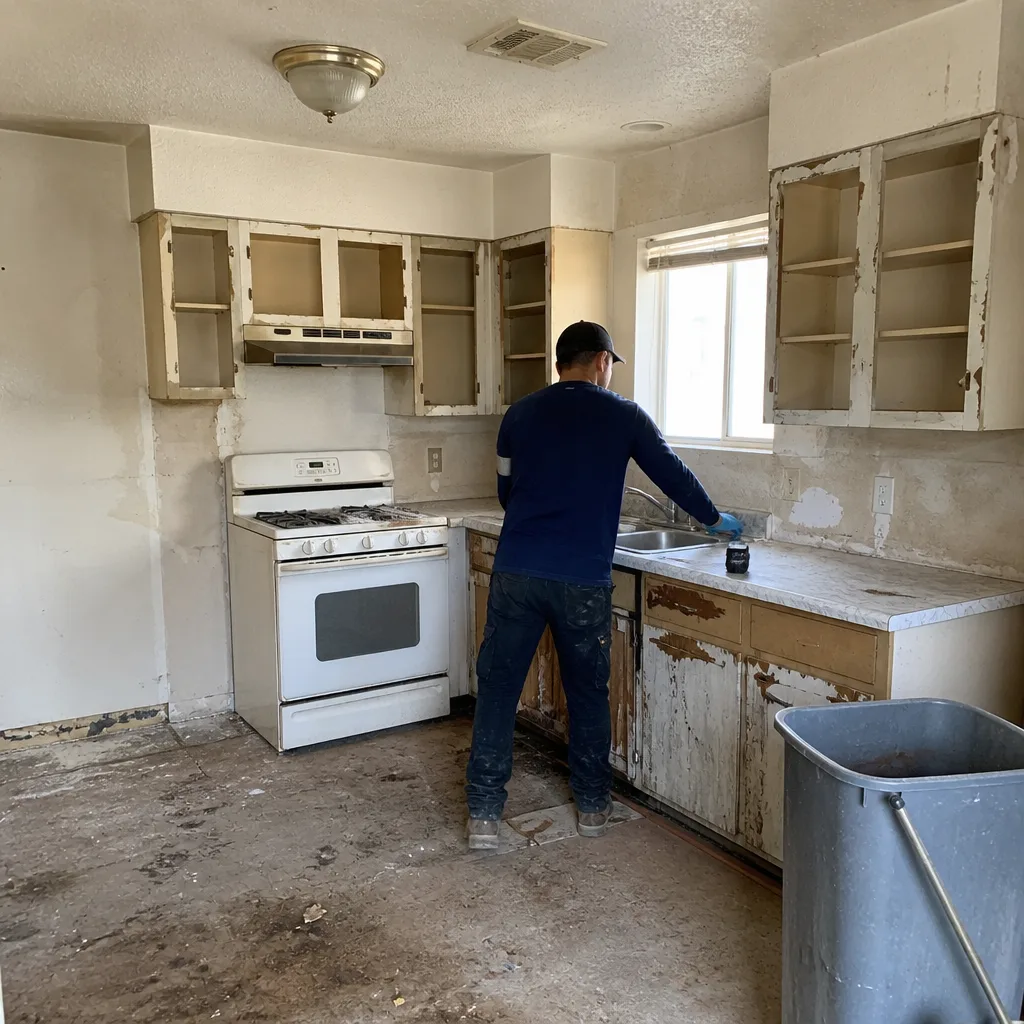 Before
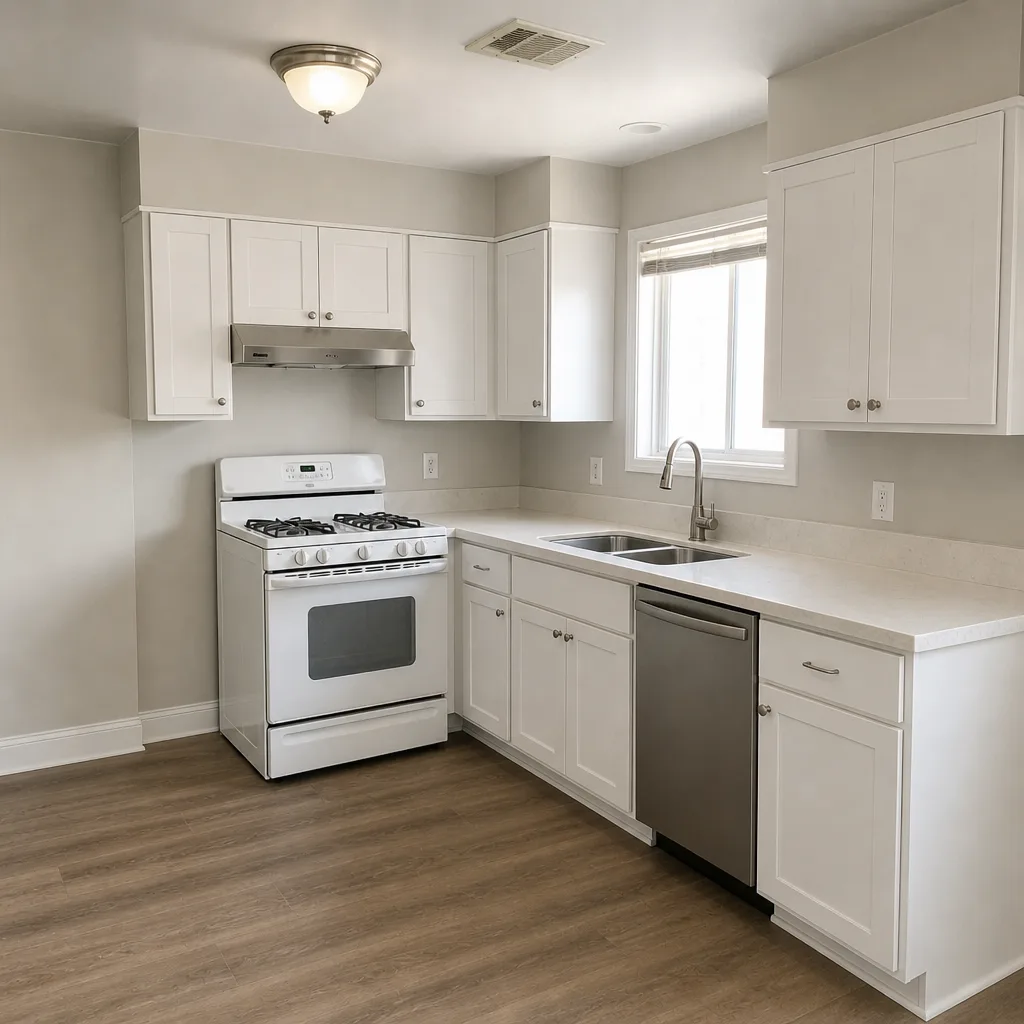 After
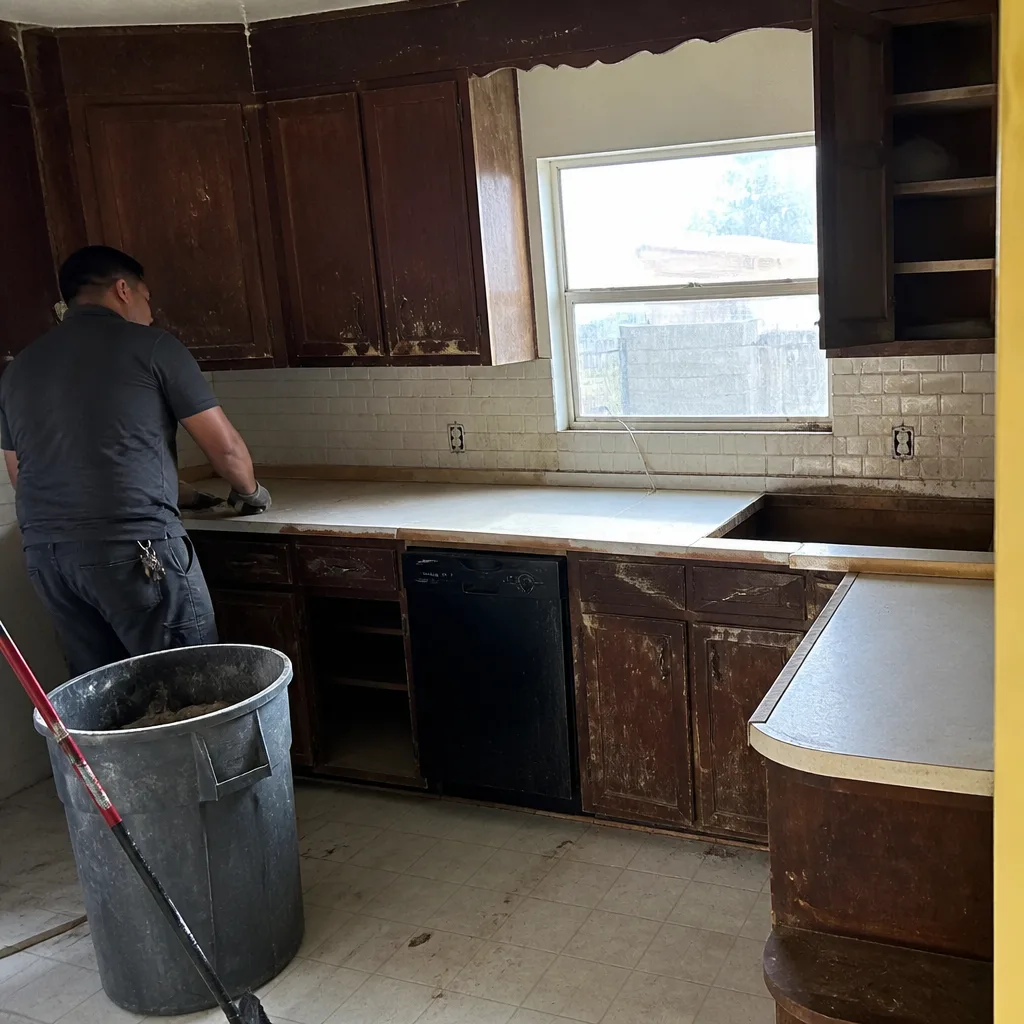 Before
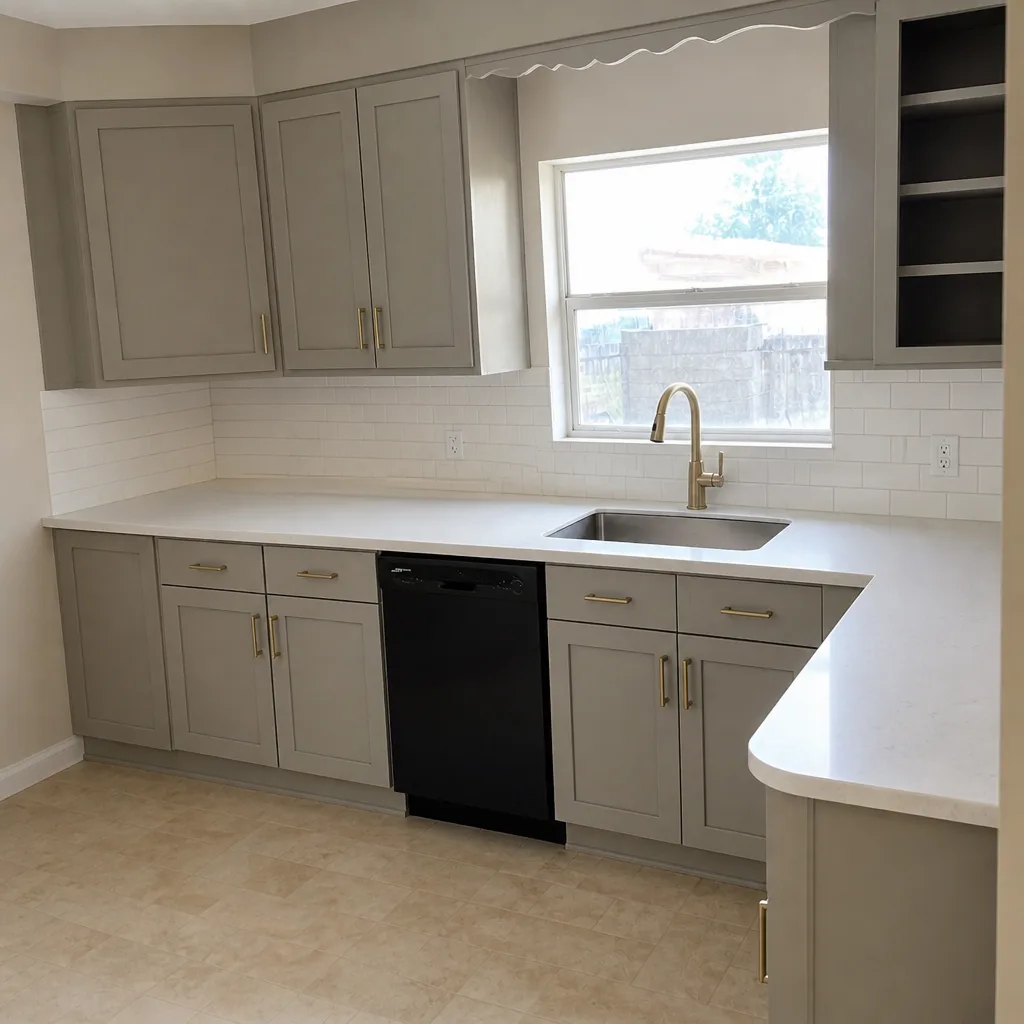 After
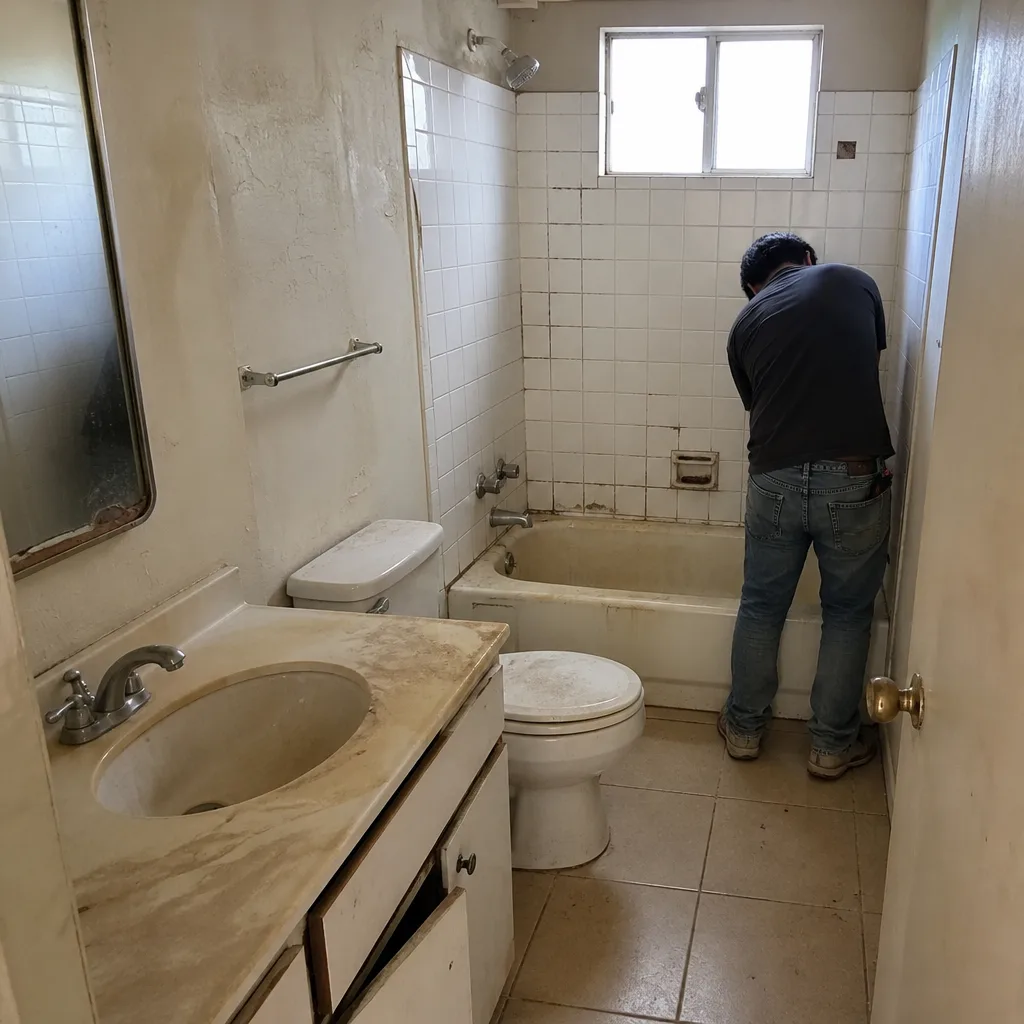 Before
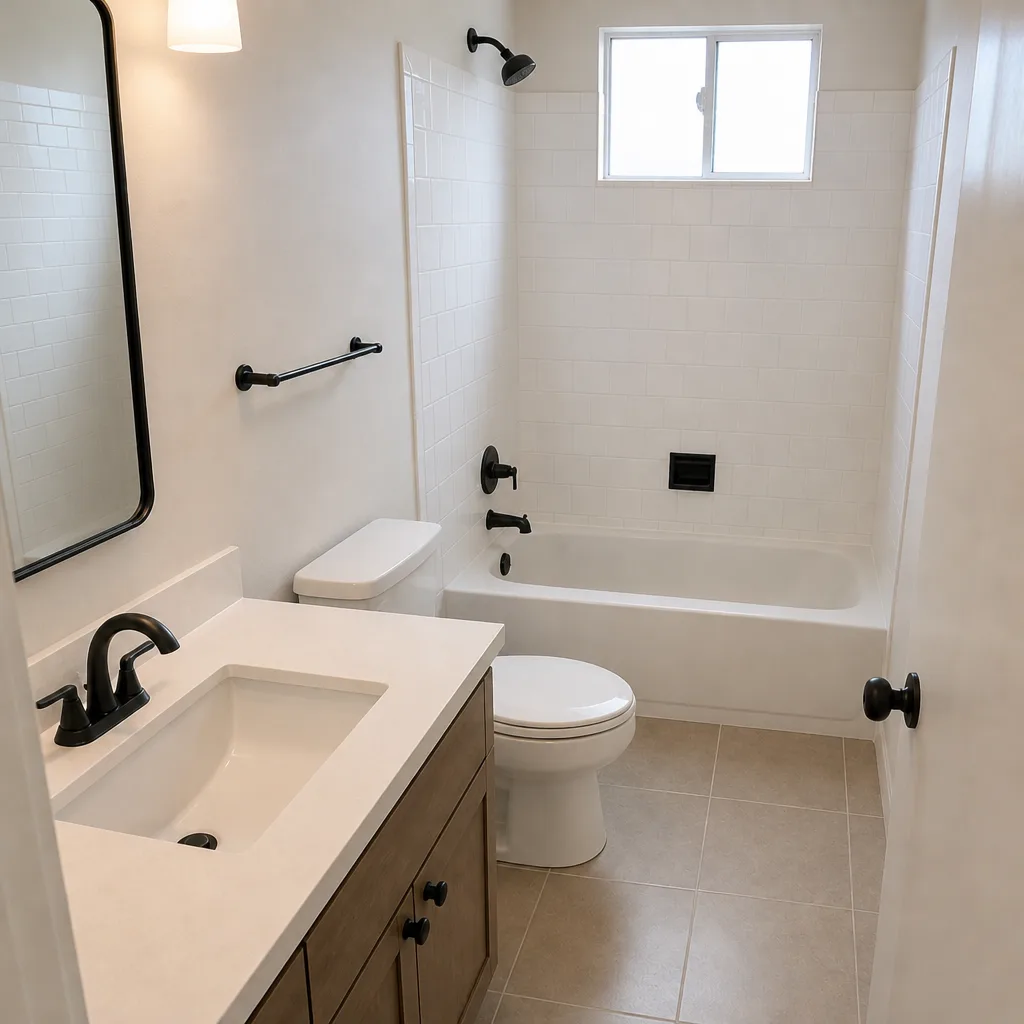 After
Frequently Asked Questions
The biggest red flags are no written contract, unusually low bids, large upfront deposits, vague crew descriptions, and refusal to provide license or insurance proof. One alone warrants a question; three in a pattern warrants walking away. Trust the pattern, not the personality.
A deposit should generally fall between 10% and 15% of the total project cost on a large remodel. Anything above 15% signals potential cash flow problems. Anything above 25% is a serious warning sign. Ask what the deposit specifically covers before you write the check.
Use the Nevada State Contractors Board license lookup online and confirm the license is active, the classification matches your project, and there are no disciplinary actions. Then call the carrier on the certificate of insurance to confirm it’s current. The whole process takes under 10 minutes and eliminates most risk. Call (855) 606-6122 if you want help interpreting what you find.
The price should never change unless the scope changes in writing. A written change-order procedure should be part of the original contract. If a contractor quotes one price and delivers another without a signed amendment, that’s a contract violation. We deliver a written price before any work begins and never change it without a signed amendment.
Yes, most remodeling work in Sunrise Manor requires permits through Clark County. Structural, electrical, plumbing, and HVAC changes almost always need permits, and even some cosmetic work triggers code requirements. A contractor who offers to skip permits is exposing you to remediation costs at resale and insurance denial if something goes wrong. We pull permits as standard practice on every project.
A legitimate crew can tell you every name and role before the first person arrives, shows up in marked uniforms with photo ID badges, and works for a contractor who verifies their background. If any of these are missing, ask why before you let them in. Our crews meet The Threshold Standard for verification, and you’ll receive each technician’s name and photo before the visit so you know exactly who’s at the door.
Related Reading
The Bottom Line
The warning signs that matter most don’t announce themselves. They wear the face of a helpful neighbor, a great price, or a flexible process. What separates a safe project from a dangerous one is a pattern you can measure: written pricing before work starts, verifiable license and insurance, named and verified crew members, milestone-based payments, and a written guarantee with specific terms. When you run every contractor through those five checks, the dangerous ones reveal themselves before money changes hands.
Ready for a written estimate and a crew you can verify before they knock? Call Mason Remodeling Sunrise Manor at (855) 606-6122 for a free estimate.
Written by the team at Mason Remodeling Sunrise Manor.