
Last updated November 17, 2026








Free written scope consultation - allowances, timeline, and change-order rules on paper before a single trade is scheduled
Home Remodeling Troubleshooting: Common Problems and How to Fix Them
That crack in your new drywall looks identical whether it was caused by winter thermal movement, a missed fastener pattern, or a framing problem your contractor should have caught during rough-in. Three different causes. Three different outcomes for your wallet. The visual difference is often a few inches of crack direction and a few weeks of timing. We’ve walked Sunrise Manor homeowners through this exact diagnosis more times than we can count, and the pattern behind most remodeling disputes isn’t a lack of good solutions. It’s that nobody sorted the problem into the right category first. This guide gives you the sorting framework, the documentation habits that make a warranty claim stick, and the specific failure patterns we see in Nevada homes.
Quick Answer
Most post-remodel problems fall into one of three categories: contractor workmanship defects, material manufacturer defects, or normal post-construction settling. The category determines who pays. Workmanship and material defects should be fixed at no cost to you under warranty. Settling is usually cosmetic and usually yours to monitor. Diagnose the category before you call anyone, document with dated photos, and pull out the written price and guarantee documents you received before work started – those are your leverage in any resolution conversation.
Styles & brands we work with
- Kitchen remodeling
- Bathroom remodeling
- Home additions & ADU
- Roofing
- Windows & doors
- Driveway & pavers
- Fence
Table of Contents
- The Three-Category Framework: Sorting the Problem Before You Call
- Building the Documentation File That Makes Warranty Claims Work
- Nevada-Specific Failures: Duct Sealing, Stucco Cracking, and Tile on Slab
- What a Written Price Before Work Begins Actually Protects
- Reading Your Written Guarantee: What’s Covered and What Isn’t
- When to Escalate: The Nevada State Contractors Board Process
- What 22 Years of Experience Actually Catches
The Three-Category Framework: Sorting the Problem Before You Call
Every problem we’re asked about starts in one of three buckets. Get the bucket right and the conversation with your contractor takes ten minutes instead of ten weeks.
1. Workmanship defects
These are installation problems. The material itself is fine, but it was installed wrong. Signs: problems appear early (within weeks of completion), they cluster in one area, and they trace back to a specific installation step. A tile that’s tenting because thin-set coverage was thin. A cabinet door that sags because a hinge was set into soft drywall without a backing plate. A shower that leaks because the waterproofing membrane wasn’t lapped correctly.
2. Material manufacturer defects
These are product failures. The installation was right, but the material failed. Signs: the failure pattern shows up across a run of identical materials, and the defect often appears after a few months of normal use. A quartz countertop that develops a hairline fracture along a manufactured seam. A faucet cartridge that fails in its first year. Flooring planks that delaminate at consistent points along the tongue-and-groove.
3. Normal post-construction settling
These are expected effects of a building adjusting to new loads, new moisture conditions, and seasonal movement. Signs: hairline cracks at drywall seams and corners (particularly above door frames and at ceiling-wall junctions), small gaps where trim meets wall, and sticking doors or windows that resolve with the season. In Sunrise Manor, where dry heat and rapid temperature swings are the norm, hairline cracking in the first year is common and rarely structural.
The critical distinction: workmanship and material defects are covered, settling usually is not. Learning which bucket you’re in is the whole game.
Building the Documentation File That Makes Warranty Claims Work
Here’s the hard truth we’ve watched homeowners learn the hard way: a guarantee is only as strong as the file behind it. In our experience, a well-documented homeowner who files a claim has an answer within days. An under-documented homeowner is stuck trading phone calls. Start the file the day work begins, not the day the problem appears.
What belongs in your remodel file
- Photo timestamps of every stage. Use a camera or phone app that burns a timestamp into the image. Shoot the walls open during rough-in. Shoot plumbing and electrical before the drywall closes. Shoot the finished work at handoff. These photos answer the “what was behind the wall” question that decides most disputes.
- Written change orders, signed. Any change from the original scope needs a signed document with the new price and schedule impact. Verbal changes are the root of the most expensive disputes we see.
- Inspection sign-offs. Keep copies of every municipal inspection card and sign-off. These prove work was done and passed. If permits weren’t pulled, that’s a red flag worth noting in the file.
- Material receipts and product model numbers. Serial numbers and model numbers on faucets, fixtures, cabinets, and surfaces make manufacturer warranty claims possible.
- The written price before work began. The original document. Not a photo of a text message. The actual signed written price.
- The written guarantee. The document that states what’s covered, what’s excluded, and for how long.
Time and date stamps are the difference between “the shower was installed in March” and “the shower was installed on March 14 and here is the waterproofing photo.” One version gets resolved. The other gets debated.
Nevada-Specific Failures: Duct Sealing, Stucco Cracking, and Tile on Slab
Sunrise Manor homes face conditions that produce their own failure patterns. Three are so common we’ve made them standard inspection points on every project.
HVAC duct sealing
In a climate that runs the AC hard for most of the year, unsealed ductwork silently loses a significant share of its cooled air into the attic or crawlspace. After a remodel that changes walls or adds a room, new duct runs are the most likely to be under-sealed. Symptoms: rooms that don’t cool evenly, a system that runs longer than it used to, and a higher summer bill. Responsible party: the installer, if the work was part of the remodel scope. This is a workmanship item and should be covered.
Stucco cracking at additions
Stucco over new framing moves differently than stucco over original framing, especially in Nevada’s dry heat. A hairline crack along the joint where new stucco meets old stucco is normal settling. A crack wider than the thickness of a credit card, or a stair-step crack that follows the framing, is a workmanship or structural concern that needs inspection. The distinction: width and direction. Hairlines that run with the joint are usually cosmetic. Anything stepped is worth a call.
Tile failure on concrete slabs
Sunrise Manor has a lot of slab-on-grade construction. Tile laid over a slab that hasn’t fully cured, or without an uncoupling membrane, will often fail – usually as hollow-sounding spots, then hairline grout cracks, then tenting. This is a workmanship category problem. The right install over a slab uses a decoupling layer, which allows the tile to move independently of the concrete. If yours didn’t and you’re seeing tenting, the document file and written guarantee are your tools.
These three account for a large share of the calls we get on general contractor work in Sunrise Manor. Recognizing them early shortens the resolution considerably.
What a Written Price Before Work Begins Actually Protects
Homeowners sometimes treat the written price like a receipt: a record of what they agreed to pay. It’s more than that. The written price is a scope document. It tells everyone in the conversation – the homeowner, the contractor, the office, and if necessary the state board – what was in the job and what wasn’t.
When a dispute happens, the conversation almost always comes down to one of these three questions:
- Was this in the scope or was it a change?
- Was the price fixed or was it an estimate?
- Was the material specified or was it a placeholder?
A written price that answers all three is a resolution tool. A verbal estimate answers none of them. In our experience, the single best protection a homeowner can buy is a contractor who delivers a written price on every project, before a single tool is unpacked – not as an upgrade, not as a favor. A fixed written price with no surprise invoices is the standard we hold to. If a contractor won’t put it in writing, walk away from that bid, no matter how good the price sounds.
Use the written price in the resolution conversation like this: open the document, point to the scope line, and ask the contractor to show you exactly where the disputed item was specified or excluded. Either they can, or the item is a change – and changes get new written pages. Good contractors welcome this. It’s the fastest way to a fair answer.
Reading Your Written Guarantee: What’s Covered and What Isn’t
A guarantee with vague terms is not a guarantee. It’s a promise you can’t enforce. The good news is that reading yours correctly takes about fifteen minutes and settles most of the fear.
What a strong written guarantee states plainly
- The coverage period, in exact terms – 365 days from the completion date, not “backed by our guarantee”
- The specific trade areas covered: general contracting, bathroom remodeling, whole-home remodeling, etc.
- The specific items excluded: normal settling, homeowner-caused damage, damage from other trades, and any pre-existing condition called out in the file
- The claims process: who to call, what documentation to send, and the response timeline
- The remedy: repair, redo, or replacement, and whether a return visit is free
The 365-Day Done Right Promise is what we attach to our own projects: if the work isn’t right within a year of completion, we make it right at no cost to the homeowner. For a repair or installation that fails, there’s no charge and no dispute process – a free return visit. That’s the standard we recommend any homeowner demand in writing before signing a contract, from any remodeler.
If your current guarantee doesn’t state the term and exclusions in plain language, ask for a revised document before work begins. A contractor who hesitates to write it down is a contractor whose promise is worth considerably less than you’re paying.
When to Escalate: The Nevada State Contractors Board Process
The vast majority of problems resolve directly with the contractor. When they don’t, or when the contractor won’t respond, the Nevada State Contractors Board is the next step. Here’s how the escalation works, in order.
- Written demand to the contractor. Send a written notice describing the problem, citing the written price and guarantee, and requesting a response within a specific number of days. Keep a copy. This document becomes the first page of any board complaint.
- Wait the response window. Most contractors who intend to resolve will respond in this window. Those who don’t have effectively made the escalation decision for you.
- File a complaint with the Nevada State Contractors Board. The complaint must typically be filed within a set window from the date the problem occurred, and must include the contract, the written price, the guarantee, your photo documentation, and any written correspondence. The board requires specific documentation, so the file you built during construction is exactly what you need.
- Board review and investigation. The board reviews the complaint, may conduct an inspection, and can order the contractor to correct the work, mediate, or pursue disciplinary action.
- Mediation or hearing, if needed. The board offers mediation for some disputes and holds hearings for others. Timelines vary with caseload and the nature of the complaint.
Escalation is slow and shouldn’t be the first move. It should be the last one – and a well-documented file is what makes it work when it’s the right move. If you’re in Sunrise Manor and aren’t sure whether your problem is board-worthy, that’s exactly the call we’re happy to take. Not every crack needs a complaint, and telling the two apart is worth a phone call.
What 22 Years of Experience Actually Catches
Our technicians have up to 22 years of experience. That matters less as a number and more as a set of failures someone has already seen, diagnosed, and fixed in the field. Three things experience catches that books don’t:
- Slab moisture. A slab that reads dry on the surface can still be moving moisture up through it. An experienced installer tests the slab before laying anything over it. An inexperienced one learns the hard way.
- Stucco adhesion at additions. The tie between new and old stucco at the joint decides whether you get a hairline or a callback. Experienced hands know the prep that makes it hold.
- Hidden duct leakage during remodel. When walls open up in a whole-home remodel, a trained eye can spot under-sealed duct runs and fix them before they cost you every summer after.
If you’re planning a whole-home remodel in Sunrise Manor and want the details of what a thorough project looks like – including who is coming to your door and how you’ll recognize them – see the Mason Remodeling Sunrise Manor home page. For the individual trades, visit kitchen remodeling in Sunrise Manor and bathroom remodeling in Sunrise Manor.
Common Mistakes to Avoid
- Skipping the photo file when the walls are open. Once drywall goes up, you can’t prove what was behind it. Timestamped photos during rough-in are your insurance against the exact disputes that cost the most.
- Accepting a verbal change order. A verbal change is a dispute waiting for a date. Every change – even a small one – gets written down with the price and the schedule impact, signed by both sides.
- Calling the contractor before diagnosing the category. If you open with “the tile is failing” instead of “the tile is tenting and hollow-sounding and it’s a workmanship issue,” you spend the first call on the wrong conversation.
- Letting a hairline crack escalate in your own head. Nevada dry heat produces cosmetic cracking in the first year on most new work. Hairlines wider than a credit card, or stair-step cracks, are the ones worth a call.
- Not pulling the guarantee out before the first conversation. The guarantee’s stated term and exclusions are the reference document. Know them before you call, or you’ll argue from memory and lose.
- Waiting past the board filing window. If a genuine workmanship dispute isn’t resolving and you intend to escalate, don’t let the calendar run out. The window dates from the problem’s occurrence, not from when you get fed up.
- Hiring on price alone at the bid stage. A bid without a written price before work begins and a written guarantee is a bid you can’t enforce. In Sunrise Manor as anywhere, the cheapest bid is usually the most expensive project.
See the difference
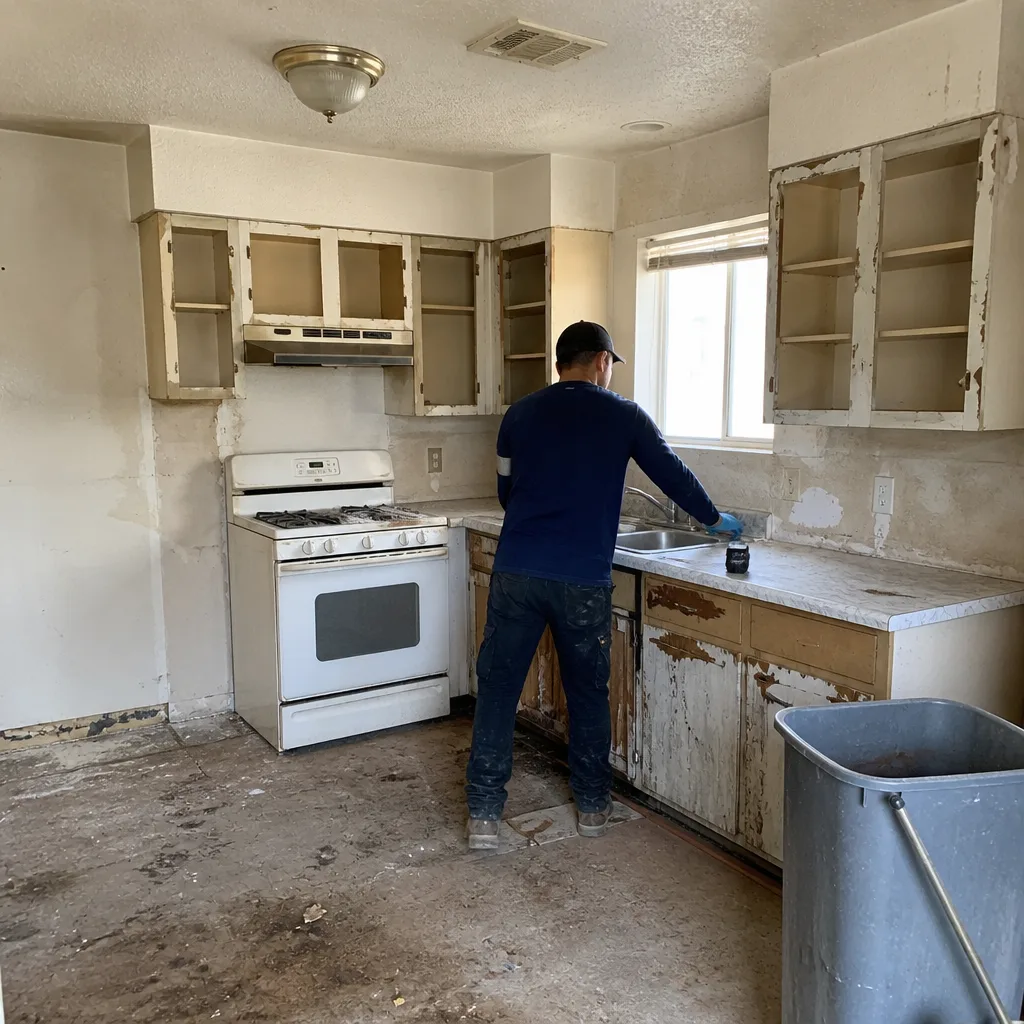 Before
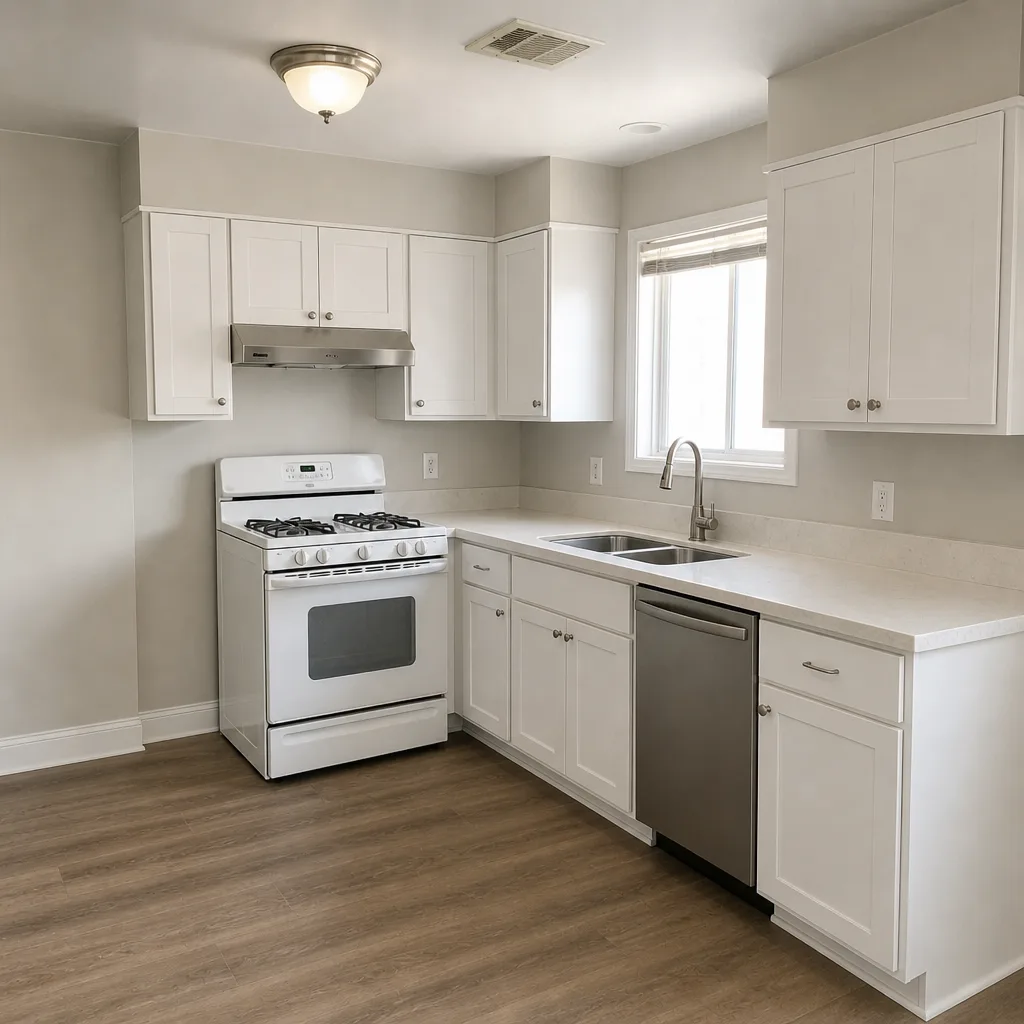 After
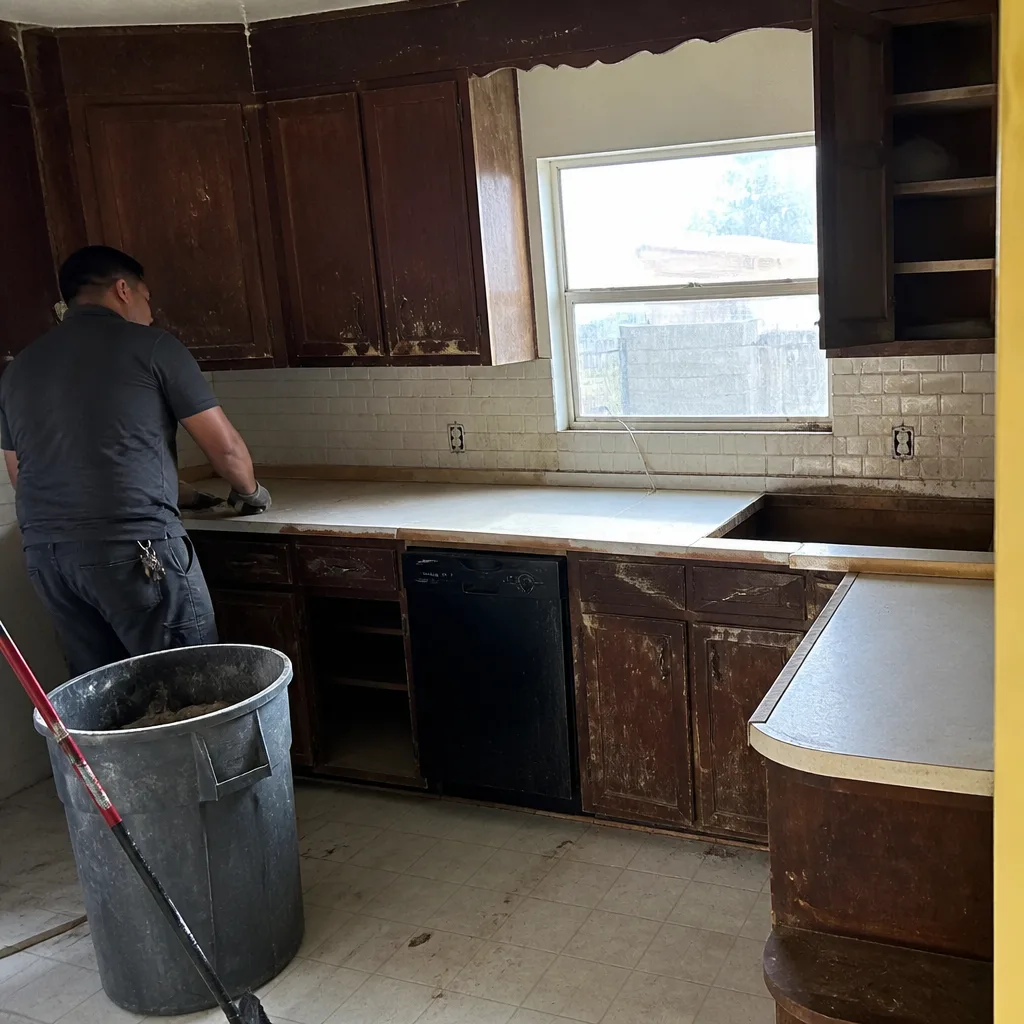 Before
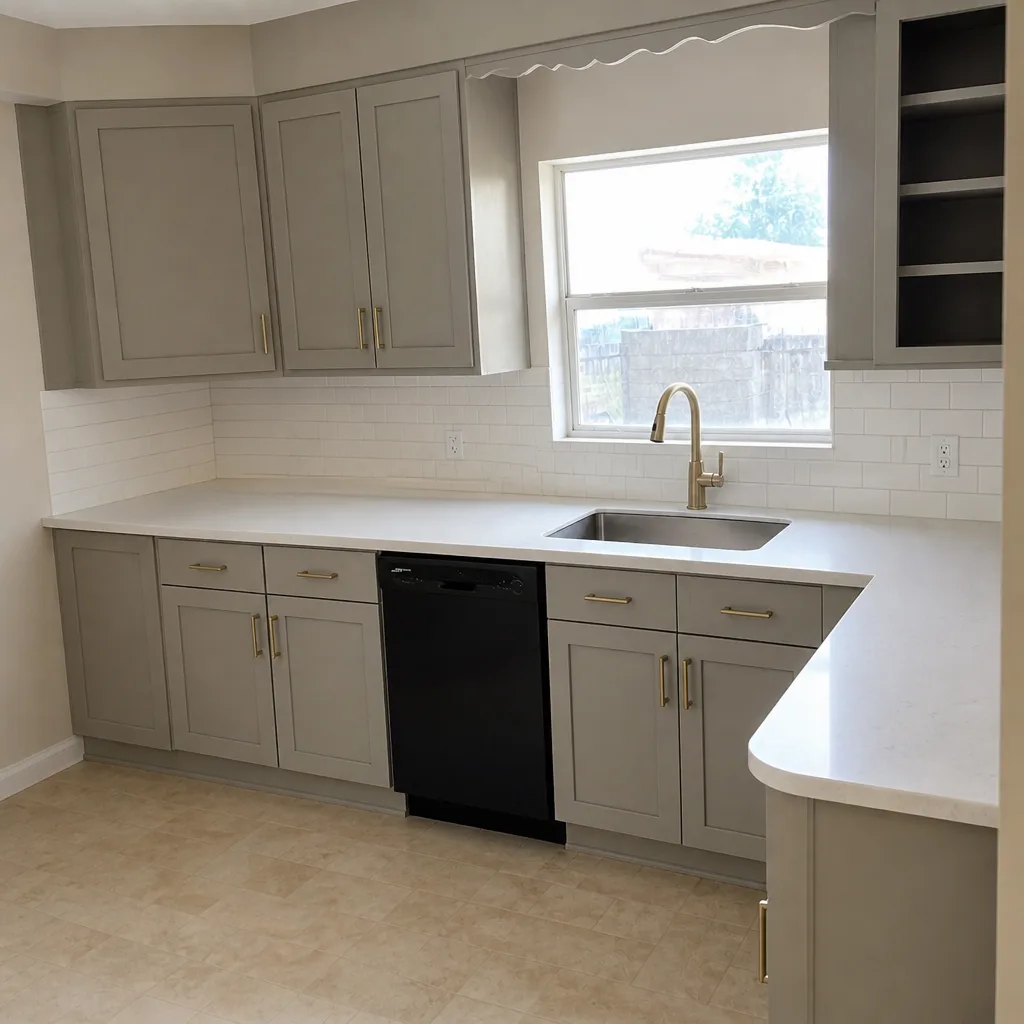 After
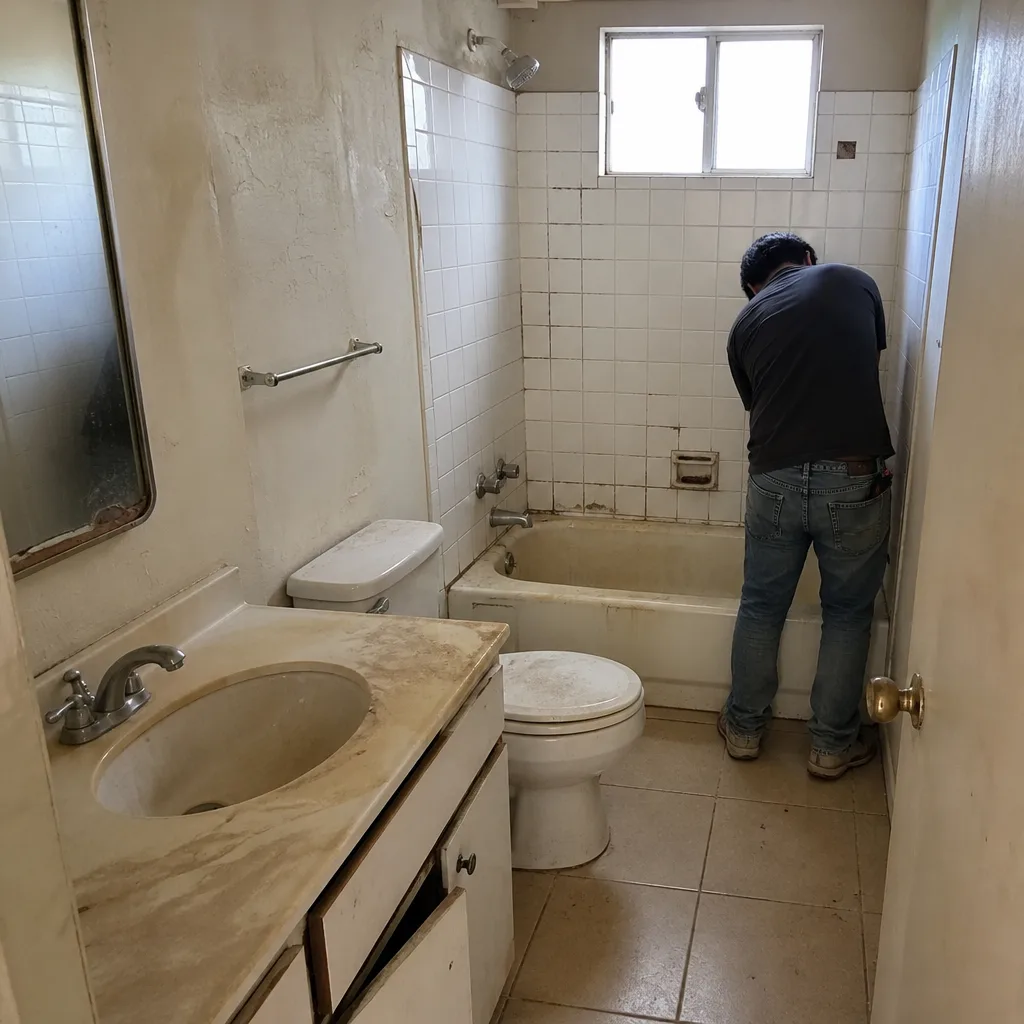 Before
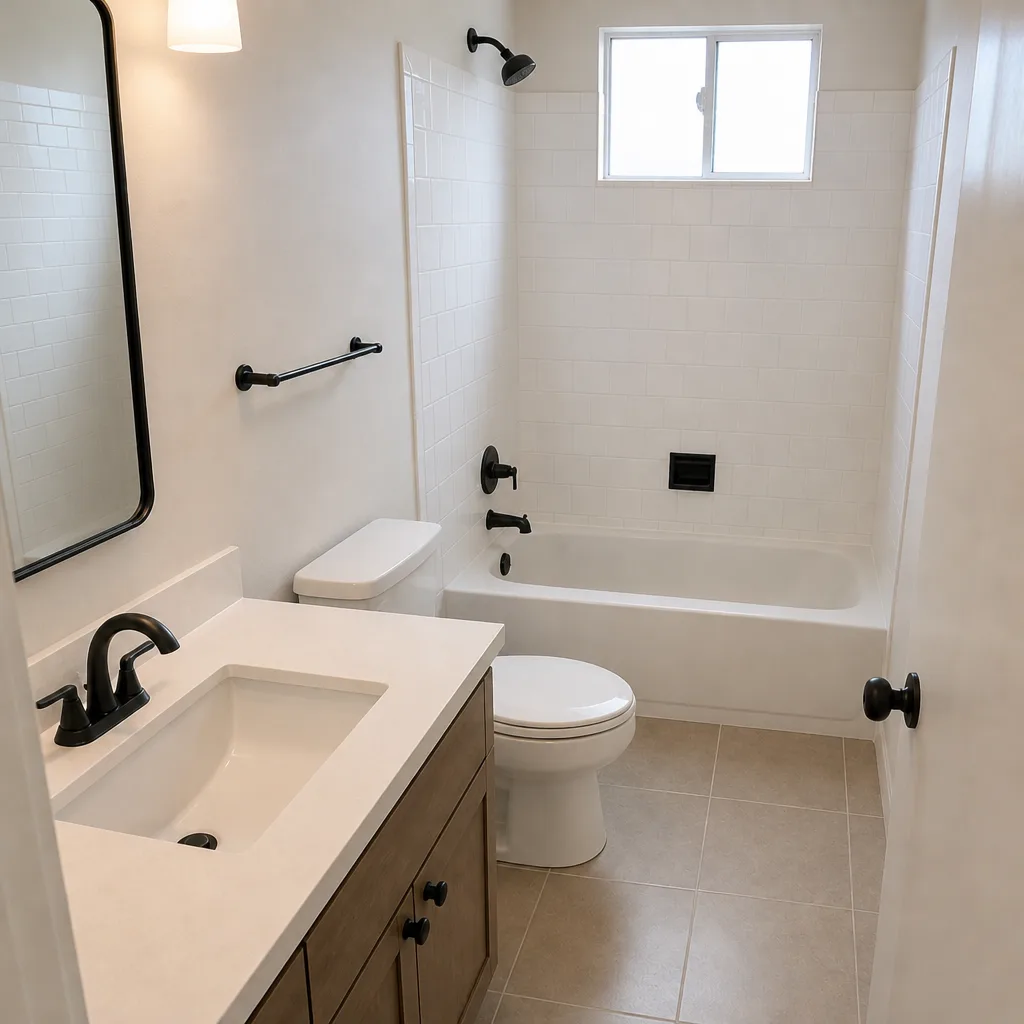 After
When to Call a Professional
Some problems are yours to monitor. Some aren’t. Call a professional if: you’re seeing a stair-step crack following the framing pattern, a shower that leaks to the other side of a wall, tile that’s tenting, a wide stucco crack at an addition joint, or an HVAC system that cools unevenly after a remodel. Call sooner if you’re within the guarantee window and the contractor isn’t responding – time matters for both warranty and board filing deadlines. Call before you touch anything yourself, because the photo file is the diagnosis.
Mason Remodeling Sunrise Manor offers free estimates in Sunrise Manor – call (855) 606-6122. Every project we take on comes with a written price before any work begins, a written guarantee with clearly stated terms, and the 365-Day Done Right Promise. The crew that shows up is background-checked, identity-verified, and introduced by name and photo before the visit.
Frequently Asked Questions

Hairline cracks that run with the joint – above a door frame, where drywall meets the ceiling, or at a corner – in the first year are usually normal settling. Stair-step cracks that follow the framing, cracks wider than the thickness of a credit card, or cracks that keep widening are workmanship or structural concerns. Photograph the crack with a ruler next to it, date the photo, and call your contractor for an inspection. Call (855) 606-6122 for a free estimate if you’re not sure which you’re looking at.
The core file is: the signed contract and written price, any written change orders, the written guarantee, timestamped photos of every stage (especially the walls-open stage), inspection sign-offs, and product receipts with model numbers. This file is what makes warranty claims actionable and what the Nevada State Contractors Board asks for if a disagreement escalates.
Not with a proper written price. A fixed written price before work begins is the standard because it means no surprise invoices and no verbal estimates that grow on the final bill. Changes to the scope should come as separate written change orders with their own price, signed by both sides. If a contractor talks price verbally and won’t put it in writing, that’s your cue to look elsewhere.
Send a written notice citing your written price and guarantee, requesting a response within a set number of days. Keep a copy. If there’s no response in that window, the next step is a complaint to the Nevada State Contractors Board, which requires the contract, written price, guarantee, photo documentation, and correspondence. Do not let the board filing window expire while you’re waiting on a callback.
Repair work that touches structural framing, plumbing, or electrical almost always requires a permit in Nevada; cosmetic drywall patches and paint typically don’t. When in doubt, ask the contractor and confirm with the local permitting office. If a contractor proposes to redo failed work without a permit, ask why in writing. On every project we take on, permits are pulled and inspections passed.
A written guarantee should state plainly what’s covered (workmanship and installation errors on general contracting, bathroom remodeling, whole-home remodeling), what’s excluded (normal settling, homeowner-caused damage, and pre-existing conditions), and for how long. The standard we hold to is 365 days from the completion date, with a free return visit if a repair or installation fails – no charge and no dispute process.
The Bottom Line
Remodeling problems aren’t solved by knowing the fix. They’re solved by knowing the category. Workmanship defects, material defects, and normal settling each require a different response, a different document, and sometimes a different party. Build the photo and document file during construction, read your written guarantee before you need it, and know the Nevada State Contractors Board timeline before any dispute gets old. Do those three things and a post-remodel problem stays a phone call instead of a case. For a free estimate on your Sunrise Manor project, call (855) 606-6122.
Written by the team at Mason Remodeling Sunrise Manor.