Last updated November 17, 2026







Free written scope consultation - allowances, timeline, and change-order rules on paper before a single trade is scheduled
Home Remodeling Warning Signs Every Homeowner Should Know
The most expensive remodeling problems are the ones a homeowner notices six months after the contractor is gone. A soft spot near the shower curb. A hairline crack that keeps widening above a doorway. A grout line that darkens every time the shower runs. Most of these left a warning sign during the project that nobody knew to look for. Your house talks the entire time a crew is inside it, and the failures that cost the most are the ones that were visible in week two. This guide shows you what to watch for in Sunrise Manor, before drywall hides the evidence.
Quick Answer
Home remodeling warning signs fall into two buckets: contracting red flags (vague pricing, no written scope, changing crews) and physical building signals (wet grout, fresh cracks, doors that stop closing, drains that gurgle). The physical ones matter most because they show up while the walls are still open and can still be fixed cheaply. Catching them before the crew leaves is what separates a $300 fix from a $9,000 tear-out.
Styles & brands we work with
- Kitchen remodeling
- Bathroom remodeling
- Home additions & ADU
- Roofing
- Windows & doors
- Driveway & pavers
- Fence
Table of Contents
- Five Physical Signs Your House Shows During Construction
- The 48-Hour Moisture Test for a Sunrise Manor Bathroom
- Contract Warning Signs vs. Construction Warning Signs
- How to Read a Final Punch List
- The Post-Project 30-Day Inspection Checklist
- What Sunrise Manor’s Desert Climate Changes About All of This
- Warning Signs About the People in Your Home
- Common Mistakes to Avoid
Five Physical Signs Your House Shows During Construction
These are the tells. In our experience remodeling homes across Sunrise Manor, the crews that cut corners rely on one thing: that you’ll only look at the finished surface. So look behind it while you still can.
- Wet framing or dark studs behind new drywall. Before drywall goes up, the framing should be bone dry. If you see water staining, swollen wood, or a musty smell in a wall cavity, the shower pan or a supply line is already leaking. Drywall hides water for months; the desert heat then turns that cavity into a mold incubator.
- Tile set with no visible waterproofing membrane. In a wet area, ask to see the membrane before tile goes down. A red or blue roll-on layer (products like Schluter systems are common and reliable) should coat the walls and the pan. Bare cement board with thinset directly on it fails years earlier than the spec sheet claims.
- Grout that looks wet hours after installation. Fresh grout should dry to a uniform matte. Dark, damp-looking patches mean moisture is trapped underneath, usually a sign the substrate wasn’t sealed or the mix ratio was wrong.
- Framing that flexes or creaks underfoot. New subfloor should feel solid. Spongy spots or a floor that bounces near a wall means the joists weren’t properly blocked or the subfloor wasn’t glued and screwed to spec.
- Doors and windows that suddenly stick. A door that swings freely at demo and drags a week later is telling you the framing shifted or a load path changed. That’s a structural conversation to have before drywall, not after.
None of these requires a contractor’s eye to catch. They require being present, or at least looking at photos of every stage. Any reputable contractor will walk you through the open walls and point them out. If a crew gets defensive when you ask to see the work in progress, that’s the loudest sign of all.
The 48-Hour Moisture Test for a Sunrise Manor Bathroom
High desert climates create a specific grout-curing risk most guides skip. Sunrise Manor sits at roughly 2,000 feet with summer humidity that can drop below 15 percent and afternoon highs above 105°F. That combination pulls moisture out of fresh grout fast, and fast curing is where hairline cracks begin.
Here’s the test. Within 48 hours of the tile install, before you seal anything:
- Run the shower on hot for ten minutes and let the room steam up. Close the door.
- Wipe a dry paper towel across the grout lines at the shower floor, the curb, and the bottom corners of the walls.
- Check for any darkening at the floor-to-wall joint after 15 minutes. That seam is where water intrusion almost always begins.
- Look at the grout color. Uniform means the mix and cure were right. Blotchy, uneven, or chalky patches mean the humidity was wrong or the grout was over-wiped.
If that seam is damp or dark, do not seal it. Sealing over trapped moisture locks it in, and in Sunrise Manor’s dry heat it will push into the adjacent drywall rather than evaporate. Call the contractor back. A re-grout and re-seal is a one-day fix now and a full pan rebuild later. If you’re planning the project from scratch, our bathroom remodeling in Sunrise Manor page walks through the waterproofing steps a proper install follows.
Contract Warning Signs vs. Construction Warning Signs
Homeowners conflate these two, and that’s how they miss both. Contract signs live on paper. Construction signs live in the building. They fail in different ways, so you have to check for each in the right place, at the right time.
Contract warning signs (before the work begins):
- A verbal estimate that never becomes a written number.
- A price with no line items, or a line item called “miscellaneous” that isn’t explained.
- No start date, no completion date, no named scope for who pulls permits.
- A guarantee described as “backed” without the coverage term stated in writing.
- A crew list that changes names from the quote to the jobsite.
Construction warning signs (during the work):
- Drywall closing before an inspection.
- Waterproofing that wasn’t photographed or shown to you.
- New framing that wasn’t blocked at the corners.
- Grout lines that pass the eye but fail the moisture test.
- A punch list that gets shorter every time you look at it.
The overlap matters. If you catch a contract sign early (say, no written price), you never reach the construction signs. If you catch a construction sign early, the contract terms determine who pays to fix it. That is why the written price before any work starts and the written guarantee aren’t paperwork formalities. They’re the mechanism that makes a mid-project fix actually free to you. General contracting here in Sunrise Manor runs into permits and inspections, so a contractor who treats the paper side casually is telling you something about the wall side too. If you want a sense of how the full scope is usually structured, our general contractor in Sunrise Manor page outlines the sequence.
How to Read a Final Punch List
The punch list is the last moment you have leverage before the final payment, and it’s the list that quietly omits the things that turn into expensive callbacks. Read it as a checklist of what’s missing, not just what’s on it.
Here are the items routinely left off, and why each one costs you later:
- Caulk condition at every wet joint. Ask the crew to inspect and photograph. Shrinkage in the first month is normal; a gap that opens within a week was applied to a wet surface.
- Weep holes at windows and doors. Tiny slots in the frame that let moisture escape. They get caulked over by mistake all the time.
- Grout re-seal timing. Note the exact date the grout should be sealed and who does it. Skipping this is the top cause of early tile failure.
- Cabinet and fixture alignment after settling. Doors and drawers that open smoothly on day one can drift. Have the crew demonstrate them all.
- Drain function and slope. Pour a bucket of water down the new shower and floor drains. Standing water means the slope is wrong.
- Photos of everything behind the finish. Framing, plumbing, waterproofing, insulation. These become the only record you have when a problem appears in month eight.
Before you sign off, add every missing item to the list yourself. A written punch list attached to your written scope is how the guarantee gets enforced. Compare what the list says against the video or photo record, and confirm how long each item is covered. Our kitchen remodeling in Sunrise Manor page notes how a written punch list works alongside finished cabinetry and counters, because the sign-off covers both the rough-in and the surfaces.
The Post-Project 30-Day Inspection Checklist
The project ends. The crew leaves. Then the house tells you what it thinks over the next month. Walk it with a flashlight and this list at the 30-day mark.
- Inspect every wall-to-ceiling seam. Hairline settlement cracks are normal and cosmetic. A crack wider than a credit card, or one that keeps growing across several days, is structural and needs an independent look.
- Check every caulk joint in wet rooms. Caulk should always be flexible. If it’s cracked, peeled, or pulling away, water is getting behind it.
- Press the shower floor and corners. Any softness or give means water is in the pan.
- Open and close every door and window. A door that sticks in Sunrise Manor’s dry season tells you framing moved or the strike plate was installed off-center.
- Look at the baseboards. Warping, bubbling paint, or a musty smell near a bathroom wall means hidden moisture.
- Run all drains. Gurgling or slow drainage 30 days in is a slope or venting problem, not a clog.
- Inspect the exterior penetrations. Look at where any new vent or pipe exits the wall. Sealing fails in desert sun faster than in mild climates.
The rule for calling back: cosmetic settling is your contractor’s job to document and, if covered, repair. Structural movement, active water intrusion, or anything that feels unsafe is worth an independent structural or home inspector, even before you contact the builder.
What Sunrise Manor’s Desert Climate Changes About All of This
Sunrise Manor is not a mild-climate market, and the warning signs behave differently here because of it.
The air is dry and the ground moves. Expansive clay soils common around the east Las Vegas Valley swell in the monsoon season and shrink hard through the dry months, and that cycle shows up inside the home as cracks near door and window frames, drywall seams, and corners. Most are harmless and cosmetic. A few are not, and the difference is whether the crack widens over time. Keep a dated log with photos of any crack you find, and you’ll know by the 60-day mark whether it’s settling or a real structural signal.
Sun exposure also drives early caulk and seal failure on the south and west faces of a home. Sunrise Manor’s afternoon sun is relentless, and exterior caulk that lasts years in cooler regions can fail in a single season on a western wall. That makes it a sign to check at the 30-day walk, not just at the 12-month warranty window.
And the dry heat exaggerates grout-curing risk. Grout that sets too fast in low humidity cracks before it fully cures, and those cracks are the entry point for the moisture you’ll find months later. This is why the 48-hour moisture test isn’t optional in Sunrise Manor; it’s the core of catching the problem while it’s still a small fix.
Warning Signs About the People in Your Home
Handling the construction properly matters, but the people doing the work are the other half of the equation. Many of our customers in Sunrise Manor are often home alone, parents with young children, or older adults who treat the front door as a real decision. Here is what to look for.
- Nobody is introduced before the visit. You should know a technician’s name and see a photo before they knock. This is not a courtesy. It’s how you decide who enters your home.
- No badge at the door. A uniform is easy to fake. A photo ID badge checked at the door is not.
- A rotating, unnamed crew. If the subcontractor changes from the quote to the install, ask who is actually on site and how they were vetted.
- No one answers the phone after hours. A company that reaches voicemail when something leaks on a Saturday has already failed a test.
- A guarantee you can’t read. Coverage terms should state what’s covered, what’s excluded, and for how long. “Backed by our guarantee” with no term isn’t coverage.
Our crews meet The Threshold Standard: every technician is identity-verified, arrives in a clean marked uniform, shows a photo ID badge at the door, and is introduced to you by name and photo before the visit. We tell you who’s coming before we knock, and a live person answers the phone around the clock. That matters most at the moment a homeowner is deciding whether to open the door at all. You can see how this carries through a project on our Mason Remodeling Sunrise Manor home page.
Common Mistakes to Avoid
- Waiting to check until drywall is up. Once the walls close, the physical warning signs are hidden, and the fix costs ten times more. Ask to see each completed stage.
- Sealing over wet grout. In Sunrise Manor’s low humidity this is tempting, but sealing traps moisture and pushes it into the surrounding drywall. Test first, then seal.
- Accepting a verbal estimate. A price that only exists in conversation has already grown by the final invoice. Insist on a written number before work begins.
- Skipping the punch-list omission check. Homeowners review what’s listed and never ask what’s missing. That’s how caulk gaps and unsealed grout become callbacks.
- Confusing cosmetic cracks with structural ones. Most 30-day cracks are settling. A widening crack or one wider than a card needs an independent inspector, not a handyman.
- Ignoring who is on site. A crew you can’t identify by name or photo is a safety problem, not a scheduling inconvenience.
- Letting a guarantee stay vague. If coverage isn’t stated in writing with a term, ask for it. Then keep it with the project photos.
See the difference
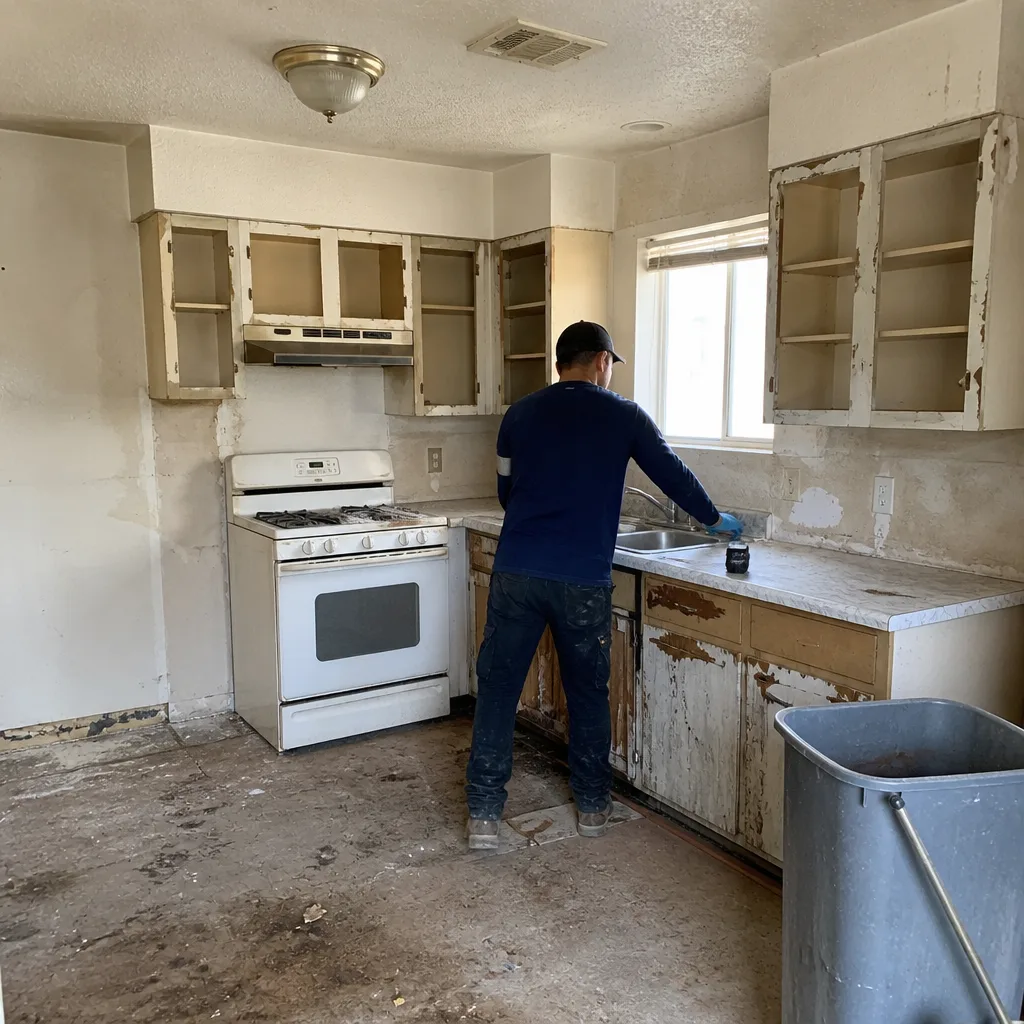 Before
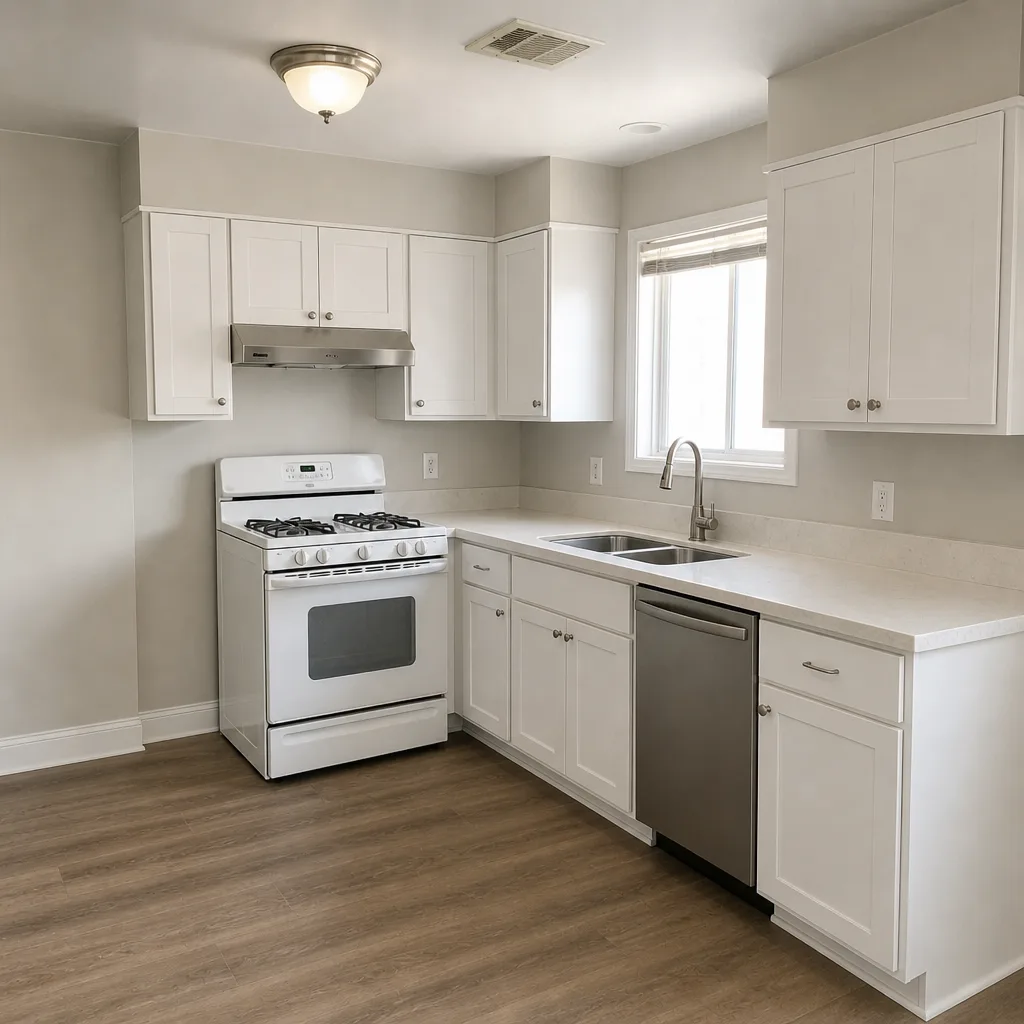 After
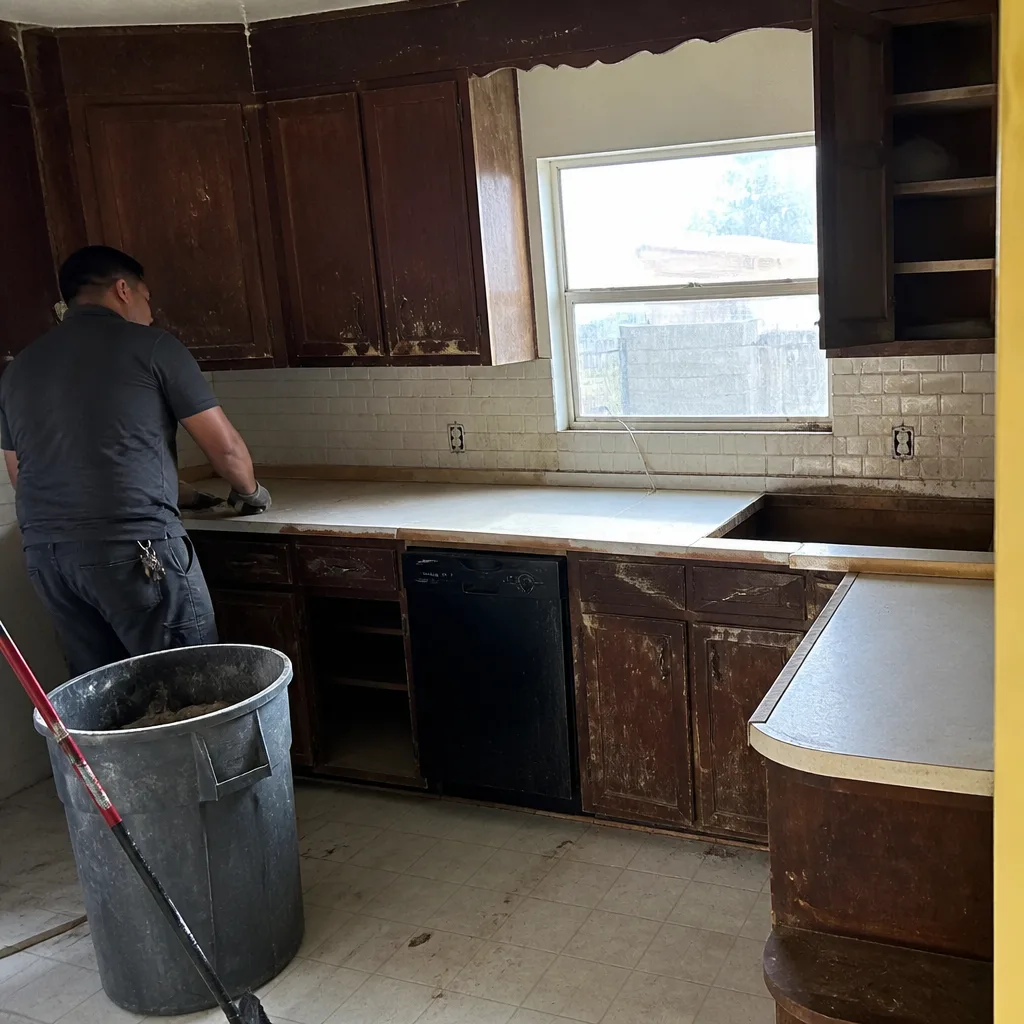 Before
 After
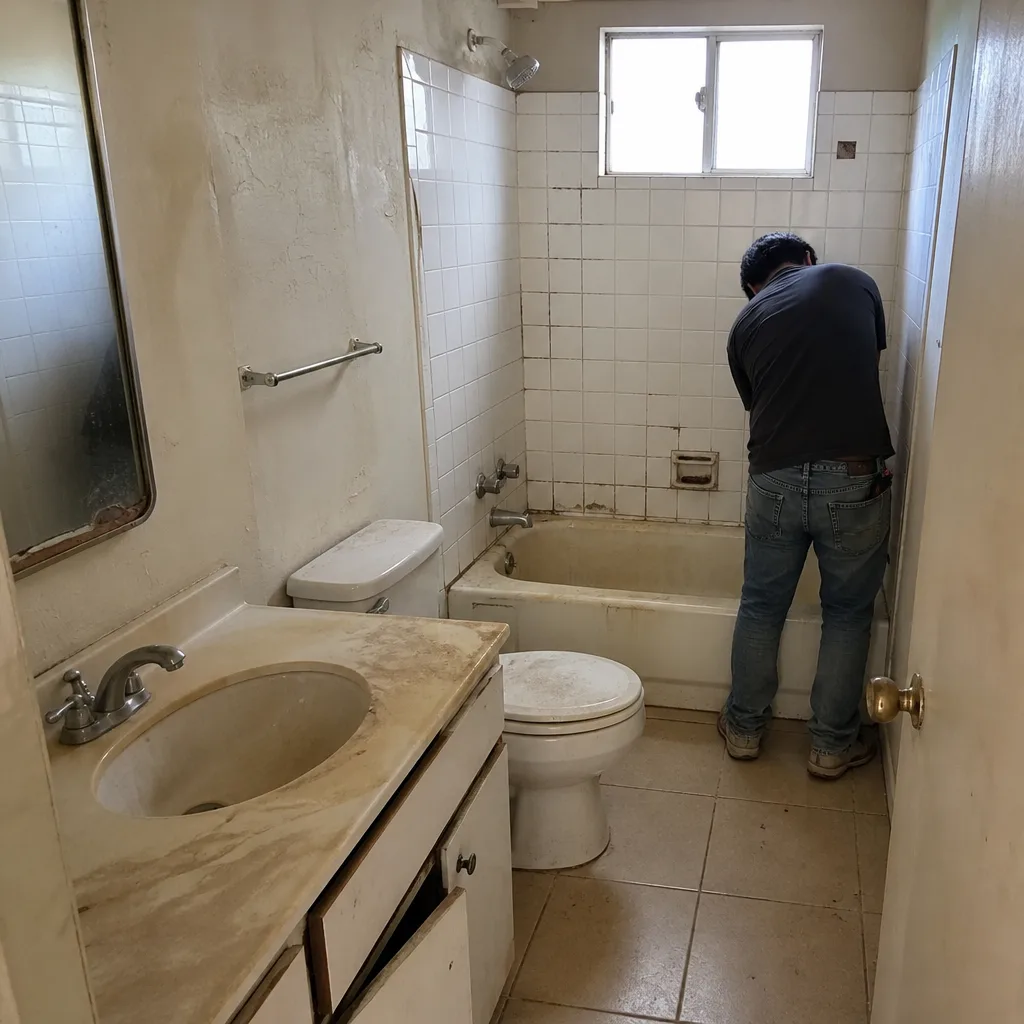 Before
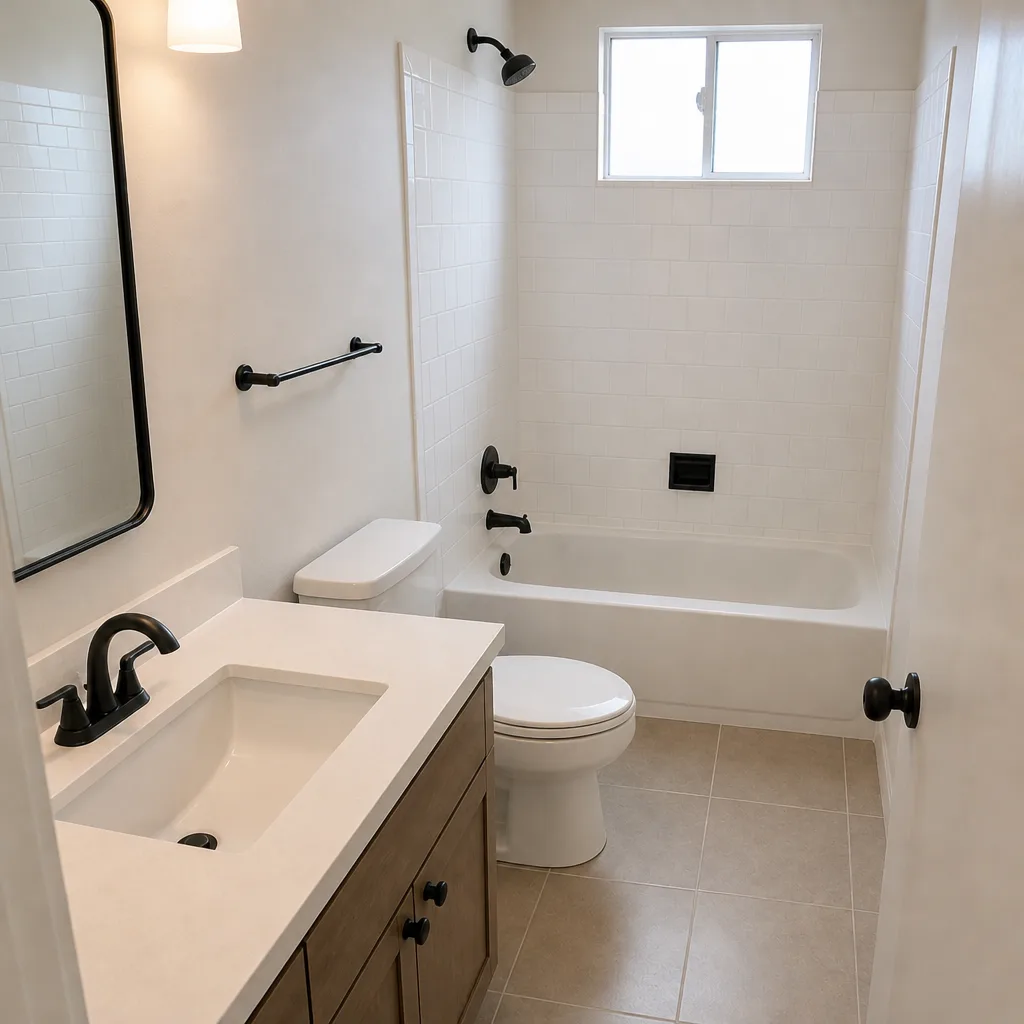 After
When to Call a Professional

Call a professional when a warning sign stops being cosmetic. That means a crack wider than a credit card that keeps growing, water in a shower pan after the 48-hour test, a drain that stays slow after cleaning, a door that drags 30 days after the plan said it was true, or a musty smell in a wall you can’t explain. Any of these suggests the hidden work under the finish failed, and finding it early is almost always cheaper than finding it later.
Mason Remodeling Sunrise Manor offers free estimates in Sunrise Manor, and our technicians have up to 22 years of experience tracing exactly these problems back to the rough-in. Call (855) 606-6122 and a live person will answer, day or night. You’ll get a written price before any work starts, so you know what the fix costs before a tool is unpacked.
Frequently Asked Questions
Most mid-project fixes cost less than 10 percent of what the full project cost, while the same problem discovered after the finish is installed can run several times that because the wall, tile, or cabinet has to come out first. Catching it before drywall is the whole point of the warning signs in this guide. Call (855) 606-6122 for an exact quote, and estimates are free.
Not when you have a written price before work begins. The price should be stated per line item, so any change is a visible change order you authorize rather than a surprise on the final bill. That’s why we deliver a written price on every project before any tool is unpacked, and that’s the standard to hold any contractor to. Call (855) 606-6122 to schedule your free estimate.
Yes. Permits and inspections are the contractor’s responsibility on a permitted remodel, and the permit record is also your evidence that the work behind the walls was inspected. Ask which permits the project needs and who pulls them, and get it in the written scope. Our team handles the permit step as part of a general contracting scope; call (855) 606-6122 to talk through the specifics.
Properly mixed, cured, and sealed grout should hold up for years, but in Sunrise Manor’s low humidity the curing window is the fragile part. If your grout looks blotchy, darkens in patches, or lets moisture in at the floor joint within the first week, it cured too fast and needs re-grouting. Test at 48 hours and treat it as urgent. Call (855) 606-6122 and we’ll take a look.
Settling cracks are hairline, usually near seams or corners, and stop changing within a few weeks. Structural cracks widen over time, sometimes extend across a room, and often come with doors or windows that stop closing. Photograph the crack with a date, watch it for 30 to 60 days, and if it grows, bring in an independent inspector. For an honest read on whether a crack needs repair, call (855) 606-6122 with your photos.
If the work is not right within a year of completion, we make it right at no cost to you. The coverage is stated in writing with what’s included, what’s excluded, and the term, and a free return visit is provided if a repair or installation fails, no conditions. Ask for the written terms before the project starts so you can compare. Call (855) 606-6122 to schedule a free estimate.
The Bottom Line

The warning signs that matter most aren’t the ones on a checklist. They’re the ones your house shows you while the walls are still open: wet framing, unsealed waterproofing, grout that sets wrong in the desert heat, a door that suddenly drags. Learn to read them at demolition, at the 48-hour moisture test, at the punch list, and at the 30-day walk, and the worst outcomes never happen. Pair that with a written price before any work starts and a written guarantee you can read, and you’ll have caught the failure while it was still a cheap fix. That’s the whole game.
If something on this list already matches what you’re seeing, call (855) 606-6122 to schedule a free estimate. Mason Remodeling Sunrise Manor will hand you a written price before any work begins, and our technicians have up to 22 years of experience tracing problems back to the step that caused them.
Written by the team at Mason Remodeling Sunrise Manor.