Last updated November 17, 2026

Free written scope consultation - allowances, timeline, and change-order rules on paper before a single trade is scheduled
DIY vs Professional General Contractor: What’s Safe to Do Yourself
In Nevada, unpermitted electrical or structural work done by a homeowner can void your homeowner’s insurance policy and legally complicate a home sale, even if the work looks perfect. That single fact reframes the whole DIY debate. The question isn’t whether you’re handy enough to hang drywall or move a light switch. It’s which mistakes you can undo and which ones follow the house for years. This guide draws the line where DIY legally and financially cannot protect you, and it tells you plainly which projects are still worth doing yourself in Sunrise Manor.
Quick Answer
In Nevada, homeowners can legally self-perform cosmetic work, painting, non-structural demolition, finish hardware, and most landscaping, but electrical, plumbing, HVAC, and structural work should go to a licensed contractor because unpermitted work can void insurance and stall a sale. The safe DIY list is short and the risk list is long, and the difference usually comes down to liability, not skill.
Styles & brands we work with
- Kitchen remodeling
- Bathroom remodeling
- Home additions & ADU
- Roofing
- Windows & doors
- Driveway & pavers
- Fence
Table of Contents
- Nevada’s owner-builder rules in plain language
- The four categories where DIY creates uninsurable liability
- What’s genuinely safe and cost-effective to do yourself
- How to be a smart owner-builder coordinator without a license
- The hidden cost math that shrinks most DIY savings
- What Sunrise Manor homes run into most
- How to decide in ten minutes
Nevada’s owner-builder rules in plain language
Nevada allows a homeowner to act as an “owner-builder” on their own primary residence in limited situations. That means you can take out certain permits in your own name and do some work yourself, or hire subcontractors directly, without holding a contractor’s license. But the exemption is narrower than most people assume. It applies to a home you live in, not a rental or a flip, and it comes with real obligations: you become responsible for code compliance, inspections, and worker safety on your own property.
Here’s where the law gets strict. Nevada requires a licensed contractor for work that touches structural elements, electrical systems, plumbing, mechanical systems, and gas lines. Some of that work explicitly cannot be self-performed at all, even by an owner-builder, because the permit itself requires a licensed signer. If you pull a permit as an owner-builder and then hire an unlicensed “handyman” to do the rough electrical, you’ve created a paper trail that shows the work was done outside the rules.
What catches Sunrise Manor homeowners most often is the resale problem. When you sell, a buyer’s lender and title company will ask about permitted work. Unpermitted additions, converted garages, and swapped panels get flagged. You may be asked to tear it out or pay for retroactive permitting, and retrofit inspections are far harder to pass than inspections done during construction. In our experience, that retroactive process costs more than hiring the licensed contractor would have cost in the first place.
- Owner-builder allows: permits in your own name on your primary home, cosmetic work, and coordinating your own licensed subs on covered tasks.
- Owner-builder does not allow: skipping permits on structural, electrical, plumbing, HVAC, or gas work.
- The trap: hiring an unlicensed worker to do licensed work “under your permit” still leaves you exposed.
If you want the licensed path handled end to end, our General Contractor in Sunrise Manor page covers how permits and inspections are pulled and passed on our projects.
The four categories where DIY creates uninsurable liability
These four areas are where competence doesn’t save you. Even if your wiring is neat, your plumbing holds, and your framing is square, the insurance and sale consequences are the same as if the work were wrong.
1. Structural work
Removing any wall requires knowing whether it’s load-bearing, and in Sunrise Manor’s older ranch homes that answer is often yes. Load-bearing walls carry roof weight, and a wall that looks like a partition may be holding up a beam above a wide opening. Removing it and adding a beam later means engineering, retrofit inspection, and framing corrections. That’s not a skill test – it’s a liability test, because insurance carriers will ask who did the work.
2. Electrical
Panel changes, new circuits, subpanels, and any work inside the panel are permitted work that requires a licensed electrician. The danger is real: a panel change is genuinely dangerous work and a trained professional should handle it. Beyond safety, an unpermitted panel swap can void coverage on a fire claim. Nobody at the insurance company wants to hear how neat it looked.
3. Plumbing
Supply lines, drain re-routing, gas connections, and water heater replacement are all permit-level work. Gas lines are the hardest stop of all. A slow leak behind a wall can run for weeks in a hot, dry climate like ours before anything shows, and by then the damage is inside the wall cavity.
4. HVAC
Ductwork changes, equipment replacement, and refrigerant lines require licensed work and permits. Sunrise Manor runs some of the most punishing summer heat in the metro area, and a system sized or charged wrong will run constantly and fail early. When it does, the warranty may be voided by unlicensed installation.
Our Bathroom Remodeling in Sunrise Manor page shows how permitted plumbing and electrical get handled inside one of the most permit-intensive rooms in any house.
What’s genuinely safe and cost-effective to do yourself
This is the honest list. These tasks carry low liability, low redo risk, and real savings if you’re reasonably capable.
- Interior painting. Prep, prime, and paint on walls and ceilings. Sunrise Manor’s dry heat means paint cures fast in summer, but patch and sand properly or the texture will show.
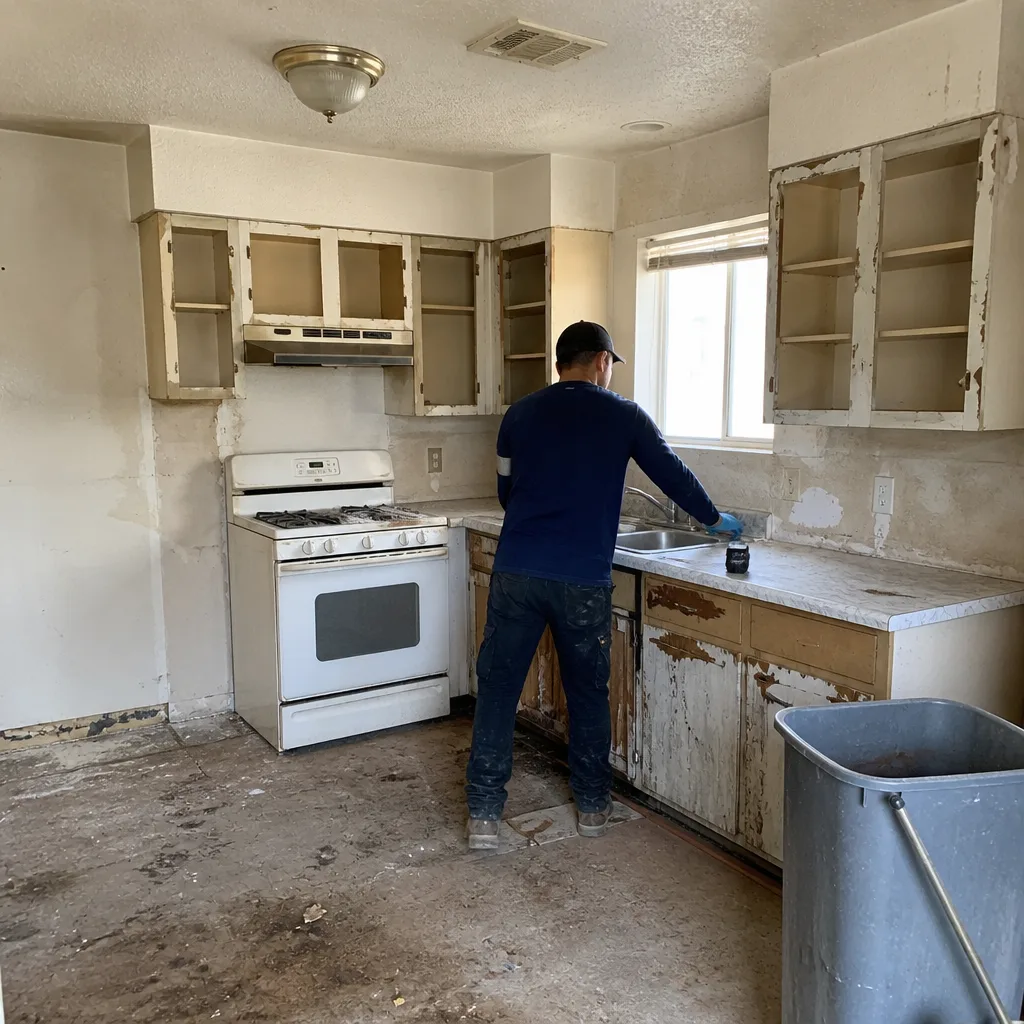
- Non-structural demolition. Pulling cabinets, tearing out old flooring, removing dated tile, and hauling debris. Confirm nothing is structural or wired first.
- Finish hardware and fixtures. Cabinet pulls, faucet trim (not the supply lines), towel bars, shelving, closet systems, and door hardware.
- Landscaping and yard work. Gravel, desert-friendly plantings, drip irrigation on surface runs, and paver repair. Hardscaping itself has code depth, but surface planting and gravel do not.
- Light cosmetic updates. Swapping outlets and cover plates (matching the existing circuit, not adding circuits), replacing a vanity top, or updating trim.
The pattern: anything that touches water, gas, live wiring, or load-bearing structure is not on this list. Everything else is fair game. In our experience, the homeowners who do well with DIY scope stick to the finish side of the project and hire out the systems side. For a sense of how far that can go, our Kitchen Remodeling in Sunrise Manor page shows where finish work meets systems work, and why the two get handled differently.
How to be a smart owner-builder coordinator without a license
Some homeowners want to act as their own general contractor: hire the electrician, the plumber, and the tile setter separately, then manage the schedule themselves. This is legal in Nevada as an owner-builder on your primary residence, with conditions. Here’s how it actually works.
- Confirm the exemption applies. Primary residence only, and you must occupy it. Rentals, second homes, and flips need a licensed contractor.
- Verify every sub’s license. Nevada licenses are public records. Check the license number, the classification, and whether it’s active before anyone swings a hammer.
- Pull the permits in your name where allowed. Some permits can be pulled by a licensed sub directly; coordinate which is which before the job starts.
- Carry the schedule yourself. This is the real cost of coordinating. You’re the one calling four trades to keep a sequence moving, and one slipped sub stalls the whole job.
- Keep documentation. Contracts, license numbers, inspection records, and invoices. If you ever sell, this is what protects the transaction.
What you cannot do as an owner-builder is hire unlicensed workers to perform licensed work on your property, and you cannot take a fee or do this for compensation on someone else’s home. That crosses into contracting without a license, which is a legal problem, not a gray area. If your project is a whole-home remodel, the coordination load is substantial enough that most homeowners eventually hand it back to a licensed GC. Our Mason Remodeling Sunrise Manor home page lays out how the full-service path works when you’d rather not carry that weight.
The hidden cost math that shrinks most DIY savings
The DIY pitch is a comparison between a contractor’s price and a stack of materials. That comparison leaves out four costs, and together they usually shrink the savings well below what the homeowner expected.
- Permit fees. Permits cost money whether you pull them or a GC does, and unpermitted work carries the potential cost of retrofit inspection and correction. That’s a real number, not a hypothetical.
- Tool rental and purchase. Tile saws, jackhammers, and scaffold rentals add up. A single bathroom demo might run $300-$600 in tool rental alone.
- Redo risk. The first attempt often fails. A tile shower with a failed waterproofing membrane means pulling tile, replacing backer, and starting over – a cost the pro absorbs on their own redos.
- Time, valued honestly. Nights and weekends on a kitchen project that a crew would finish in two to three weeks can stretch to three months. That’s three months of eating out and living around a construction zone.
Here’s a rough way to frame it. A bathroom refresh that a contractor quotes at $14,000-$22,000 might run $5,000-$8,000 in materials if you do it yourself, plus $500 in tools, plus a possible redo if the waterproofing fails. The gap between those numbers is real, but smaller than the materials-only math suggests. On small cosmetic projects, DIY wins cleanly. On anything with systems behind the walls, the math narrows fast.
What Sunrise Manor homes run into most
Sunrise Manor’s housing stock is mostly mid-century to 1990s build, one-story ranch and tract homes, many with garages converted to living space over the years. That history drives the three issues we see most.
The first is unpermitted conversions. A converted garage often has wiring and a room addition that never went through permitting, and the homeowner inherits the exposure at sale. The second is aging systems. Homes from the 1960s and 1970s in Sunrise Manor regularly have original or second-generation panels and plumbing near the end of service life, and upgrading them raises the permit question immediately. The third is heat-driven wear. Sunrise Manor summers push past 110°F regularly, and that heat cooks roofing materials, tire-out window seals, and AC equipment faster than in cooler parts of the valley. Homeowners with older single-pane windows often hear about window replacements from brands like ES Windows or ECO Window Systems – window swaps are a licensed scope, not a DIY one.
If your project involves windows, roofing, or hardscaping, those are all licensed categories. We’ve seen homeowners in Sunrise Manor start a roof patch in June, discover the decking underneath was shot, and end up hiring a roofer anyway – with the patched section to redo. The heat also means concrete and stucco work goes in early morning, not mid-afternoon, which a homeowner coordinating subs has to schedule around.
How to decide in ten minutes
Ask yourself these questions in order. Stop at the first yes.
- Does the work touch electrical, plumbing, HVAC, gas, or structural framing? If yes, hire licensed.
- Would a permit be required? If yes, hire licensed unless you’re prepared to be the owner-builder of record and carry the inspections yourself.
- Could a mistake here require opening a finished wall to fix? If yes, the redo risk is high enough that DIY math usually doesn’t work.
- Is this a home you’ll sell within five years? If yes, unpermitted work becomes a transaction problem, not just a quality problem.
- Is the work cosmetic, finish-level, and reversible? If yes, DIY is reasonable.
Common Mistakes to Avoid
- Hiring an unlicensed “handyman” for licensed work. The paper trail still points at you as the owner-builder, and the insurance carrier will treat it the same as if you’d done it yourself.
- Starting structural demo before confirming what’s load-bearing. In Sunrise Manor’s older ranch homes, a wall that looks like a partition often carries a beam, and correcting it later costs more than the original project.
- Swapping a panel to save money on a remodel. Panel work is permitted and licensed for a reason, and an unpermitted panel swap can void fire coverage on the whole house.
- Skipping drywall patching before paint. Sunrise Manor’s dry heat makes paint cure fast, which means every flaw in the patch telegraphs through the finish. Sand to 220 and prime the patch.
- Underestimating tool rental. A tile saw, wet vac, and demo hammer can run several hundred dollars for a single project, which eats directly into the DIY savings.
- Buying materials without a spec sheet. Cabinets and surfaces bought off the shelf often don’t match the box dimensions and require modification, which means a second order and a delayed schedule.
- Coordinating subs without a written schedule. The most common failure of owner-builder projects isn’t bad work, it’s a four-week gap between the electrician and the drywall crew.
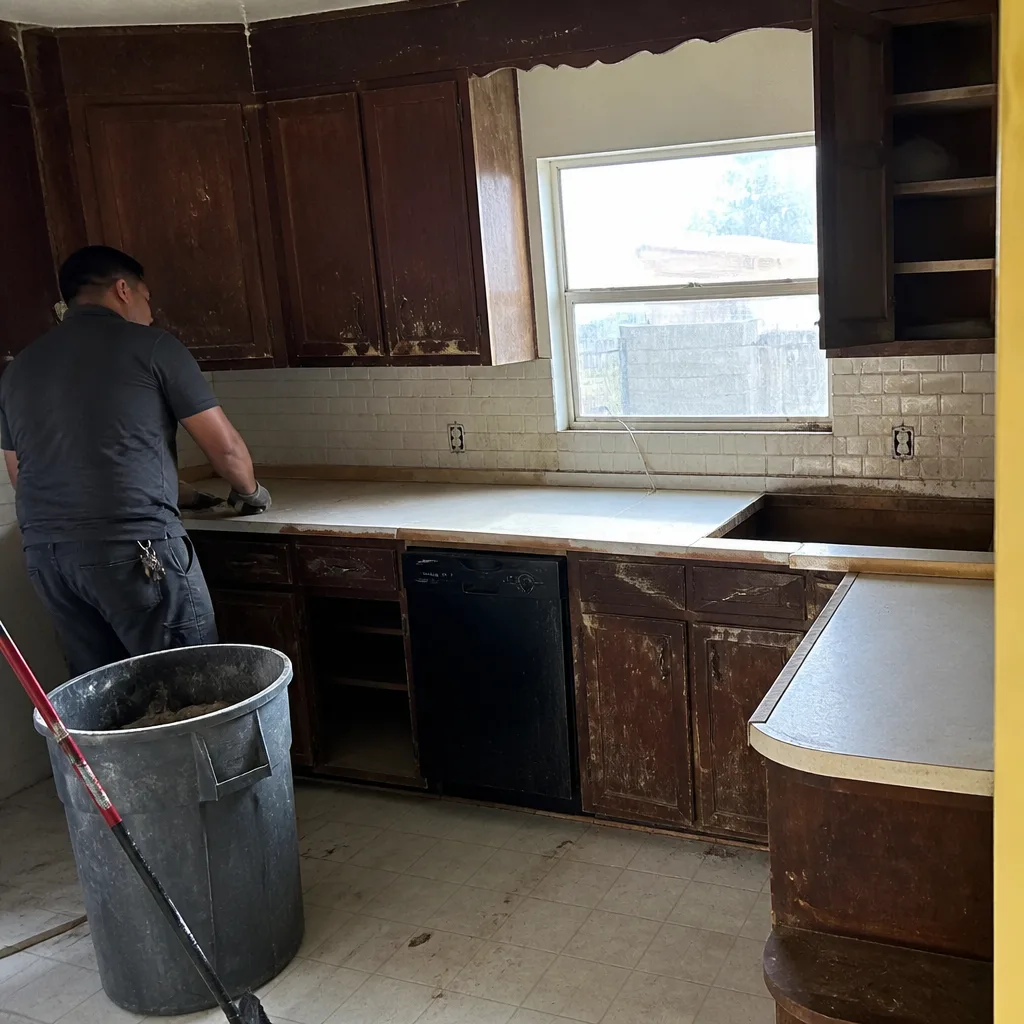
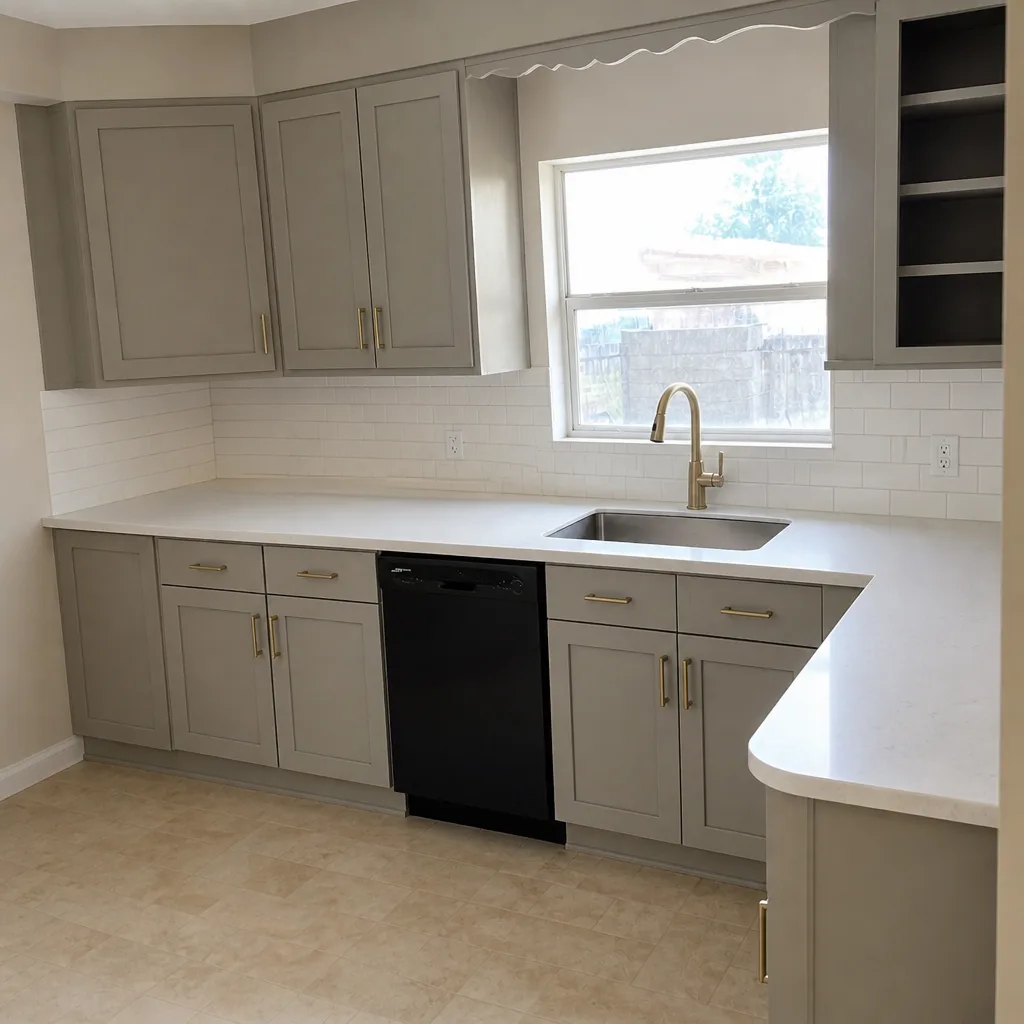
See the difference
 Before
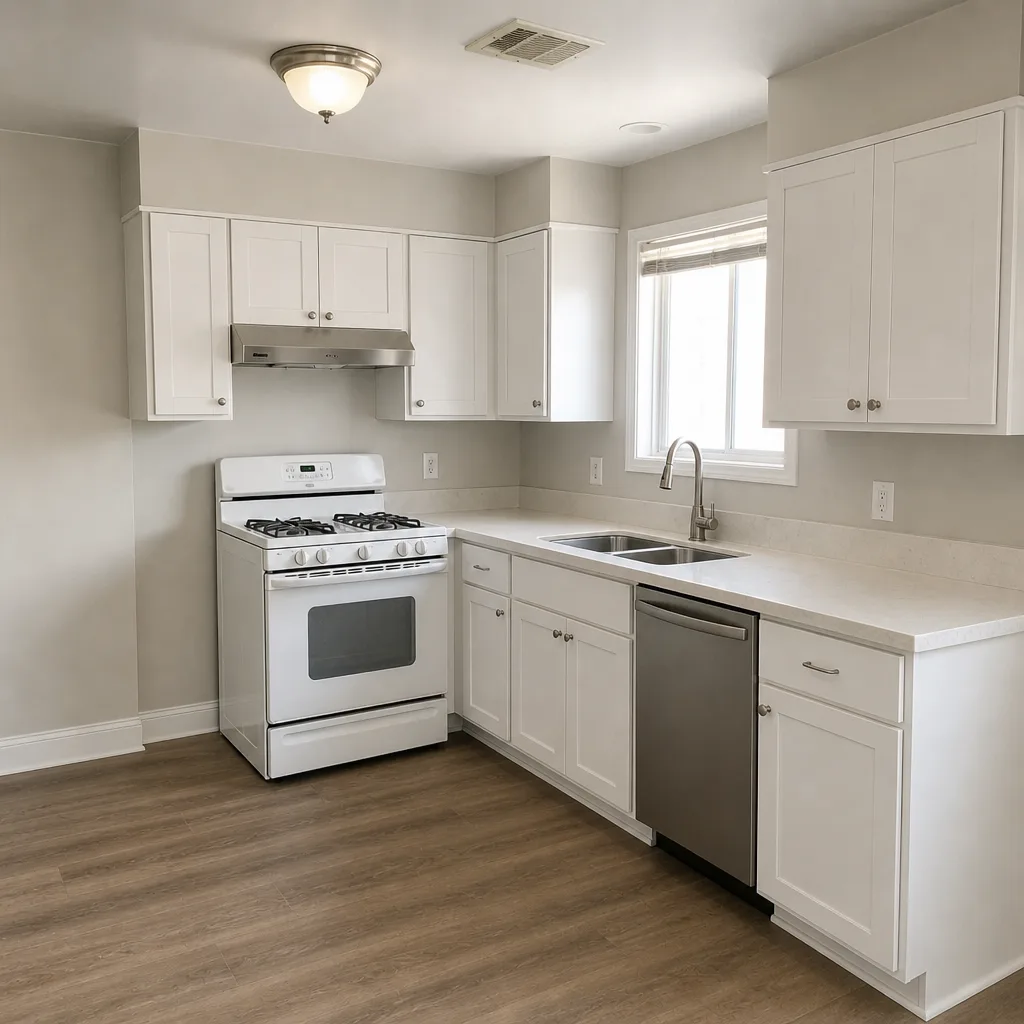 After
 Before
 After
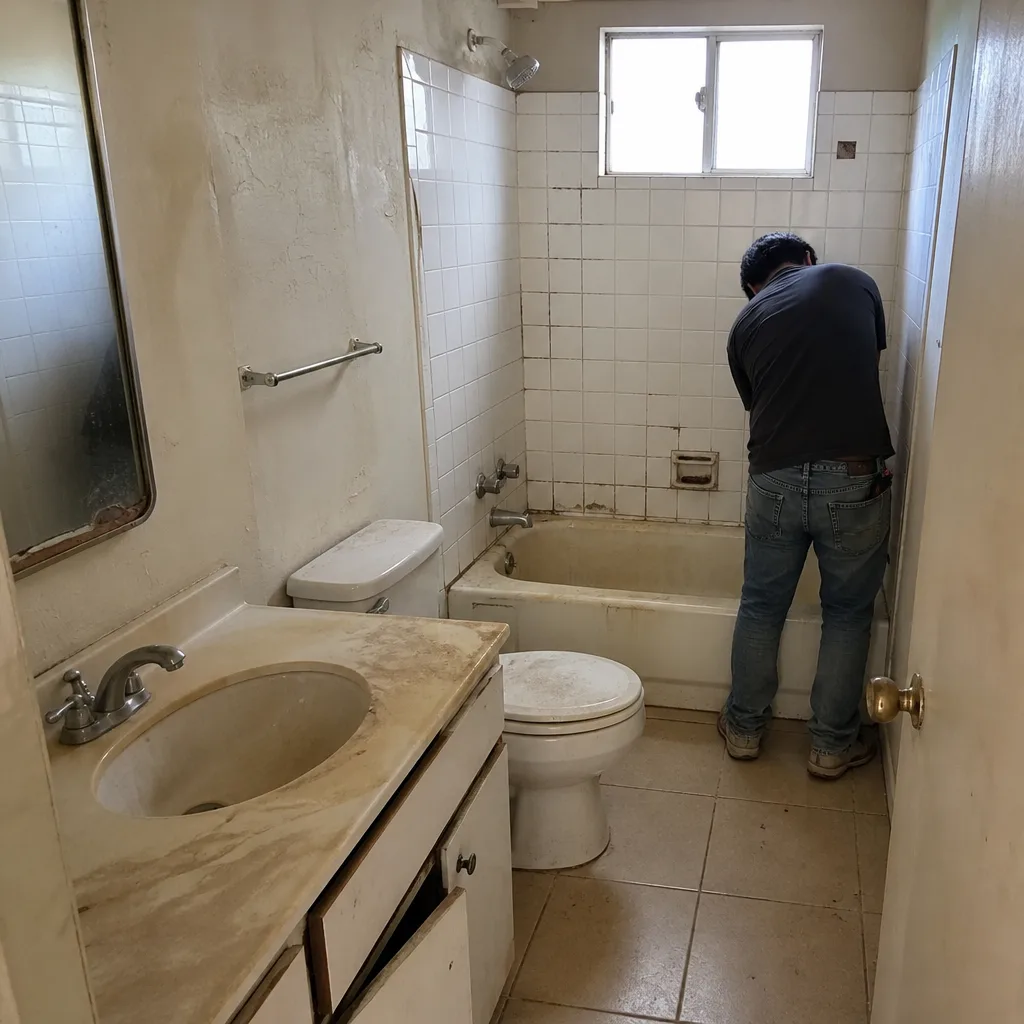 Before
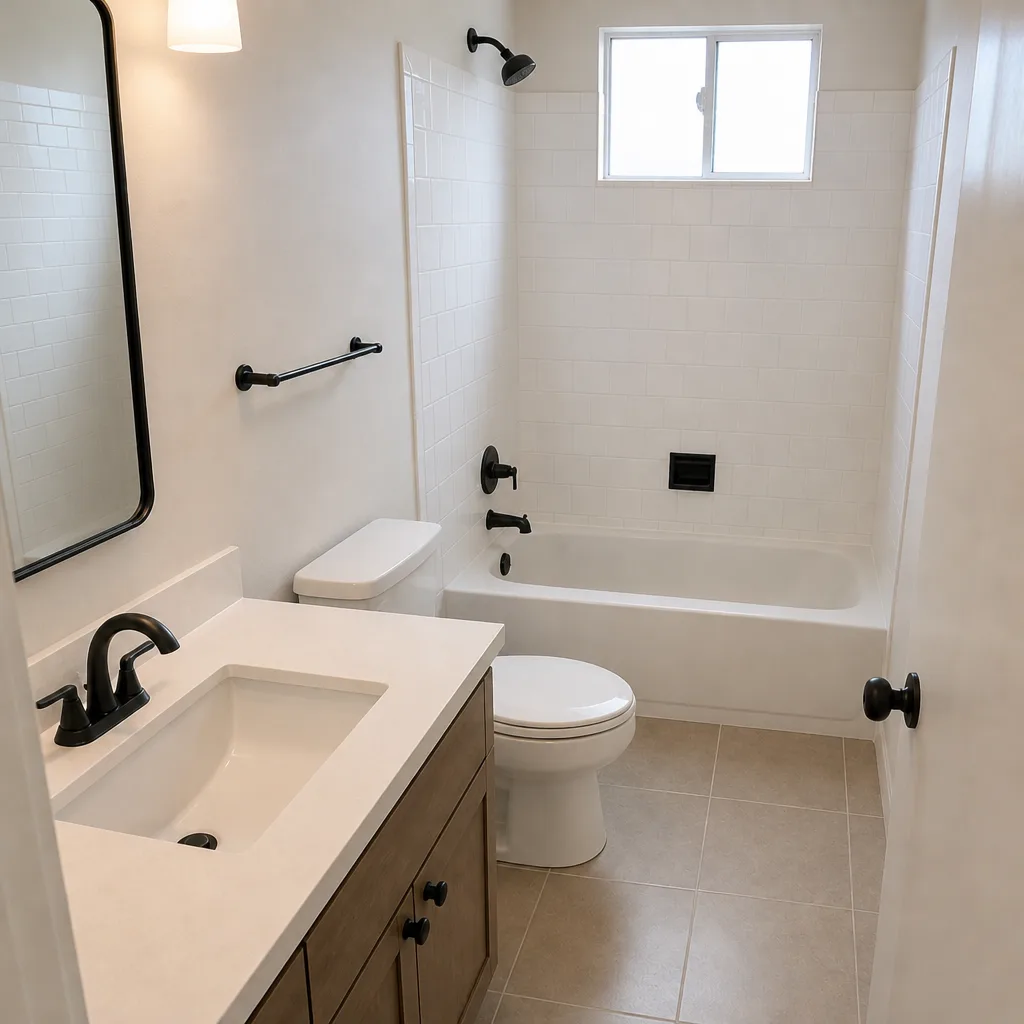 After
When to Call a Professional
Call a licensed general contractor when your project touches any of the four liability categories – structural, electrical, plumbing, or HVAC – or when it requires a permit you’d rather not carry as owner-builder. Call when you’re remodeling a whole room rather than refreshing one, when you’re preparing to sell within a few years, or when the coordination load is more than you want on your schedule. For Sunrise Manor homeowners, the trigger is often a converted garage or an aging panel that surfaces during a kitchen or bath project – both need a licensed hand. Mason Remodeling Sunrise Manor offers free estimates in Sunrise Manor – call (855) 606-6122. A written price is delivered before any work begins, on every project, and the 365-Day Done Right Promise covers the work for a full year from completion.
Frequently Asked Questions
In Nevada, you can legally self-perform cosmetic and finish work, painting, non-structural demolition, finish hardware, and most landscaping on your primary residence, and you can act as an owner-builder pulling permits in your own name. Electrical, plumbing, HVAC, gas, and structural work requires a licensed contractor. If you’re not sure which category a task falls into, call (855) 606-6122 and we’ll tell you plainly.
Yes, on your primary residence only, under Nevada’s owner-builder rules. You can pull permits in your name, hire licensed subs directly, and coordinate the schedule. You cannot hire unlicensed workers for licensed work, and you can’t do it for compensation on someone else’s property. The catch is that you carry code compliance and inspection responsibility yourself, which is why many homeowners hand the coordination back to a licensed GC mid-project.
It can. Insurance carriers routinely exclude or deny claims tied to unpermitted work, particularly electrical and structural, because the carrier has no record of an inspection. Even competent work done without a permit can complicate a fire or water damage claim. A retroactive permit and inspection can fix the record, but retrofit inspections are harder to pass than inspections done during construction.
Yes, non-structural demo is one of the best DIY tasks in a bathroom remodel – pulling tile, removing the old vanity, and hauling debris saves real labor dollars with low redo risk. What isn’t safe to self-perform is the plumbing rough-in, the electrical, and the waterproofing behind the tile. Those are permit-level and failure here means ripping out finished tile. Call (855) 606-6122 for a quote on the parts you don’t want to take on.
General contractor pricing in Sunrise Manor runs roughly 15-25% above the raw trade cost as a project-management margin, and whole-room remodels typically land in these ranges: bathroom refresh $14,000-$22,000, full bathroom remodel $25,000-$45,000, and kitchen remodel $35,000-$70,000 depending on cabinet and surface selections. Those aren’t guesses – they’re what we see quoted in this market. Call (855) 606-6122 for an exact written price on your project; estimates are free.
Yes. Water heater replacement in Nevada requires a permit and a licensed plumber, because it’s a gas or electrical connection plus a pressure-relief system. Skipping the permit saves a small fee and creates a much larger problem at resale or at claim time. Call (855) 606-6122 if you’d like a quote on getting it done permitted and inspected.
The Bottom Line
The DIY-versus-hire decision comes down to whether a mistake can be undone. Paint and demo can. A panel swap, a structural wall, a gas line, or a shower waterproofing job cannot, because the consequences show up later as insurance problems and sale complications rather than as an obvious failure. Nevada’s owner-builder rules give Sunrise Manor homeowners real latitude on cosmetic work, but they don’t protect you from unpermitted systems work – and neither does your insurance. Keep the finish work if you enjoy it. Hand the systems work to a licensed contractor, and get the price in writing first. Mason Remodeling Sunrise Manor offers free estimates on any project that crosses the line – call (855) 606-6122.
Call Mason Remodeling Sunrise Manor at (855) 606-6122 for a free estimate. Every proposal comes with a written price before any work begins, our technicians are background-checked and introduced by name and photo before the visit, and every project is covered by the 365-Day Done Right Promise. A live person answers every call, every day of the week.
Written by the team at Mason Remodeling Sunrise Manor.