Last updated November 17, 2026

Free written scope consultation - allowances, timeline, and change-order rules on paper before a single trade is scheduled
DIY vs Professional Kitchen Remodeling: What’s Safe to Do Yourself
Installing your own kitchen backsplash is legal, reversible, and learnable in a weekend. Installing your own kitchen electrical circuit in Nevada without a permit is a code violation that follows the home’s title. That’s the whole guide in two sentences, and it’s the line most homeowners can’t see clearly until they’re already standing in a half-gutted kitchen. In Sunrise Manor, where a lot of housing stock was built between the 1970s and early 2000s, we see the same pattern: confident DIYers who handle finish work beautifully and get quietly exposed on the trades that carry legal weight. This guide draws the line precisely, task by task, with real Nevada rules and real numbers, so you can decide with your eyes open instead of mid-demolition.
Quick Answer
In Nevada, homeowners may legally do cosmetic and finish work themselves under owner-builder rules: painting, cabinet hardware, backsplash tile over existing substrate, open shelving, and similar non-structural tasks. Anything involving gas lines, new electrical circuits or panel changes, plumbing drain reconfiguration, or structural wall removal requires a licensed contractor and permits, and DIY there creates code violations, insurance exposure, and disclosure problems at resale. The safe savings live in finish work; the dangerous savings live in the trades.
Styles & brands we work with
- Kitchen remodeling
- Bathroom remodeling
- Home additions & ADU
- Roofing
- Windows & doors
- Driveway & pavers
- Fence
Table of Contents
- The Legal Line in Nevada: What You Can and Can’t Do Yourself
- Safe DIY Territory: Four Tasks Worth Doing Yourself
- Where DIY Stops Protecting You
- The Hybrid Model: Acting as Your Own Project Coordinator
- The Real Cost Comparison: Materials vs. Full Contractor
- Permits, Inspections, and the Resale Paper Trail
- Common Mistakes to Avoid
- When to Call a Professional
The Legal Line in Nevada: What You Can and Can’t Do Yourself
Nevada draws a clearer line than most homeowners expect, and it’s enforced at the point of sale more often than at the point of construction. The state’s contractor licensing statute (NRS 624) requires a licensed contractor for any work on a structure that requires a building permit, and it also prohibits unlicensed persons from advertising or contracting for that work. The homeowner exception is real but narrow: you may perform work on your own primary residence, and you may pull permits as an owner-builder, as long as you’re not doing it for resale or compensation.
What that means in a Sunrise Manor kitchen:
- Requires a licensed contractor and permits: new or relocated electrical circuits, panel upgrades, gas line work of any kind, plumbing drain or supply reconfiguration, structural wall removal or beam installation, and any change to the building envelope (windows, exterior doors).
- Open to homeowners under owner-builder rules: painting, cabinet refinishing or refacing, hardware and fixture swaps that don’t require new wiring or plumbing lines, backsplash tile on an existing substrate, open shelving installation into studs, and flooring over an existing subfloor.
- The gray zone to avoid: relocating an outlet “just a few inches” or swapping a gas range for a different fuel type. These feel minor and trigger the same permit and inspection requirements as the full-scale version.
The reason this matters beyond the current project: unpermitted work becomes a disclosure item when you sell. Nevada’s residential disclosure form asks specifically about additions, alterations, and repairs made without permits. A buyer’s inspector finds a new circuit with no permit on record, and the negotiation restarts from zero. Every Sunrise Manor homeowner we’ve worked with who hit this problem said the same thing: they wished someone had told them before the drywall went back up. If you want the full picture on what licensed work looks like in this market, our kitchen remodeling in Sunrise Manor page walks through the trades involved.
Safe DIY Territory: Four Tasks Worth Doing Yourself
Here’s the honest version: about 30% of a typical Sunrise Manor kitchen remodel is genuinely doable by a careful homeowner, and it’s the part that shows. The finish work is where your labor hours translate to visible savings, and the skills are learnable. We’ve listed them in order from easiest to hardest.
- Painting cabinets and walls. Skill level: beginner. A $60 gallon of quality cabinet paint and a weekend get you a real transformation. The failure mode is rushing prep, and the fix is degreasing thoroughly and sanding between coats. Savings versus a pro paint job: roughly $2,000-$4,500 on a standard Sunrise Manor kitchen.
- Cabinet hardware swaps. Skill level: beginner. Pulls and knobs are a $200-$500 project that reads as a full refresh. The one thing to get right is the drill jig for drawer pulls; a $15 template saves you from crooked holes that can’t be undone without filling and repainting.
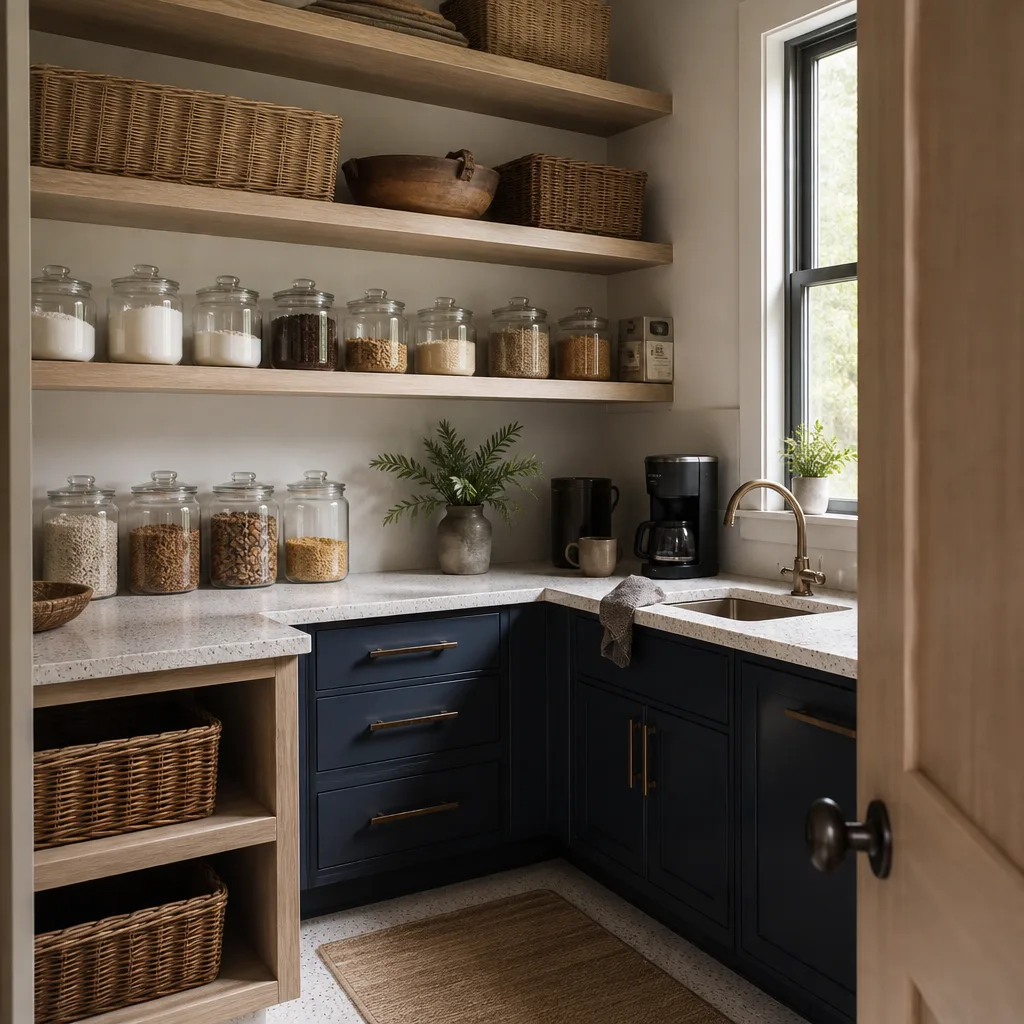
- Open shelving installation. Skill level: intermediate. You’re anchoring into studs, and in older Sunrise Manor homes (many built before 1990) you’ll find drywall over plaster or inconsistent stud spacing. A $40 stud finder is not optional here, and neither is a weight check before you load it with cast iron.
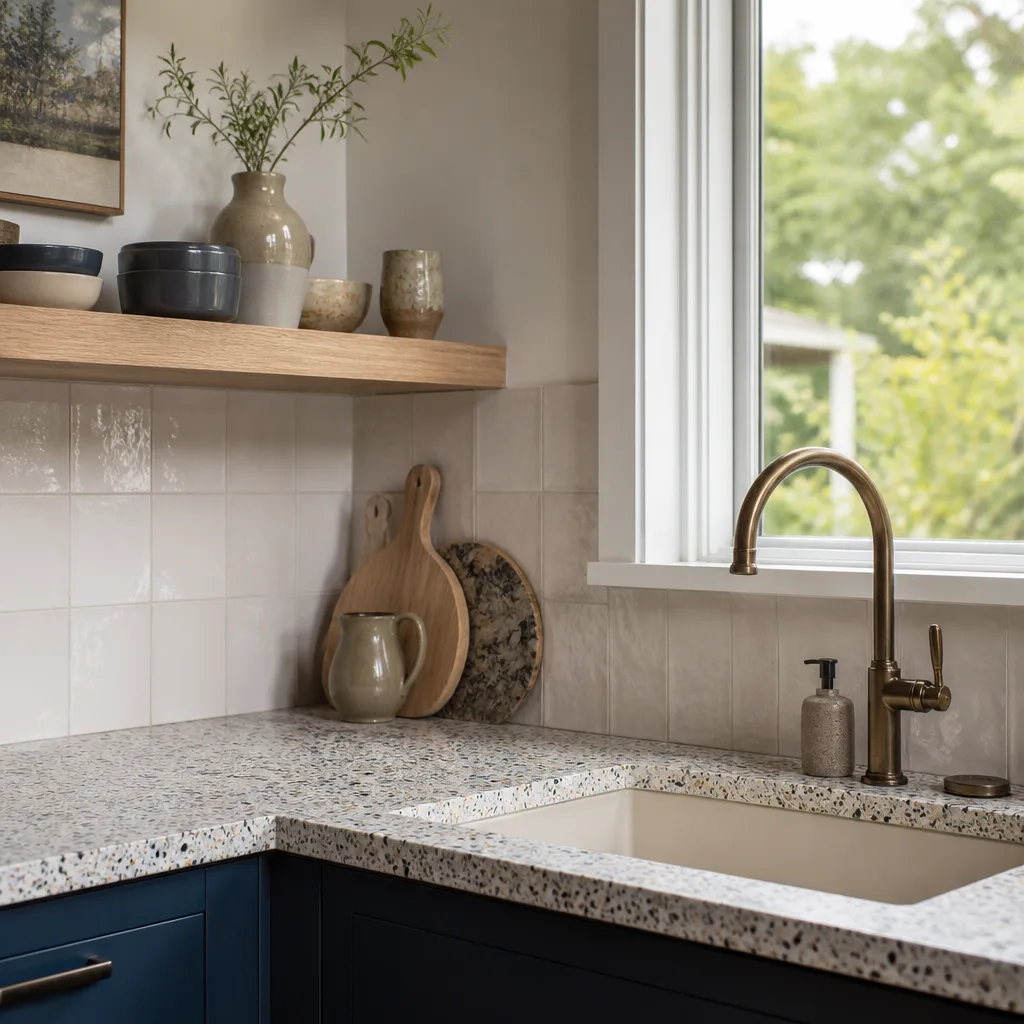
- Backsplash tile on existing substrate. Skill level: intermediate. This is the best-value DIY task in the whole kitchen, and the one where a first-timer can produce genuinely professional results. The catch is the substrate: if the existing wall behind the old backsplash is sound and flat, you can tile over it. If it’s crumbling drywall or you find water damage, stop and call someone. Budget $600-$1,500 in materials for a typical 20-30 square foot backsplash, versus $2,500-$5,000 installed. Buy a wet saw (around $150-$300) rather than renting three times, and account for the learning curve on your first ten cuts.
Notice what these have in common: none of them touch a utility, none require a permit, and all are reversible if you get it wrong. That’s the pattern to look for in your own decision-making. If your kitchen is one of the older Sunrise Manor homes with original 1980s cabinetry, our Mason Remodeling Sunrise Manor home page covers how finish updates fit into a broader refresh.
Where DIY Stops Protecting You
Every trade below has a real failure mode that isn’t “it looks bad.” It’s “it kills someone, floods the house, or voids your insurance,” and those are the four categories where we’ve seen homeowners take on risk they didn’t fully understand.
Gas line work. Natural gas leaks are invisible and odorless until the additive (mercaptan) concentrates enough for a nose to catch it. A mis-torqued flare fitting or an unsealed thread is a slow leak that turns into a fire or carbon monoxide problem months later. Nevada requires licensed gas work and inspections, and no homeowner insurance policy will cover a fire traced to unpermitted gas work. This is the single hardest “never” in the guide.
Electrical panel changes and new circuits. A kitchen remodel almost always adds circuits: a dedicated line for a microwave, a GFCI-protected counter circuit, more amperage for a range. Panel work and new circuits require a licensed electrician and inspection. The failure mode is an overloaded circuit or a mis-bonded neutral that passes a handyman test but trips an inspector’s meter, and worse, a fire inside a wall. When we coordinate a kitchen project, this is the first trade we bring in because it affects everything downstream.
Structural wall removal. Removing a wall between kitchen and dining room is the most-requested change we get in Sunrise Manor, and the most dangerous to do without engineering. Many of those walls are load-bearing, and the substitute beam has to be sized by a structural engineer, not by the lumber yard’s recommendation. An undersized header sags the floor above and can crack the slab. The fix is $8,000-$15,000 once you’ve discovered it, versus $1,500-$3,000 for a verified beam at the start.
Plumbing drain reconfiguration. Moving a sink under a window or relocating a dishwasher changes drain slope, venting, and trap geometry. Get the slope wrong by half an inch over six feet and you get slow drains that smell, then backups into the wall. In Sunrise Manor’s older housing stock, drain lines are often original cast iron, which complicates any change and requires a licensed plumber.
If your project is touching any of the four, that’s when it stops being a DIY decision. Our general contractor in Sunrise Manor service exists precisely because these trades need to be sequenced, permitted, and inspected by licensed people who do it every week.
The Hybrid Model: Acting as Your Own Project Coordinator
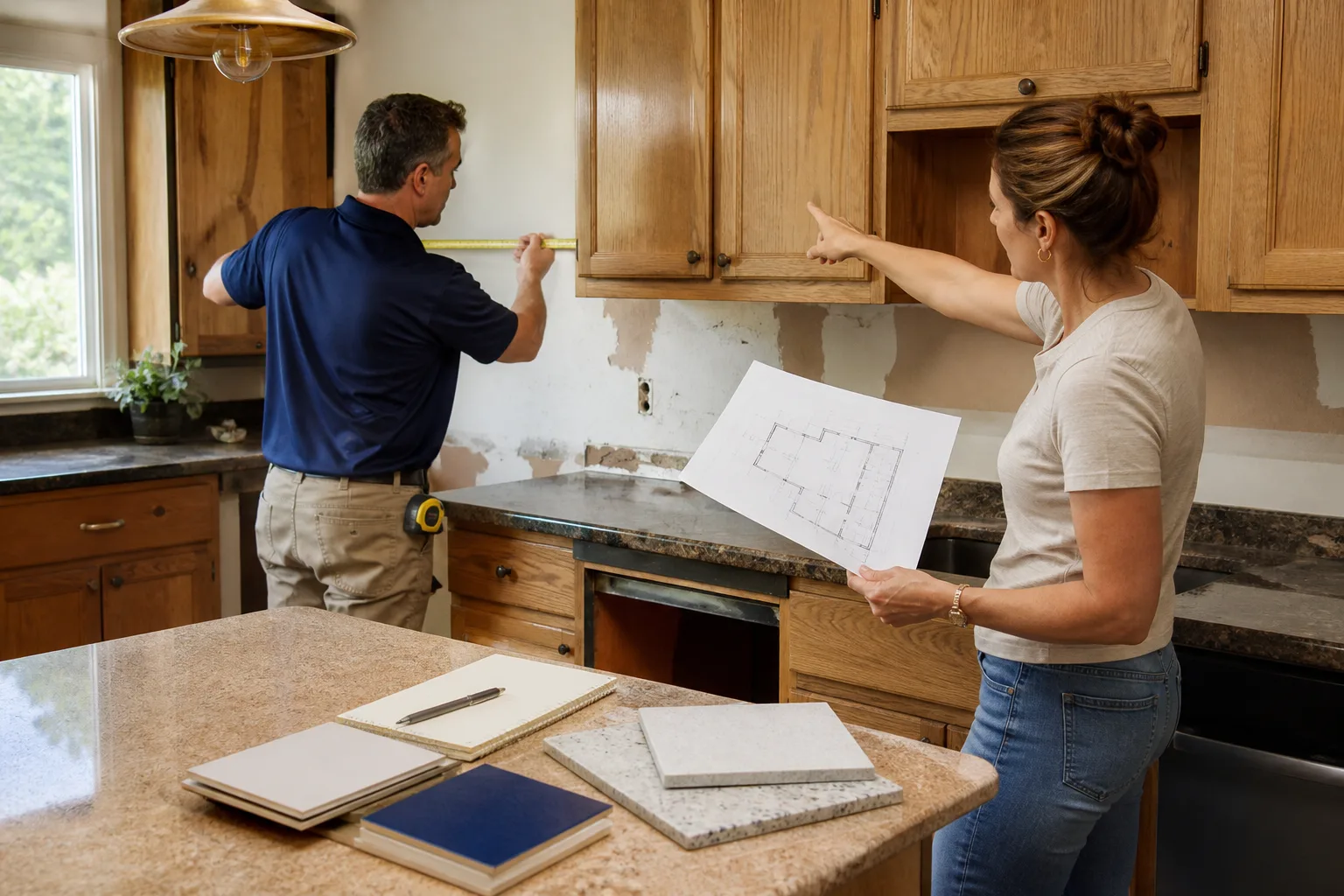
You don’t have to choose between “do everything” and “hire a general contractor.” There’s a middle path that saves real money and stays legal: you act as your own coordinator, hiring licensed trades for each discipline and handling the finish work yourself. It’s more work for you, and it’s a legitimate way to run a Sunrise Manor kitchen remodel on a tighter budget.
Here’s how the hybrid model runs in practice, as a numbered sequence:
- Get the plan and the permits first. Hire a designer (or use your contractor’s design help) to finalize layout, then pull owner-builder permits for the work you’ll coordinate. Nevada allows this for your primary residence; you’ll need to sign as owner-builder and be present at inspections.
- Hire licensed electrician, plumber, and HVAC subs for rough-in. Get three quotes per trade, verify each license number on the state contractor board’s website, and confirm they’ll pull their own permits or work under yours. Schedule them in sequence: electrical first (because it affects cabinet layout), then plumbing, then any structural work.
- Pass rough-in inspections before drywall goes up. This is the step homeowners skip, and it’s the one that causes the most expensive rework. The inspector needs to see the wiring and pipes before they’re covered.
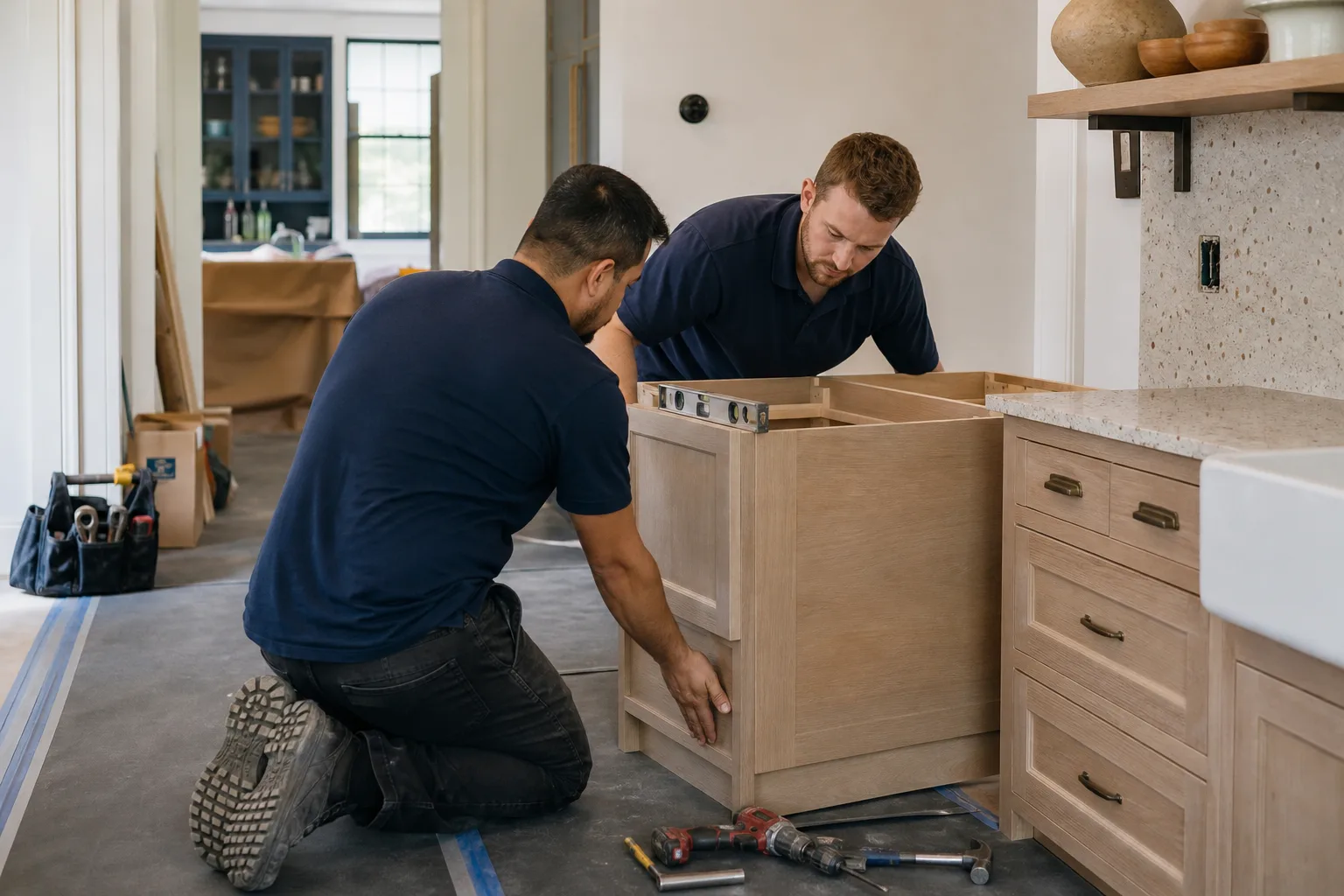
- Hire out drywall and cabinetry installation. These are the two tasks where first-timers most often lose their savings to redo. Drywall finishing is a craft you can’t learn from a video in a week, and a mis-hung cabinet set means the countertop template won’t fit.
- Handle finish work yourself: paint, backsplash, hardware, shelving. This is where your hours actually pay you back.
- Hire licensed trades for countertop template and installation, and plumbing/electrical final connections. Countertop fabrication has to be done by a fabricator regardless; final electrical and plumbing connections require licensed work to be inspected.
Budget 15-25 extra hours of your time over six to eight weeks for coordination. If that sounds like a good trade for the $8,000-$15,000 you’ll typically save versus a full-service general contractor, the hybrid model is worth considering. If it sounds exhausting, the full-service route is a reasonable choice. Both are legal. Both get a kitchen done. The hybrid just costs your time instead of your money.
The Real Cost Comparison: Materials vs. Full Contractor
Most DIY cost comparisons fail because they compare materials against contractor fees and stop there. That’s not the honest math. Here’s what a full-service kitchen remodel versus a hybrid DIY approach actually costs on a typical Sunrise Manor kitchen (roughly 150 square feet, cabinets and countertop replaced, layout kept):
- Full-service contractor: $38,000-$65,000 total, including design, permits, all trades, materials, project management, and warranty. Our kitchen remodeling in Sunrise Manor page breaks down the ranges by scope.
- Hybrid (you coordinate, pro trades, DIY finishes): $28,000-$48,000, including subcontracted trades, permits pulled as owner-builder, and materials. Your time: 120-200 hours over the project.
- Mostly DIY (you do all finishes, land subs for the four dangerous trades): $26,000-$44,000. Still requires licensed subs for electrical, plumbing, gas, and structural.
- Fully DIY (illegal or negligent on the trades): $22,000-$38,000 on paper, plus permit violations, uninsured exposure, resale disclosure problems, and redo risk. Not a real savings option.
Now layer in the costs most comparisons miss:
- Permit fees: $400-$1,800 in the Sunrise Manor area for a kitchen remodel, depending on scope. If you’re DIY-coordinating, you’ll pay these directly.
- Tool costs: $300-$900 for a first-time DIYer buying a wet saw, tile tools, jigs, and decent brushes and rollers. Tools survive the project; treat them as a one-time buy.
- Redo risk: budget 5-15% of your finish-work materials for the first-timer’s redo on tile and paint. That’s honest and normal.
- Time cost: at an honest $40/hour for skilled homeowner time, 150 hours is $6,000. If your time isn’t worth that, hire out.
Here’s what the numbers actually say: a hybrid approach that pairs licensed subs with your finish-work labor saves about $10,000-$17,000 versus full-service, which is real money. What it does not do is make a $40,000 kitchen happen for $15,000. The materials alone on a full cabinet and countertop replacement would eat that budget in the first week. Any quote that promises that math is missing the trades, the permits, or both.
Permits, Inspections, and the Resale Paper Trail
Permits are the boring part of this guide and the part you’ll care about most in five years. A Sunrise Manor kitchen remodel that moves electrical, plumbing, or structural work needs a permit, and the permit is what ties the work to an inspection record that follows the house. At resale, a buyer’s agent pulls the permit history. An unpermitted remodel shows up as a gap in the record, and the negotiation turns into a credit or a walk.
What to know about permits in this market:
- Cosmetic work (paint, backsplash, hardware) typically doesn’t require a permit. Confirm with the local building department on any gray-zone task.
- Electrical, plumbing, gas, and structural always require one. No exceptions, whether you’re doing the work or hiring it out.
- Owner-builder permits are real and legal for DIY on your primary residence. You sign as the owner, you’re present at inspections, and you’re on the hook for corrections.
- Final inspection closes the project. Skipping it leaves the permit open, which flags in title searches the same way an unpermitted project does.
If permits and inspection coordination aren’t a project you want to run, that’s one of the strongest reasons to hire a general contractor. Our bathroom remodeling in Sunrise Manor page shows the same permit-and-inspection logic applied to a smaller room, and it’s a good primer if you’re comparing scope. When you work with Mason Remodeling Sunrise Manor, permits are pulled and inspections passed as standard, not as an add-on.
Common Mistakes to Avoid
- Removing a wall “just to see what’s inside.” If it’s structural, opening it up turns a $1,500 engineering question into a $10,000 repair. Get the structural line checked before demo day, not after.
- Moving an outlet two feet without a permit. Feels trivial, triggers the same permit and inspection requirement as a full circuit. In Sunrise Manor, we’ve seen buyers walk over exactly this.
- Buying cabinet stock before final layout. Cabinet dimensions dictate the countertop template. A layout change after cabinets arrive means return shipping and a two-week delay.
- Skipping the rough-in inspection to keep the schedule moving. The inspector needs to see wiring and plumbing before drywall goes up. Every Sunrise Manor homeowner who skipped this paid for it in a rework.
- Doing gas work yourself. No insurance policy covers a fire from unpermitted gas work, and no amount of savings is worth the safety exposure for your family.
- Under-budgeting the redo. First-timer tile work has a learning curve. Buying 15% extra material and planning for one redo is the difference between a good project and a stressful one.
- Not getting a written price before you start. “It’ll be around forty” on a verbal quote is the single most common reason budgets blow up. Get it in writing, with line items, before work begins.
When to Call a Professional
Call a professional when your project touches any of the four hard lines: gas, electrical circuits or panel, structural wall removal, or plumbing drain reconfiguration. Call when your Sunrise Manor home’s age is a question mark – 1950s through 1980s housing stock here often has original cast iron drains, aluminum wiring, or drywall over plaster that changes every task’s complexity. Call when your timeline is tight and coordination of multiple licensed trades would eat more of your time than you have.
And call for a second opinion before you commit to a full DIY plan. A local contractor can tell you in 20 minutes what’s load-bearing, what’s got unpermitted work behind it, and what the permit path looks like, all before you tear anything out. Mason Remodeling Sunrise Manor offers free estimates in Sunrise Manor, a written price before any work begins, and a 365-Day Done Right Promise on every project. Call (855) 606-6122 to schedule yours. A live person answers, 24 hours a day, every day of the year.
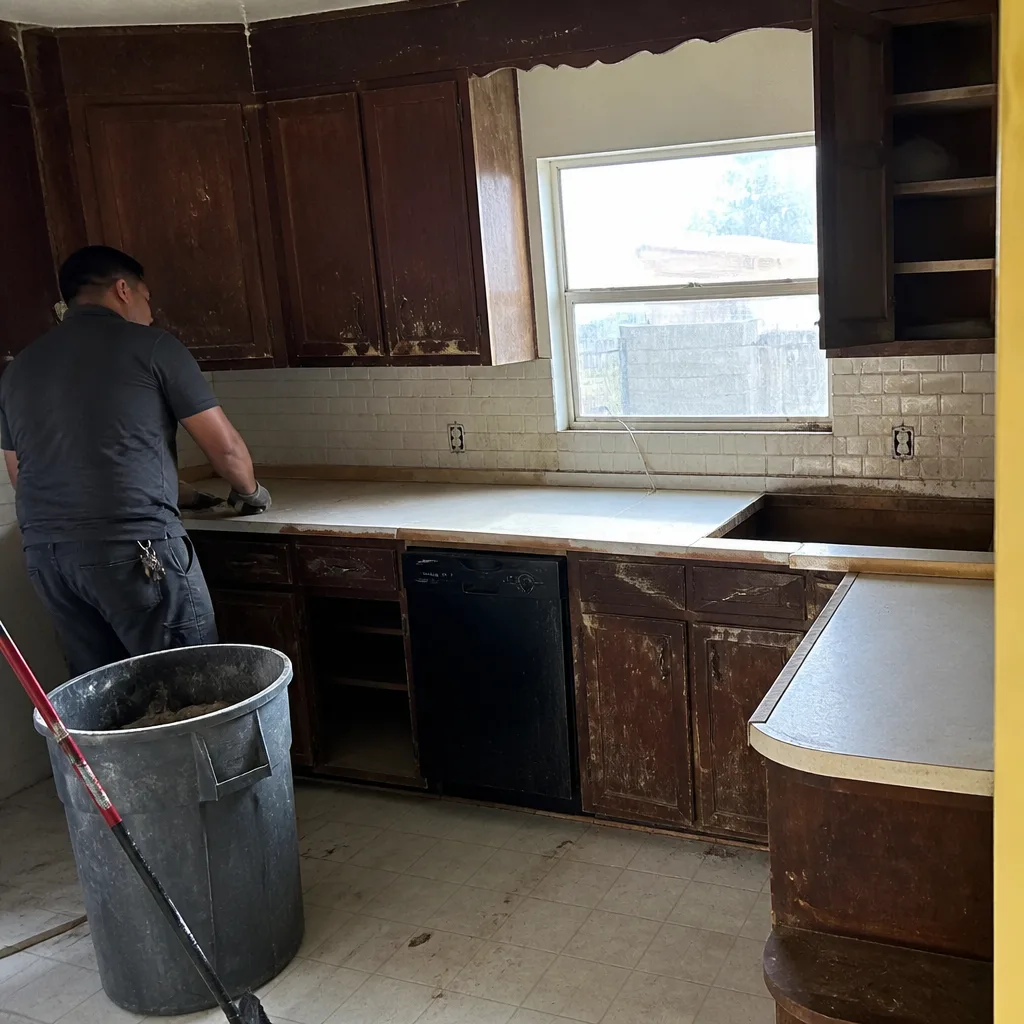
See the difference
 Before
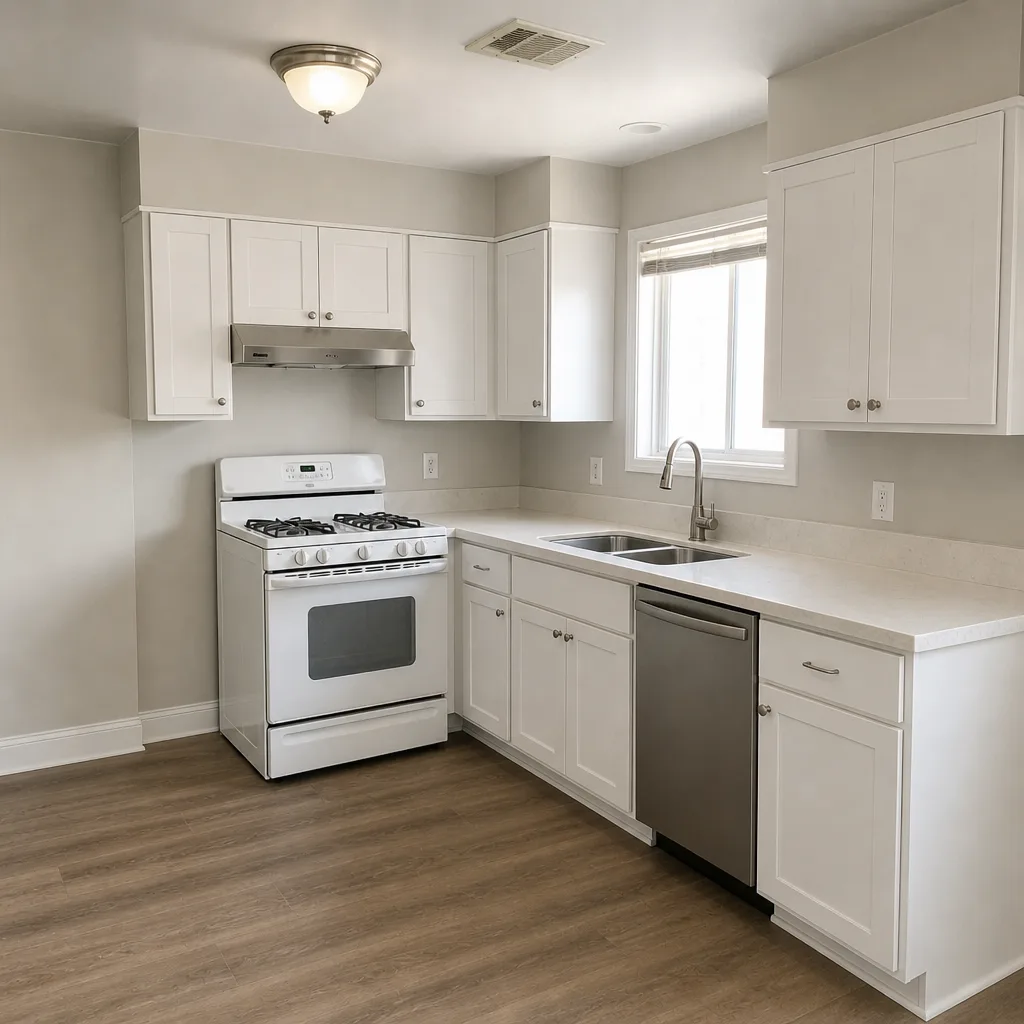 After
 Before
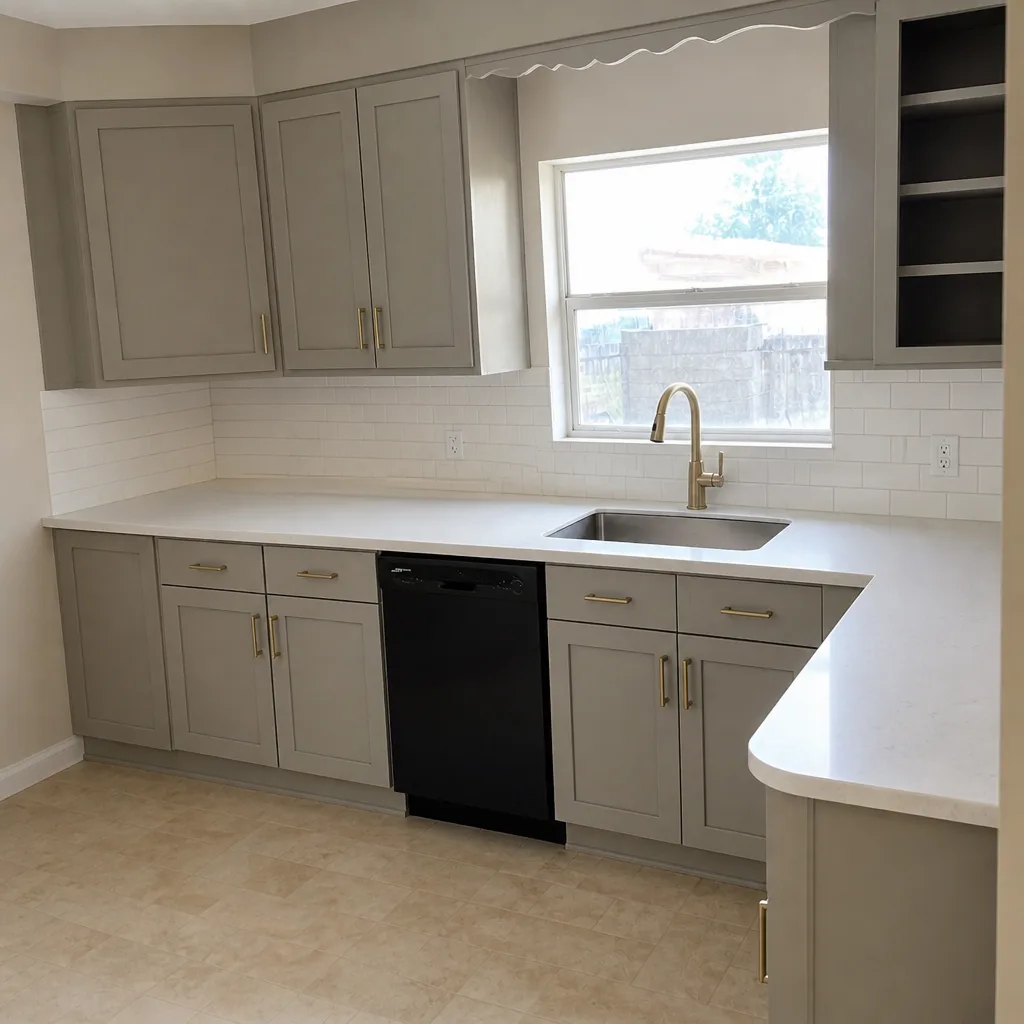 After
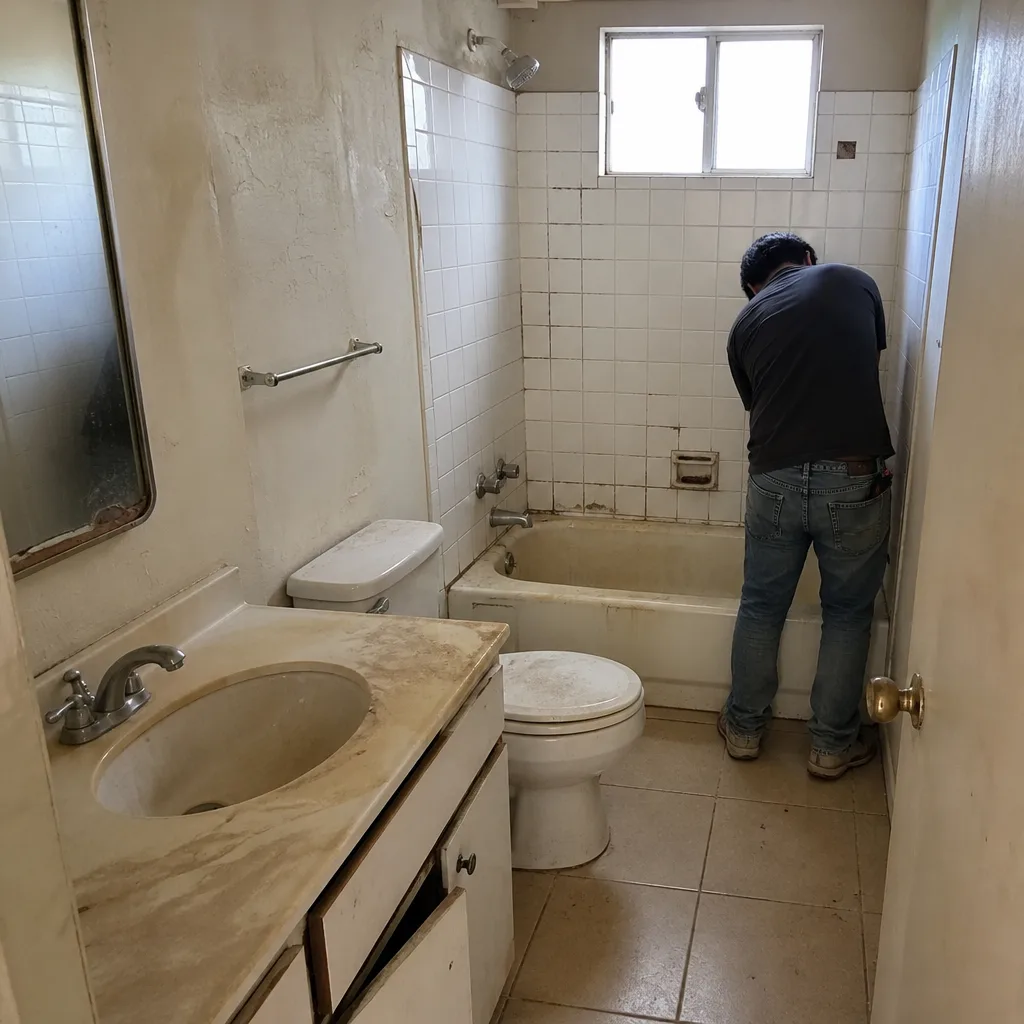 Before
 After
Frequently Asked Questions
Partly. Nevada allows homeowners to do cosmetic and finish work on their primary residence under owner-builder rules, but work requiring a building permit (electrical, gas, plumbing, structural) must be done by a licensed contractor. You may pull owner-builder permits for permitted work on your own home, but you’re responsible for passing inspections and corrections. Call (855) 606-6122 for a free estimate on anything in the licensed-only category.
Roughly $10,000-$17,000 on a typical Sunrise Manor kitchen, comparing a hybrid approach (licensed subs for trades, DIY for paint, backsplash, hardware, and shelving) against a full-service remodel. The savings come entirely from your labor hours on finish work, not from skipping the trades or permits. Call (855) 606-6122 to get a written line-item breakdown of what a full-service kitchen would cost so you can compare honestly.
Usually no, if you’re tiling over an existing sound substrate with no electrical or plumbing relocation involved. Cosmetic tile work typically falls outside permit requirements. Confirm with the local building department before you start, and call (855) 606-6122 if your substrate turns out to be damaged or you’re relocating an outlet as part of the project.
Gas line work, electrical panel changes, new circuits, and structural wall removal are the four that most often void coverage when done unpermitted or unlicensed, because insurers trace fires, floods, and collapses back to the work. Even if the failure is years later, the policy exclusion applies to the unpermitted work. Call (855) 606-6122 for a free estimate on any of these before you touch them.
Six to nine weeks is typical, versus four to six weeks for a full-service remodel where the contractor sequences the trades. The extra two to three weeks come from coordination overhead: scheduling subs, waiting on inspections, and your own finish-work hours. Call (855) 606-6122 to talk through a realistic timeline for your specific kitchen.
Yes. Nevada’s residential disclosure form requires you to disclose alterations and repairs made without permits, and a buyer’s inspection often finds them anyway. Unpermitted work typically reduces your negotiating position by more than the DIY savings. Call (855) 606-6122 if you inherited unpermitted work and want to know what permits would correct it.
The Bottom Line
DIY kitchen remodeling saves real money in a narrow band: paint, hardware, backsplash tile over sound substrate, and open shelving. It creates real liability in a wider band: gas, electrical, structural, and plumbing – all four illegal to do yourself in Nevada under the license and permit rules, and all four uninsurable if done wrong. The hybrid approach – licensed subs on the trades, your finish work on the cosmetics – is the honest middle path, worth $10,000-$17,000 versus full-service on a typical Sunrise Manor kitchen. Anything promising a $40,000 kitchen for $15,000 is missing the trades, the permits, or both.
Call (855) 606-6122 for a free estimate. We’ll pull permits and pass inspections on the licensed work, deliver a written price before any tool is unpacked, and handle the parts that keep you safe. A live person answers every call, day or night.
Written by the team at Mason Remodeling Sunrise Manor.