Last updated November 17, 2026





Free written scope consultation - allowances, timeline, and change-order rules on paper before a single trade is scheduled
DIY vs Professional Bathroom Remodeling: What’s Safe to Do Yourself
Painting a bathroom yourself saves money. Installing your own shower pan liner in a Clark County home without a permit can void your homeowner’s insurance coverage for the water damage that follows when it fails. That gap between the cheap task and the expensive mistake is where most DIY guides fall silent, and it’s exactly where this one starts. We’ve walked into Sunrise Manor bathrooms where a homeowner’s weekend tile job had been quietly leaking into the subfloor for two years before a buyer’s inspector found it. This guide draws the line precisely: which bathroom tasks you can safely self-perform, which ones Nevada law says belong to a licensed contractor, and which ones sit inside a waterproofed assembly where a single error stays invisible until it becomes structural.
Quick Answer
Safe DIY bathroom work is cosmetic and reversible: painting, swapping fixtures, installing accessories, and light demolition. Work that requires a permit, touches plumbing or electrical systems, or sits inside a waterproofing assembly should go to a licensed professional. In Nevada, a homeowner may self-permit work on their own primary residence, but that does not make every task safe or insurable to do alone, and a failed waterproof layer is the single most expensive misjudgment in the room.
Styles & brands we work with
- Kitchen remodeling
- Bathroom remodeling
- Home additions & ADU
- Roofing
- Windows & doors
- Driveway & pavers
- Fence
Table of Contents
- What Nevada Law Says About DIY Bathroom Work
- The Three Questions That Decide Every Task
- The Waterproofing Assembly Problem
- What’s Genuinely Safe to Do Yourself
- What Belongs to a Licensed Professional
- The Real Cost Comparison
- What a Professional Crew Brings Beyond Skill
- The Honest Hybrid Approach
What Nevada Law Says About DIY Bathroom Work
Nevada Revised Statutes govern contractor licensing, and the rules matter before you pick up a pry bar. Under NRS 624, work performed for compensation on someone else’s property must be done by a licensed contractor. A homeowner working on their own primary residence is generally allowed to pull permits and self-perform, which is where a lot of DIY confidence comes from. But self-permitting is not the same as self-certifying, and the inspection still has to pass.
Here’s how bathroom tasks split under Nevada rules:
- Plumbing rough-in and relocation – moving a drain, adding a shower valve, relocating a toilet flange. Requires a permit and inspection. Licensed plumber territory.
- Electrical work – new circuits, GFCI outlets in wet zones, exhaust fan wiring, in-floor heat. Requires a permit. Licensed electrician territory.
- Structural changes – removing a wall, enlarging a window, sistering joists for a heavier tub. Requires engineering and a permit.
- Waterproofing and tile – often no separate permit, which is exactly why it’s the most dangerous category. More on that below.
- Cosmetic and finish work – paint, caulk, accessories, mirror hanging, swapping a faucet on existing supply lines. Generally permit-free and homeowner-legal.
Clark County building officials care about one thing above all in a bathroom: that the wet assembly holds. A permit that gets signed off doesn’t guarantee the membrane was installed correctly, and that distinction is what separates a permit from a warranty. If your renovation falls outside the DIY scope, our General Contractor in Sunrise Manor page walks through how we sequence permitted work.
The Three Questions That Decide Every Task
Forget the “am I handy enough” question. It’s the wrong filter, and it leads homeowners into the wrong work. Ask these three instead, in order:
- Does this task require a permit? If yes, a licensed trade is involved and self-performing carries real liability. Nevada allows the homeowner to self-permit their own home, but an unpermitted change is a disclosure problem at sale and an insurance problem if something fails.
- Does this task touch a licensed-trade system? Plumbing, gas, and electrical are regulated for a reason. One wrong connection behind a wall is not a cosmetic error.
- Does this task sit inside a waterproofed assembly? If a failure would be invisible and take months or years to surface, professional execution is the only safe path. Waterproofing fails silently, tiles don’t.
Three “no” answers and you’re clear to DIY. Any “yes” and the honest calculation changes, even if your skills are strong. That’s the whole framework, and it works on a Sunrise Manor 1970s ranch house the same as a newer build.
The Waterproofing Assembly Problem
Here’s what most DIY guides won’t tell you: tile and fixtures are DIY-adjacent, but the membrane beneath them is not. A shower is a system, not a surface. Underneath the tile you see, there’s a water-in-management layer – a bonded sheet membrane like a Schluter system, a liquid-applied coating, or a traditional mortar bed with a pan liner – and it has to slope correctly to the drain, overlap at every seam, and stop water at the curb and the wall transitions. Get any of that wrong and the shower still looks perfect from the doorway.
What goes wrong when that line is crossed is predictable. Water wicks into the subfloor and the framing. The tile stays intact, the grout looks fine, and nothing shows from above. Then, months later, a soft spot appears near the drain, or the toilet starts rocking because the floor beneath it has swelled, or a home inspector’s moisture meter lights up during a sale. In our experience across Sunrise Manor, the failure pattern most often shows up as a slow leak discovered during a pre-listing inspection, not as a sudden break. By then the correction involves removing the tile, the backer, and often a section of subfloor.
There’s a second reason the assembly matters: insurance. A homeowner-installed shower pan liner that fails and causes water damage can be excluded from a claim if the insurer determines the work was improperly performed or unpermitted. That’s the hook at the top of this guide, and it’s the reason we don’t soften it. A waterproofing error is not a cosmetic mistake; it’s a coverage decision.
What’s Genuinely Safe to Do Yourself
Plenty of the room is fair game, and we’re the first to say so. These tasks save real money and carry almost no downside if you’re careful:
- Painting. Walls, ceiling, trim. Prep and a good primer do most of the work. This is the single best DIY value in the room.
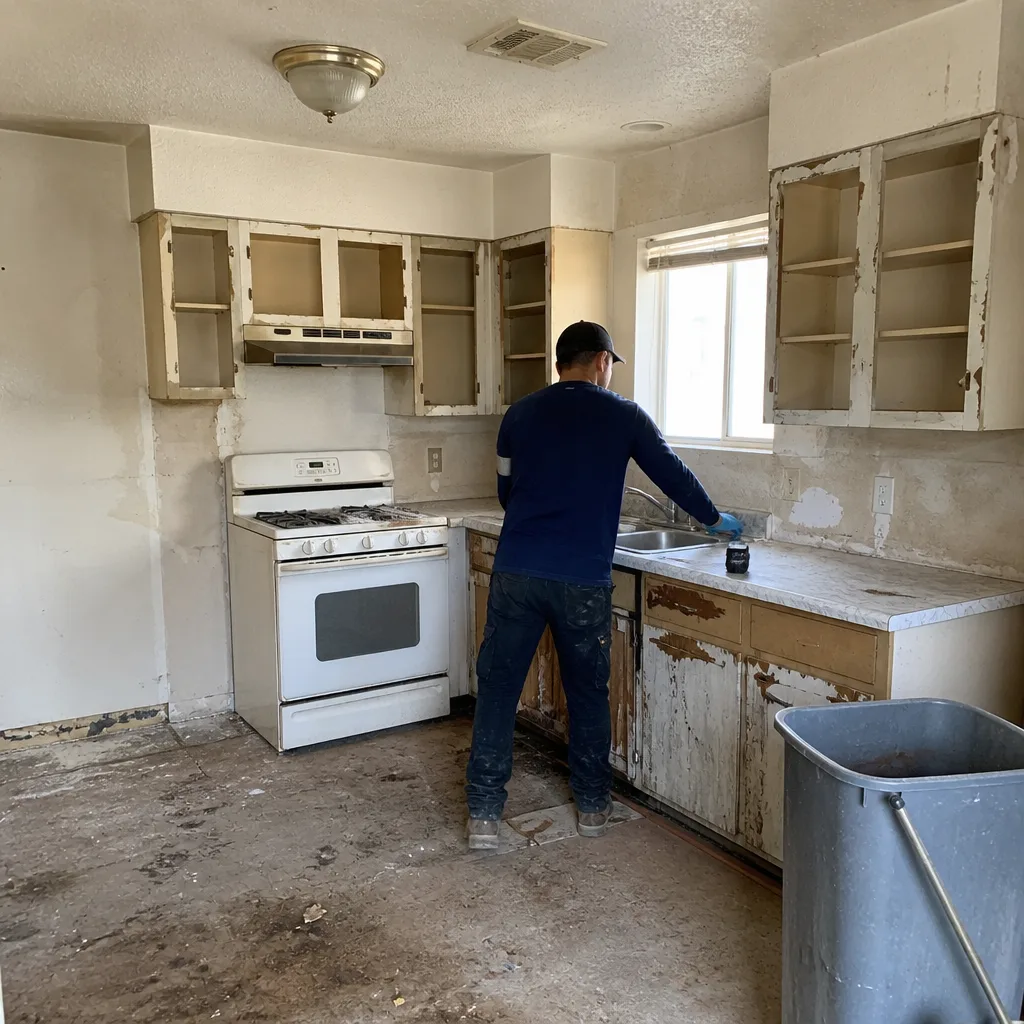
- Demolition. Tearing out old tile, cabinets, and fixtures is satisfying and low-risk, provided you shut off water and power first and know what’s behind the wall.
- Swapping a faucet on existing supply lines. If the geometry is unchanged, this is a homeowner-level task. A new valve involves the wall – that’s different.
- Installing a toilet on an existing flange. Straightforward, provided the flange is sound and the wax ring seats properly.
- Accessory install. Towel bars, mirrors, hooks, showerhead swaps, a new toilet paper holder.
- Caulk and grout refresh. A careful re-caulk of the tub surround buys a few years of clean appearance. It is not a substitute for a failing membrane, and we’ve seen it used that way more than once.
- Cosmetic lighting swaps. Replacing a fixture on the same circuit, with the breaker off, is within homeowner scope in most cases.
Doing these yourself in a Sunrise Manor home is a smart way to redirect budget toward the parts of the job that actually need a professional.
What Belongs to a Licensed Professional
These tasks carry real risk, and here we’ll be direct – not because we want the job, but because the wrong outcome is expensive enough to dwarf any savings:
- Shower pan and waterproofing. Bonded membranes, sloping mud beds, curbs, and wall transitions. This is the expensive category if it fails silently.
- Plumbing relocation and valve replacement. Moving a drain, swapping a shower valve, adding a second sink. Permit and licensed plumber required.
- Electrical in wet zones. GFCI circuits, exhaust fans, heated floors. Permit and licensed electrician required. Bathroom electrical is one of the highest-risk areas in the house.
- Structural changes. Wall removal, enlarged openings, subfloor repair. Engineering and permit required, and any subfloor replacement discovered mid-project has to be handled correctly or the new assembly inherits the old problem.
- Tub-to-shower conversions. These almost always touch drain location and waterproofing, which means they’re never a solo DIY task.
- Tile over an unproven substrate. Setting tile on the wrong backer or over an untested subfloor is a fast track to cracked grout and poped tiles at the first temperature swing.
For a fair picture of how the full scope fits together – including what licensed trades in Sunrise Manor actually coordinate on a real renovation – see our Bathroom Remodeling in Sunrise Manor overview. And if the work involves a kitchen at the same time, Kitchen Remodeling in Sunrise Manor covers the parallel decisions.
The Real Cost Comparison
Here’s the honest math people miss. DIY saves on labor up front, but the failure cost of a waterproofing error is what actually determines whether the swap made sense. Real Sunrise Manor-area ranges, professionally installed, looked like this in recent projects:
| Task | Professional range | DIY-viable? |
|---|---|---|
| Full bathroom repaint | $400 – $900 | Yes – best DIY value |
| Demo (tile, vanity, fixtures) | $600 – $1,400 | Yes, with precautions |
| Faucet swap on existing supply | $150 – $350 | Yes |
| Toilet replacement on existing flange | $250 – $500 | Yes |
| Shower valve replacement (permit) | $450 – $900 | No – licensed plumber |
| Shower pan + waterproof membrane | $1,200 – $2,800 | No |
| Tub-to-shower conversion (full) | $6,000 – $14,000 | No |
| Full bathroom remodel | $14,000 – $28,000+ | No |
Now the failure cost. A failed shower pan discovered during a sale inspection in Sunrise Manor typically runs $3,500 – $8,000 to correct once you account for the removal of tile, backer, and affected subfloor – plus drywall, repainting, and any delay in the sale itself. If the leak reaches framing or triggers an insurance exclusion, it can climb past $12,000. That’s the number to keep in your head when you’re deciding whether a $1,200 waterproofing line is worth cutting.
We give an upfront written price on every project, in real dollar figures, so you can compare that number against the failure cost honestly rather than against a vague DIY estimate. That’s how self-qualification is supposed to work.
What a Professional Crew Brings Beyond Skill
Skill is the part most homeowners already understand. It’s the part they undervalue. A licensed crew in Sunrise Manor brings three things a solo DIYer cannot replicate, and all three matter:
- Verified worker identity. Every Mason Remodeling crew member is background-checked, identity-verified, and introduced by name and photo before the visit. They arrive in a clean marked uniform and show a photo ID badge at the door. That is The Threshold Standard, and it’s a named process, not a promise.
- Written pricing before work begins. A written price is delivered on every project before a single tool is unpacked. It is not an upgrade, a promotion, or a favor. That removes the surprise invoice and the verbal estimate that grows on the final bill.
- Licensed insurance and a written guarantee. The 365-Day Done Right Promise means if the work is not right within 365 days of completion, we make it right at no cost. A solo DIYer can’t offer that, and there’s no second visit to call on.
Material quality is the fourth, quieter advantage. Access to specification-grade products across cabinetry, surfaces, fixtures, and hardscaping – including outdoor lines like Unilock and Techo-Bloc for the patio the bathroom will eventually open onto – means the whole project holds together. We order from the same vetted suppliers on every job.
The Honest Hybrid Approach
Most homeowners we talk to in Sunrise Manor don’t want a fully DIY or fully professional project. They want a clear division of labor, with the low-risk tasks self-performed and the licensed ones handed off cleanly. That’s the approach we recommend when it fits the scope:
- DIY: demo and disposal. Strip the room down to the studs and haul the debris. Save the labor cost and hand the crew a clean slate.
- Pro: any plumbing or electrical rough-in. Permit pulled, inspection passed, licensed trade on the job.
- Pro: waterproofing and tile. This is the assembly problem – the part that fails silently. Don’t cross the line.
- DIY: painting and finish. Once the tile is in, you take back the cosmetic work with zero risk.
- DIY: accessories and styling. The last five percent makes the room. Do it yourself.
When that division works, you save real money and the parts that could hurt you are handled by people who are insured for them. Our Mason Remodeling Sunrise Manor home overview covers how we scope a project like this from the first call.
Common Mistakes to Avoid
- Tile over an untested substrate. In Sunrise Manor’s older homes, subfloor moisture is common. Tile set over a soft joist or damp underlayment cracks within a season, and by then the subfloor cost is back on the table.
- Skipping the permit and self-certifying. Nevada allows a homeowner to self-permit a primary residence, but it doesn’t turn an unpermitted change into a sellable one. It becomes a disclosure problem at sale.
- Assuming new caulk fixes a failing shower pan. Caulk buys appearance, not waterproofing. If the membrane is breached, caulk hides the evidence while the subfloor rots.
- Buying a heavy tub or stone slab without a joist check. A new soaking tub can be heavier than the old one. If the framing wasn’t checked, you find out when the floor flexes underfoot.
- Redoing electrical in a wet zone without GFCI. Bathroom receptacles near water need GFCI protection. Substituting a standard outlet to save a trip to the panel is a serious safety lapse.
- Mixing trades without a schedule. Plumbing rough-in, electrical rough-in, inspection, tile, then paint – the order matters. Get it out of sequence and you’ll redo work.
- Believing the DIY labor savings are free. Count the correction costs before you start. On any task that touches the waterproofing assembly, DIY has a real downside that often eats the savings.
See the difference
 Before
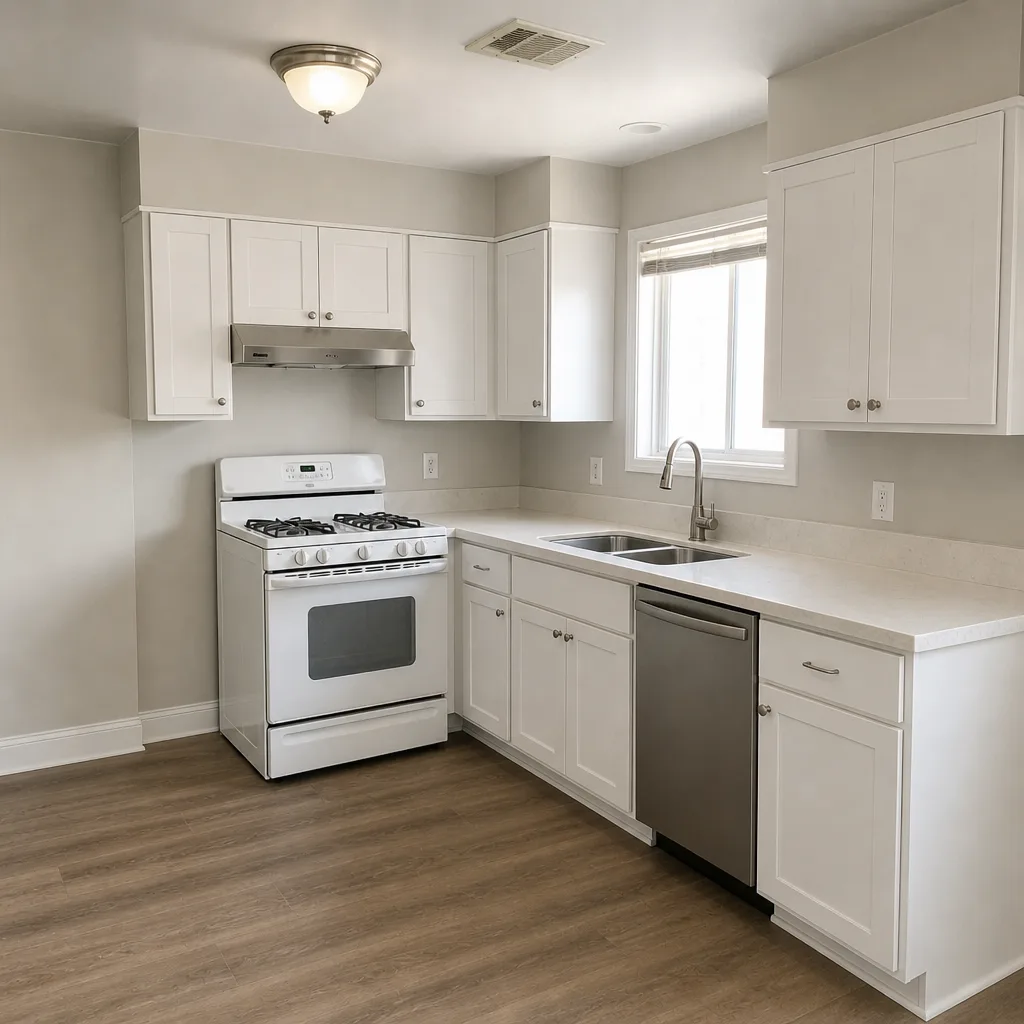 After
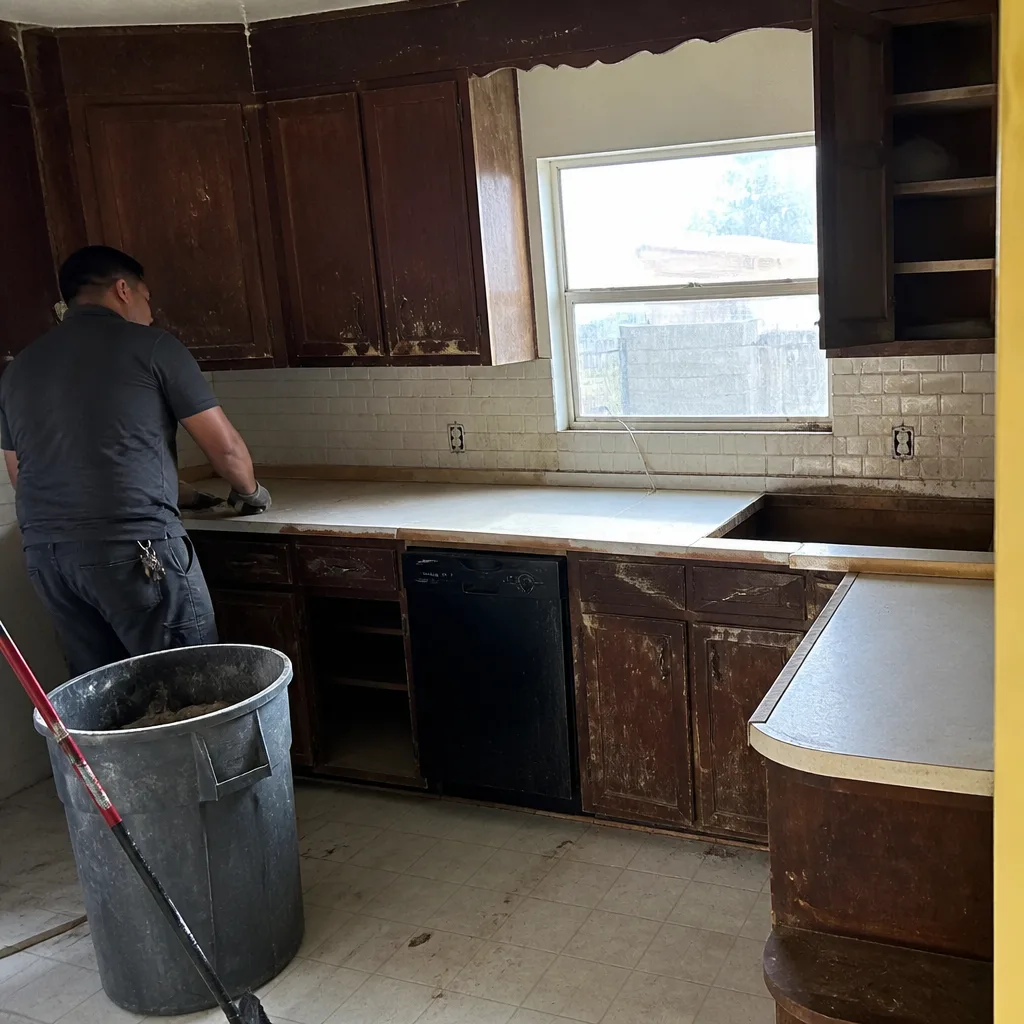 Before
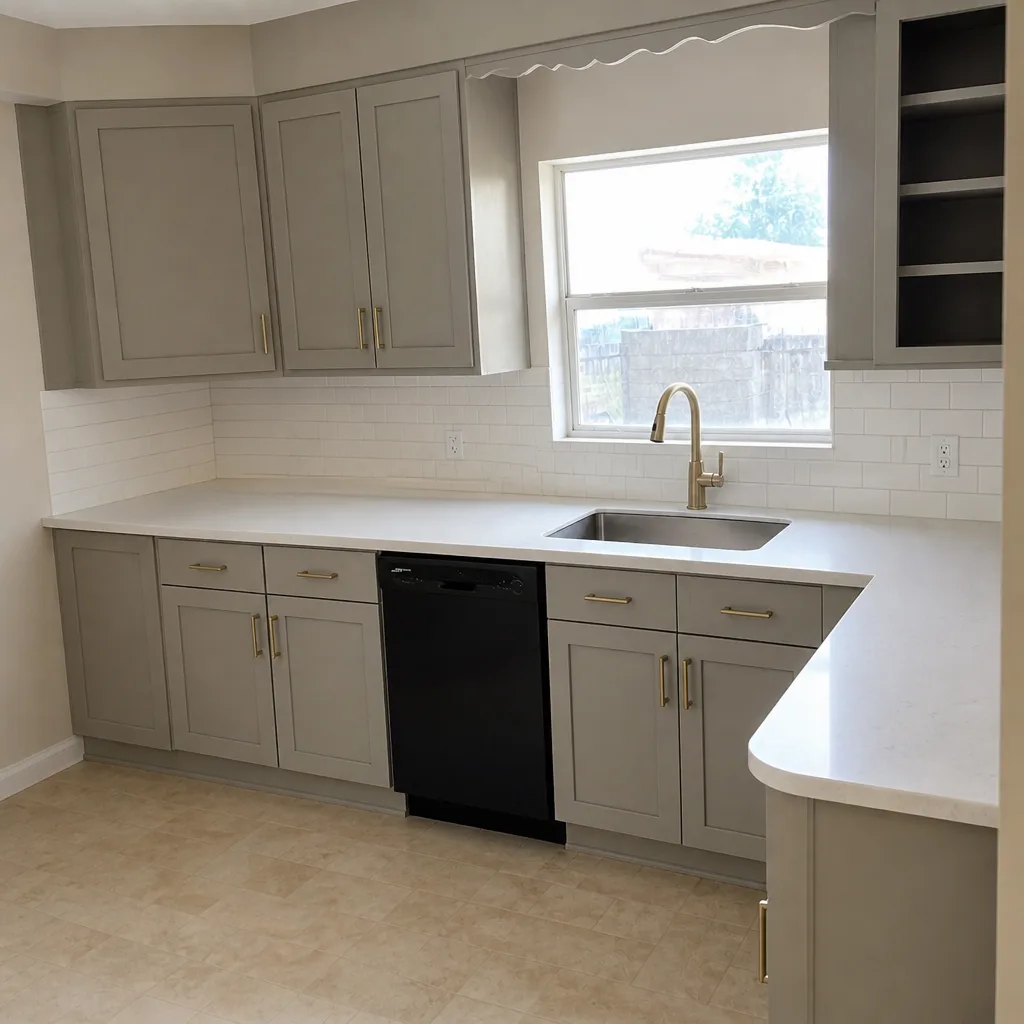 After
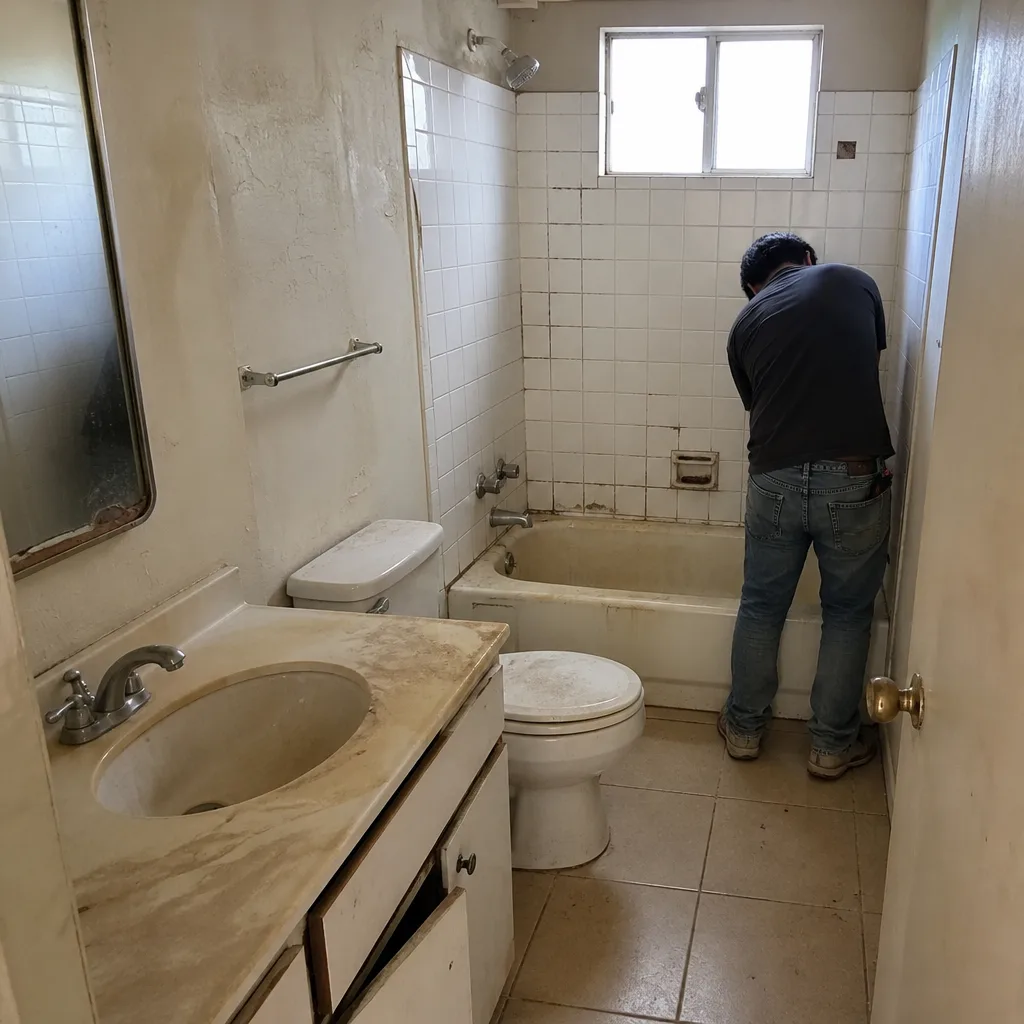 Before
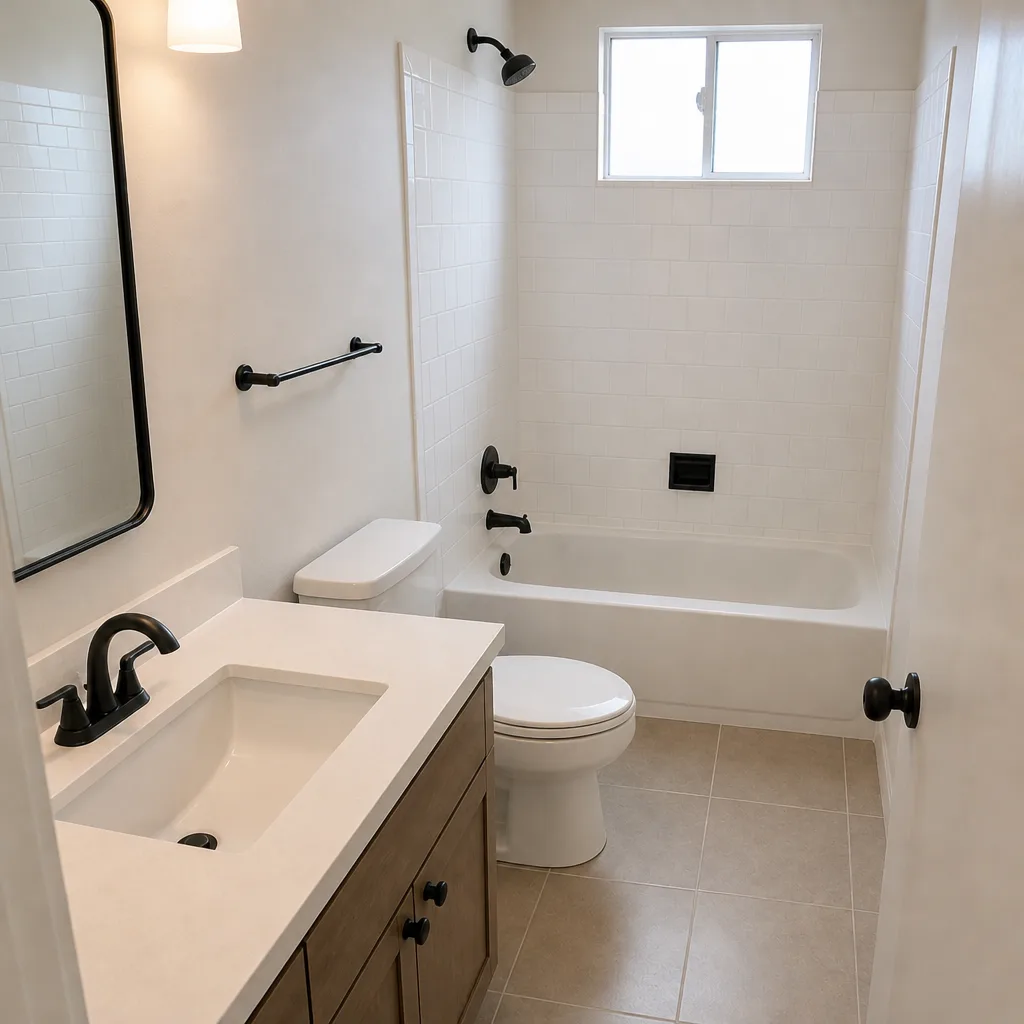 After
When to Call a Professional
Call a professional the moment a task touches a permit, a licensed trade, a waterproofing assembly, or a structural change. That covers shower valves, drain relocation, new circuits, tub-to-shower conversions, subfloor repair, and any full bathroom remodel. It also covers the situation where you start demolition and find damage behind the wall – what looked like a cosmetic job is now a repair with insurance implications. In those cases, a licensed, insured team is the only path that protects your home’s coverage and your resale. Mason Remodeling Sunrise Manor offers free estimates in Sunrise Manor – call (855) 606-6122. Every estimate comes with a written price before any work starts, and every project is covered by the 365-Day Done Right Promise.
Frequently Asked Questions
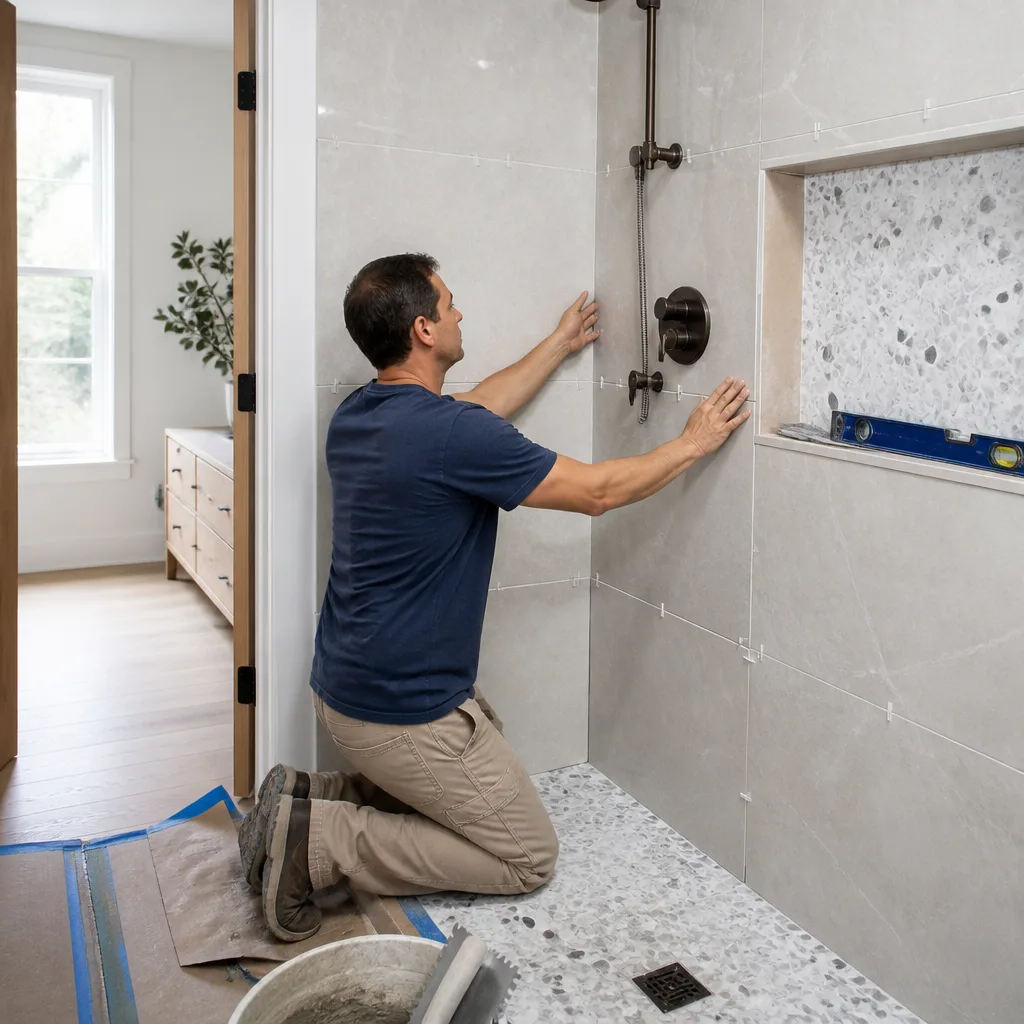
Yes, a Nevada homeowner can generally self-permit work on their own primary residence, but that does not exempt plumbing, electrical, or structural work from permit and inspection requirements. Work performed for someone else’s property or for compensation must be done by a licensed contractor under NRS 624. If you’re unsure whether a specific task qualifies, call us at (855) 606-6122 for a straight answer – estimates are free.
Installing a shower pan liner or waterproof membrane incorrectly and burying it under tile. The failure is invisible until the subfloor swells, the toilet rocks, or a sale inspection turns up moisture. It’s the single most expensive error in the room because correcting it means removing the tile and backer you just installed.
It can. Insurers may exclude water-damage claims tied to improperly performed or unpermitted work. A shower pan liner that fails and causes water damage is exactly the scenario where a claim gets denied after review. That risk is the reason the waterproofing layer is the clearest “professional only” line in this guide.
Yes. Demo and paint are the two highest-value DIY tasks in a bathroom, saving roughly $1,000 – $2,300 combined versus professional install. Both are low-risk if you shut off water and power before demolition. Redirect those savings toward the waterproofing and tile install and the budget goes furthest.
Professionally, a full bathroom remodel in Sunrise Manor typically runs $14,000 – $28,000+ depending on size, fixture grade, and how much plumbing is moving. A hybrid approach where you handle demo and paint can trim $1,000 – $2,300 from that figure. Call (855) 606-6122 for an exact written quote – estimates are free.
A permit means the work passed inspection by the county; a warranty means the installer is accountable for the result over time. A homeowner can self-permit and still have no one to call when something fails. A written guarantee like our 365-Day Done Right Promise covers 365 days from the completion date, with a free return visit if a repair or installation fails.
The Bottom Line
The right question isn’t whether you’re capable – it’s whether the task requires a permit, touches a licensed-trade system, or sits inside a waterproofed assembly. If it’s painting, demo, accessories, or a faucet swap on existing lines, DIY it and keep the savings. If it’s plumbing, electrical, structural, or the membrane beneath the tile, the failure cost is the number that matters, and it dwarfs the labor you’d save. A hybrid approach is honest and works. The line is real, and it’s worth respecting.
Ready to price the professional portion of your bathroom project? Call Mason Remodeling Sunrise Manor at (855) 606-6122 to schedule a free estimate. You’ll get a written price before any work starts – a live person answers every call, around the clock, every day. Every project comes with a written guarantee, and if a repair or installation fails, the return visit is free.
Written by the team at Mason Remodeling Sunrise Manor.