Last updated November 17, 2026







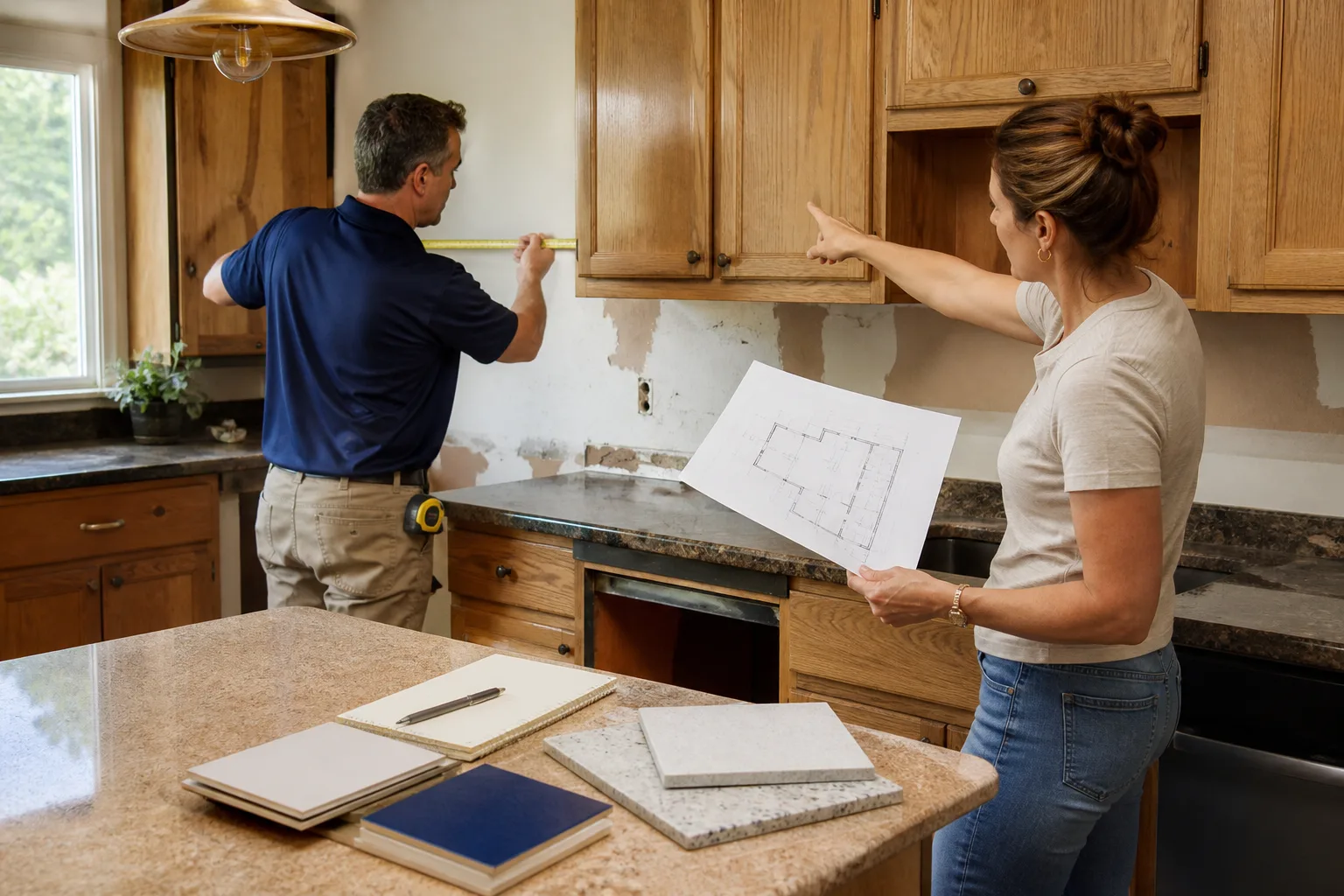
Free written scope consultation - allowances, timeline, and change-order rules on paper before a single trade is scheduled
Bathroom Remodeling Troubleshooting: Common Problems and How to Fix Them
A shower pan that leaks six months after a remodel almost never fails because of a bad product. It fails because a liner seam wasn’t inspected before the tile went over it, and that inspection window lasted exactly one afternoon. Once the thinset cured, the evidence was sealed behind a wall and under a floor. In our experience across Sunrise Manor, the same pattern repeats: the defect was visible for a few hours during construction, and nobody was looking at the right moment. This guide gives you that timeline. You’ll learn what to check at each phase, the five failures we see most in desert homes, how to document a problem for a warranty claim, and what a written guarantee should actually say.
Quick Answer
Most bathroom remodeling problems trace back to waterproofing, drainage, or ventilation rather than the tile or fixtures themselves. If water is getting out or staying in, the fix starts at the layer beneath the finish, not at the surface. Homeowners who inspect at rough-in, waterproofing, tile set, and fixture install stages catch roughly the same issues professionals do, if they know what to look for.
Styles & brands we work with
- Kitchen remodeling
- Bathroom remodeling
- Home additions & ADU
- Roofing
- Windows & doors
- Driveway & pavers
- Fence
Table of Contents
- The Four Inspection Windows Every Homeowner Should Know
- The Five Most Common Post-Remodel Failures in Desert Climates
- Cosmetic Settling vs. Structural Defects After the First Summer
- How to Document a Problem for a Warranty Claim
- What a Written Workmanship Guarantee Should Actually Say
- Why Waterproofing Failures Are the Most Expensive
- Exhaust Fan and Condensation Problems
- When to Stop Diagnosing and Call a Professional
The Four Inspection Windows Every Homeowner Should Know
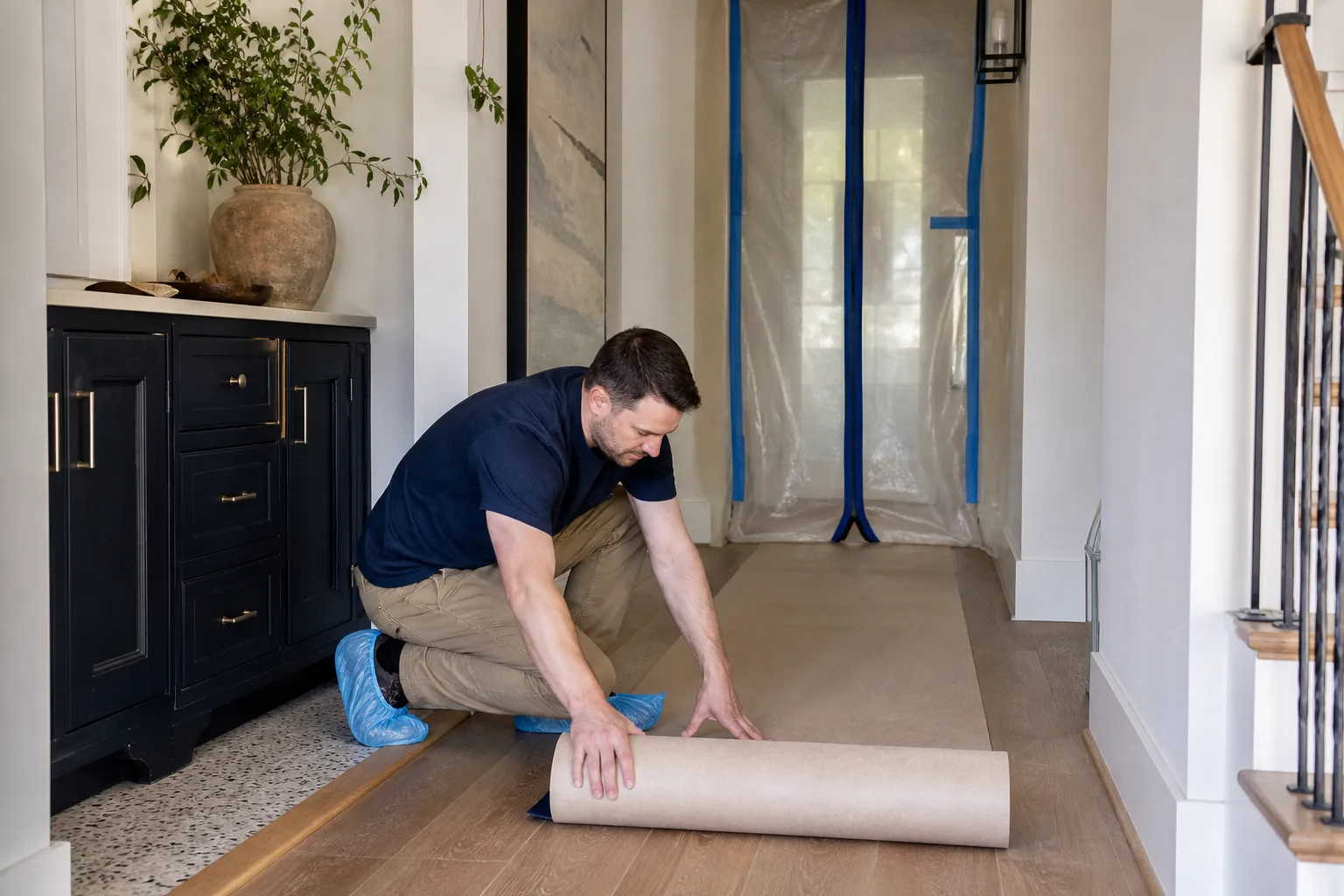
Construction moves fast, and the most important stages get covered up within hours. Here’s what you can reasonably verify yourself, and what to ask your contractor to photograph before it disappears behind a finish.
- Rough-in. This is where plumbing lines, drain slope, and electrical are set before walls close. Ask for photos of the drain assembly and any new supply lines. In Sunrise Manor homes, we regularly see drain lines run with too little fall, which causes slow draining that shows up months later. The drain should move water steadily toward the main stack.
- Waterproofing. This is the single most important window. A waterproofing membrane, or a painted-on liquid waterproofing, should coat the entire wet area and wrap all seams. Ask your contractor for a flood test if a shower pan is being built: fill the pan with water, let it sit, and confirm the level holds. That test needs to happen before tile set. It’s the one afternoon that matters most.
- Tile set. Walk the floor with bare feet or run your hand across the wall. Any hollow-sounding tile under a tap test usually means a void in the thinset, which will eventually crack or come loose. Check that the Schluter strip – the metal trim that seals the edge where tile meets flooring – sits flush and covers the cut edge.
- Fixture install. Run every fixture before the crew leaves. Fill the tub, run the shower, flush the toilet, run the sink, and check the supply connections under the cabinet. Look for weeping at the shutoff valves, and confirm the toilet sits stable with no rocking.
If you’re planning a full renovation and want a checklist built around the specific fixtures you’re installing, our Bathroom Remodeling in Sunrise Manor service page walks through the project sequence in detail.
The Five Most Common Post-Remodel Failures in Desert Climates
Sunrise Manor’s climate is hard on bathrooms in ways coastal advice doesn’t address. Low humidity, hard water, and extreme summer heat cycles combine to produce a predictable set of failures. Here’s what we see most, why it happens, and how it gets fixed.
- Grout cracking. Movement in the substrate and seasonal expansion cause hairline cracks in grout, especially at floor-to-wall transitions. The fix is re-grouting with a flexible additive, or switching to a urethane-based grout that flexes with the movement.
- Caulk shrinkage. Standard silicone and latex caulk dry out and pull away in low-humidity air. That gap becomes a water path. The fix is removing the old bead completely, cleaning, and re-caulking with a high-grade silicone rated for wet areas.
- Exhaust fan condensation. A bath fan that vents into the attic or terminates too close to a roof deck pushes moisture into cold air, where it condenses on framing. That’s a mold setup. The fix is rerouting the duct to the exterior with a proper termination.
- Hard water etching. Sunrise Manor water carries minerals that etch glass shower doors and leave a haze on tile. The fix is a squeegee habit plus a water softener or a glass sealant that makes minerals easier to remove.
- Silicone seal failure at the shower base. The joint where shower walls meet the pan is under constant stress and moisture. If it was sealed over a dirty or wet surface, it peels within a year. The fix is a clean, dry re-seal with correct backing.
Green Valley and the older blocks of Sunrise Manor each bring their own variation on these; older homes tend to have weaker subfloors, while newer construction shows more caulk and fan problems. If you’re comparing options across the valley, our Kitchen Remodeling in Sunrise Manor page is a useful reference for how moisture and heat affect adjoining rooms too.
Cosmetic Settling vs. Structural Defects After the First Summer
The first full summer in a Nevada home is a stress test. When temperatures climb into the triple digits and the air dries out, materials move. Some of that movement is normal, some signals a real problem. Knowing the difference keeps you from either panicking over a hairline or ignoring a defect that will get expensive.
Cosmetic settling usually shows up as a thin, straight hairline in grout along a change of plane, a small caulk gap where a tub meets tile, or a door that needs an eighth-inch nudge to latch. These are the house breathing. They’re worth patching and monitoring, not rebuilding.
Structural defects look different: a crack that widens over a week, tile that sounds hollow or lifts at a corner, a floor that flexes noticeably underfoot, water staining at the base of a wall, or a shower that drains slower than it did in spring. Those point back to waterproofing, substrate, or drainage – the layers behind the finish – and they need professional attention before water finds the framing.
A practical rule: photograph the same wall and floor corners once a month through the first summer. If a line stays the same width, it’s settling. If it grows, it’s structural.
How to Document a Problem for a Warranty Claim
A warranty claim lives or dies on records. Contractors need clear evidence of when a problem started, what it looked like, and whether it changed – and a vague phone call asking someone to “come look at the shower” is hard to act on. Here’s how to build a record that gets a fast, fair response.
- Date every photo. Take a wide shot showing the whole area, then a close-up of the defect. Repeat the same photo on the same dates monthly so the contractor can see progression.
- Write a short timeline. Note when the project finished, when you first noticed the issue, and what you observed since. Two or three sentences is enough.
- Keep your written price and guarantee document together. These are the two pieces of paper any contractor needs to review the claim against the original scope.
- Note the conditions. Did the issue appear after you ran the shower, after a specific hot week, after a power outage that stopped the fan? Conditions point to root cause.
- Request an inspection in writing and keep the reply. A written request with photos and dates makes it clear this is a warranty matter, not a new job.
Our General Contractor in Sunrise Manor resource explains what a written scope should contain so you can match the claim to the original project.
What a Written Workmanship Guarantee Should Actually Say
A guarantee that says “backed by our workmanship guarantee” tells you nothing. The phrases that protect homeowners are specific: what’s covered, what’s excluded, and for how long. The gaps fall in a few predictable places.
- Duration. Look for a stated period, not “as long as you own the home” or “limited.” Ours is 365 days from the completion date, spelled out in writing.
- What’s excluded. A serious guarantee will list what isn’t covered – damage from misuse, unfinished homeowner-supplied materials, existing structural problems outside the project scope. If there’s no exclusion list, ask why.
- Who performs the repair. A workmanship guarantee should commit to the company that did the work coming back, not a third party you have to find.
- The repair visit. A clear guarantee states whether the return visit is free. If it’s free if a repair or installation fails, that should be written plainly.
- What counts as a “failure.” Water leaking into a wall, a fixture that won’t drain, a tile that lifts: each should be described well enough that a claim isn’t a judgment call.
Mason Remodeling applies its 365-Day Done Right Promise across bathroom remodeling and general contracting: if the work isn’t right within a year of completion, the company makes it right at no cost to the homeowner. Every project also gets a written price before any work starts, and a live person answers every call, day or night.
Why Waterproofing Failures Are the Most Expensive
Waterproofing is the layer you never see and the one that decides whether a remodel lasts. When it fails, water reaches wood framing, drywall, and subfloor – and by the time you notice, you’re usually replacing more than tile. In our experience, a pan liner seam inspected one afternoon saves a ten-thousand-dollar rebuild two years later.
What to verify while the walls are open:
- The membrane covers the entire wet area, not just the visible shower floor.
- All seams are lapped and sealed in the correct direction, typically with the upper layer overlapping the lower so water runs off rather than into the joint.
- Corners have pre-formed pieces rather than folded cuts of sheet.
- A flood test is performed and passes before tile set.
If any of that was skipped, don’t wait for a stain on the ceiling below. A slow leak in a Sunrise Manor home can travel along a joist and show up in a completely different room.
Exhaust Fan and Condensation Problems
Bath fans fail quietly. A fan that hums but moves little air, or one whose duct terminates in the attic, fills the home’s hidden cavities with moisture every shower. In desert climates that moisture still condenses on cool surfaces, especially overnight, and creates the conditions for mold in spaces nobody inspects.
Three checks you can do yourself: hold a tissue up to the grille while the fan runs – it should stay stuck to the grille; confirm the duct runs to an exterior wall or roof cap, not into the attic; and check that the fan is rated for the room’s square footage. A fan rated below the room’s size runs longer and moves less. If any of those checks fail, that’s a professional fix, and usually a simple one.
When to Stop Diagnosing and Call a Professional
If you see water where it shouldn’t be, a crack that’s growing, a fixture that won’t drain, or a smell behind a wall, stop poking at it and get trained eyes on the problem. Water finds framing fast, and the difference between a small repair and a full rebuild is usually measured in weeks, not months. Avoid draining or disconnecting anything at the panel, and never open a wall to “just look” if it means shutting off power or gas without a pro.
Mason Remodeling Sunrise Manor offers free estimates in Sunrise Manor. We put a written price in front of you before any work starts, every time, and every crew member is identity-verified and introduced by name and photo before the visit under The Threshold Standard. Our technicians have up to 22 years of experience. Call (855) 606-6122 for a free estimate.
See the difference
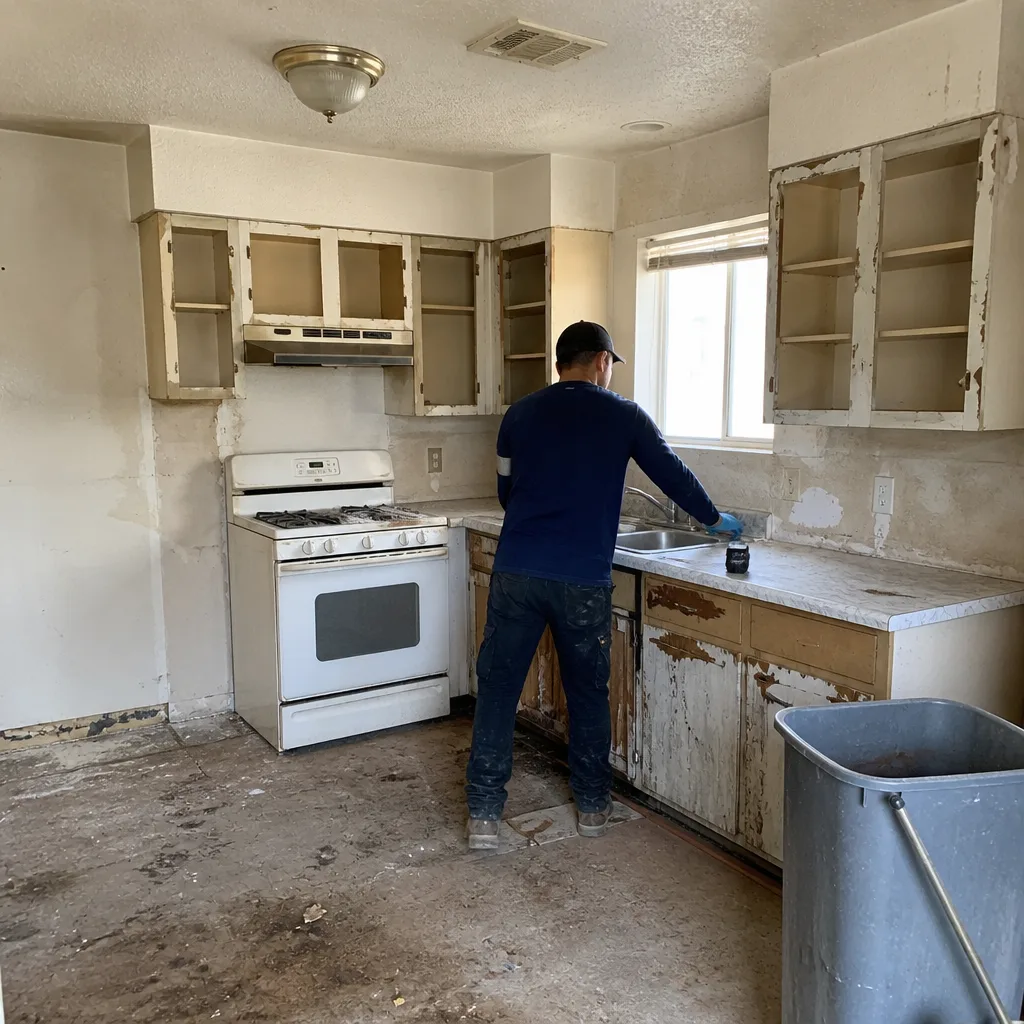 Before
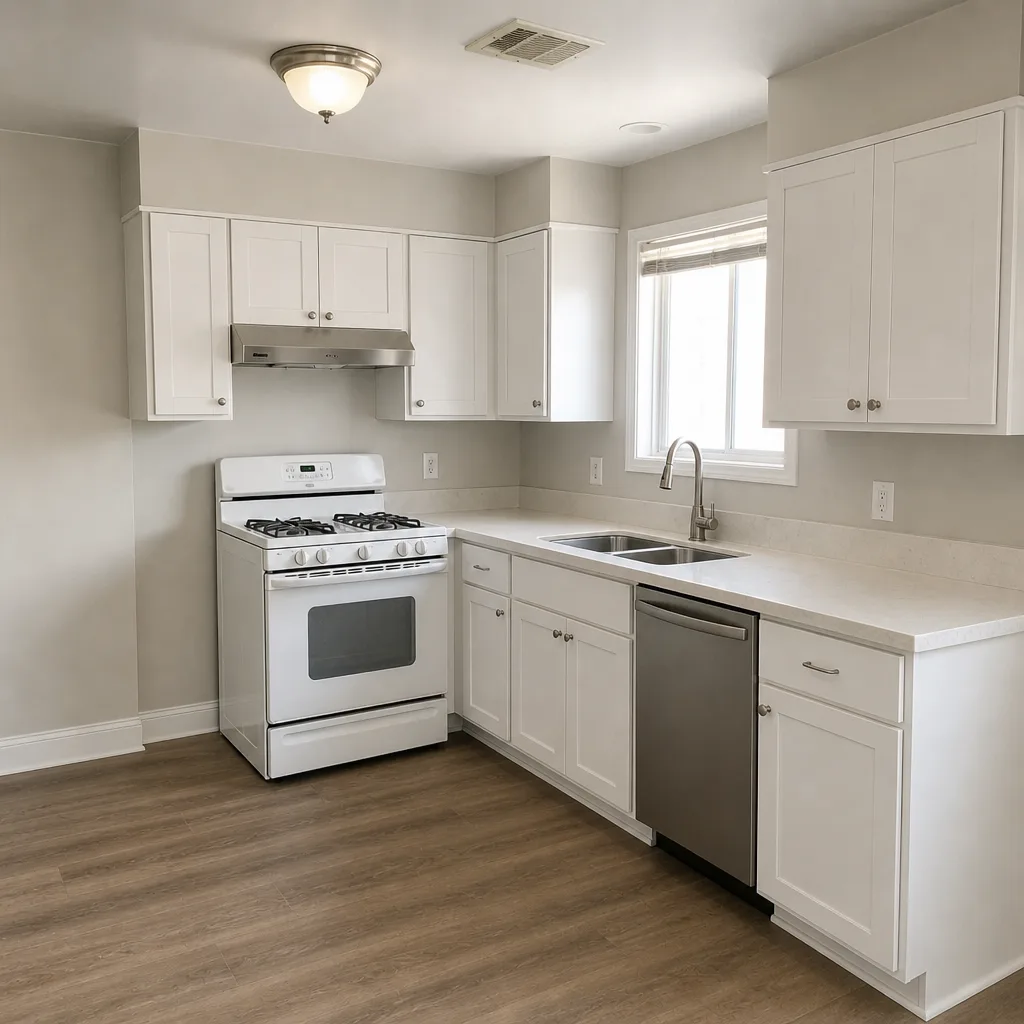 After
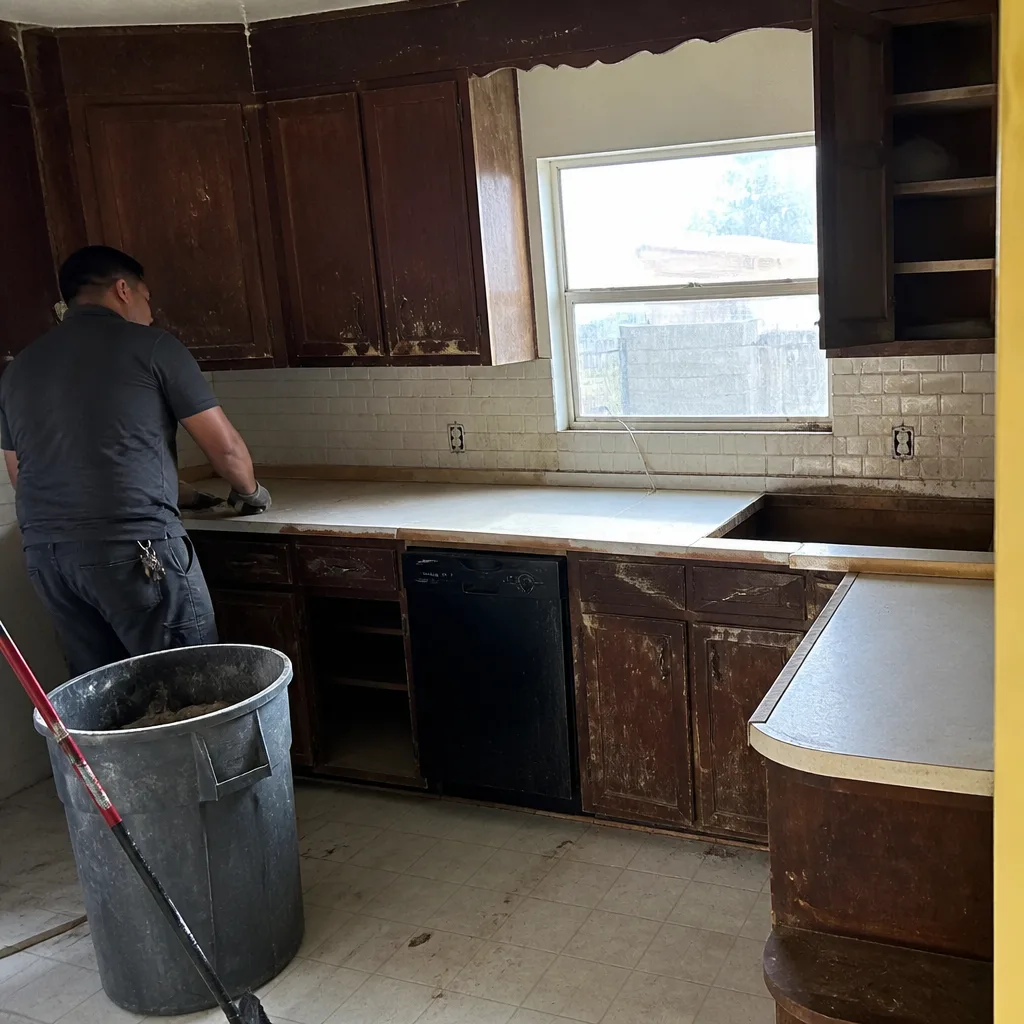 Before
 After
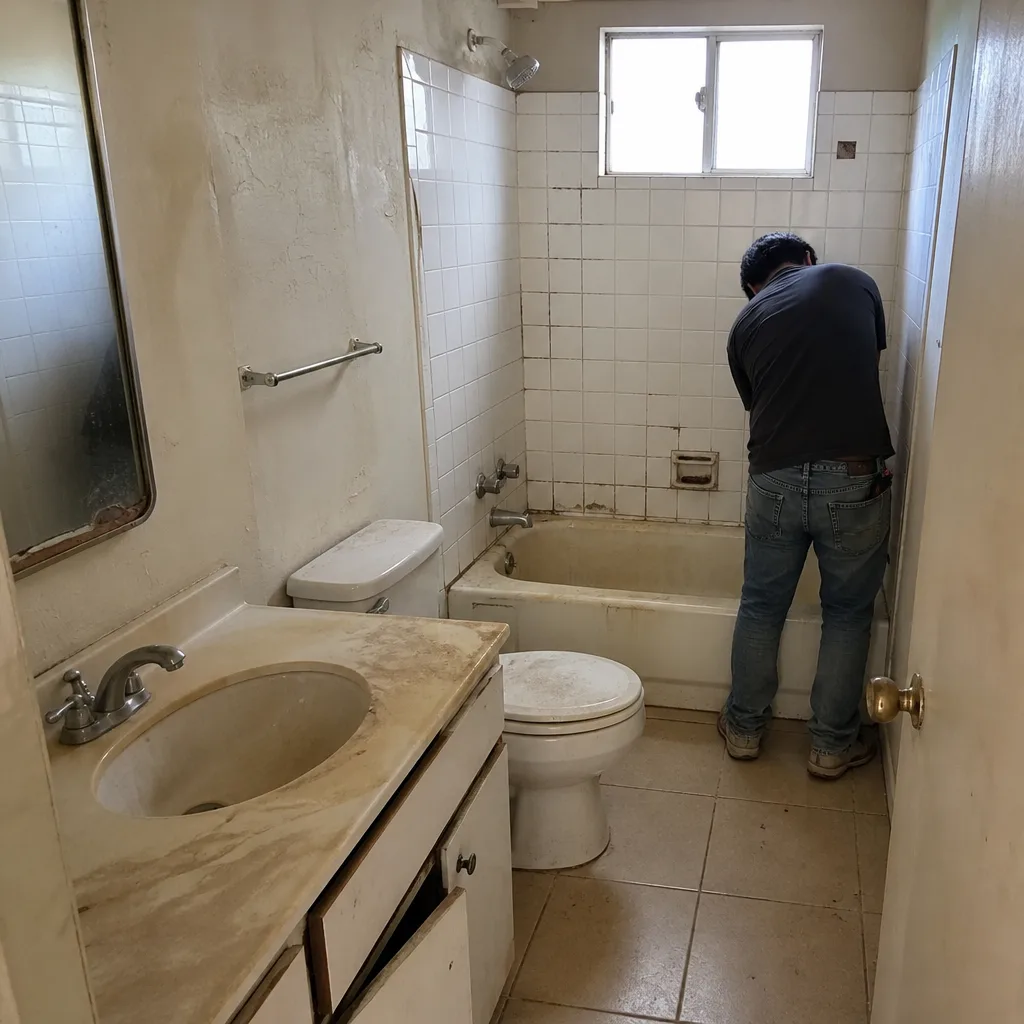 Before
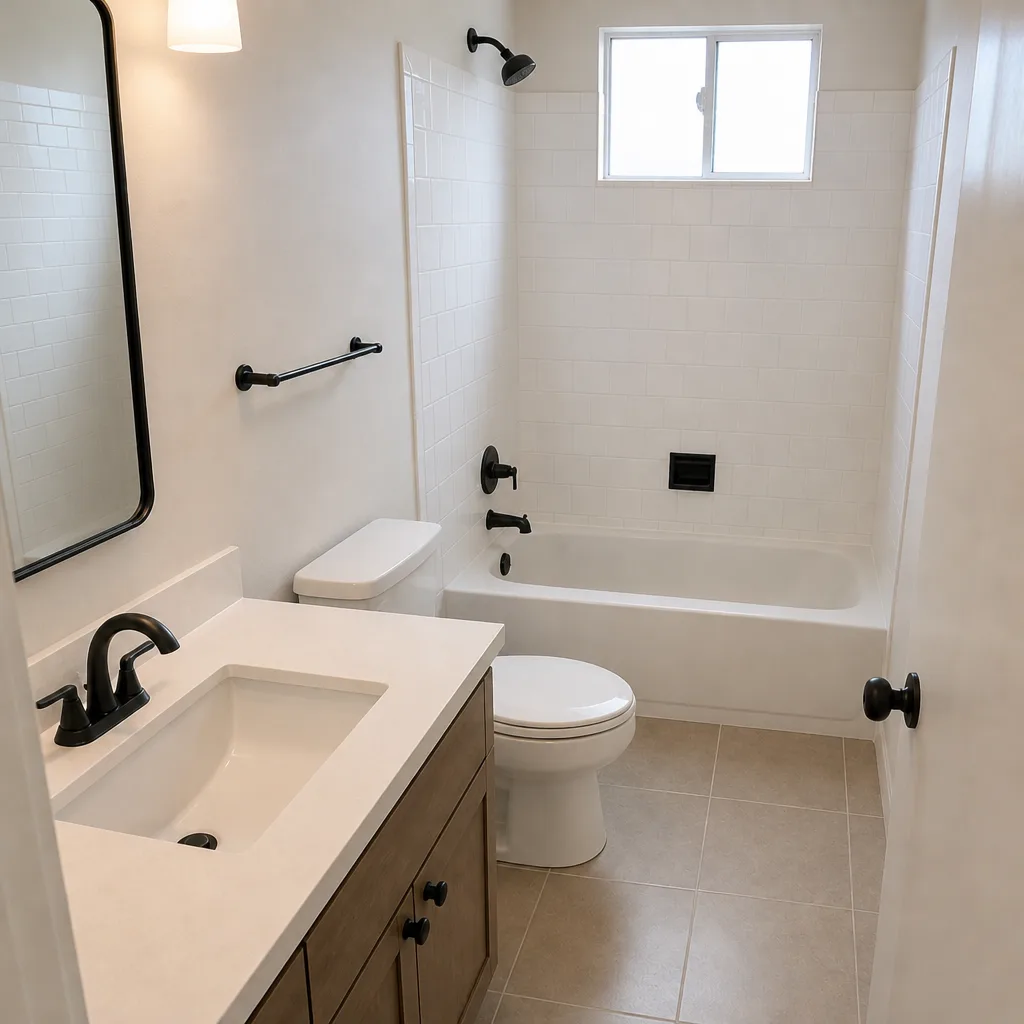 After
Common Mistakes to Avoid
- Accepting a verbal estimate. In Sunrise Manor’s busy remodel market, a verbal number is a number that grows on the final bill. Get a written price before work starts – ours is standard on every project.
- Skipping the flood test. It costs an afternoon and saves a rebuild. If a contractor won’t flood-test the pan before tile, ask why.
- Caulking over wet or dirty joints. Fresh caulk won’t bond to a damp surface, which is why so many desert bathrooms re-peel within a year. The old bead has to come out clean.
- Venting the bath fan into the attic. It’s a mold setup that shows up in a season. The duct has to terminate outside.
- Ignoring hard water. Sunrise Manor water etches glass and dulls tile faster than most homeowners expect. A squeegee and a softener go a long way.
- Not photographing the phases. Once tile is set, the evidence is gone. Photos during rough-in and waterproofing are your record if something fails later.
- Settling for a vague guarantee. “Backed by our guarantee” is not a guarantee. Insist on a stated duration and a written exclusion list.
Frequently Asked Questions
Repairs typically run from a few hundred dollars for a re-seal to several thousand if the liner has failed and tile has to come up. The final number depends on whether water reached framing. Call (855) 606-6122 for a free estimate – the written price comes before any work starts.
Peeling caulk almost always means it was applied over a damp, dusty, or oily surface, or that a rigid caulk was used at a joint that moves. Strip it completely, dry the joint, and re-seal with a flexible silicone rated for wet areas.
Usually no. A thin, straight hairline along a change of plane is normal settling, especially after the first hot season in a Nevada home. If it widens or reappears within weeks of being patched, have it looked at.
Yes, and do it before the crew leaves. Hold a tissue to the grille while it runs – it should stick. Then confirm the duct runs to the exterior, not into the attic. A fan that fails that check is a condensation and mold problem waiting to happen.
A real guarantee states a specific duration, lists what’s covered and what’s excluded, commits to the company performing the repair, and states whether the return visit is free. Ours runs 365 days from the completion date and is written, not verbal.
Take the same photo monthly. If a crack or gap stays the same width, it’s settling. If it grows, or if tile sounds hollow, the floor flexes, or water appears at the base of a wall, that’s structural and needs professional attention.
The Bottom Line
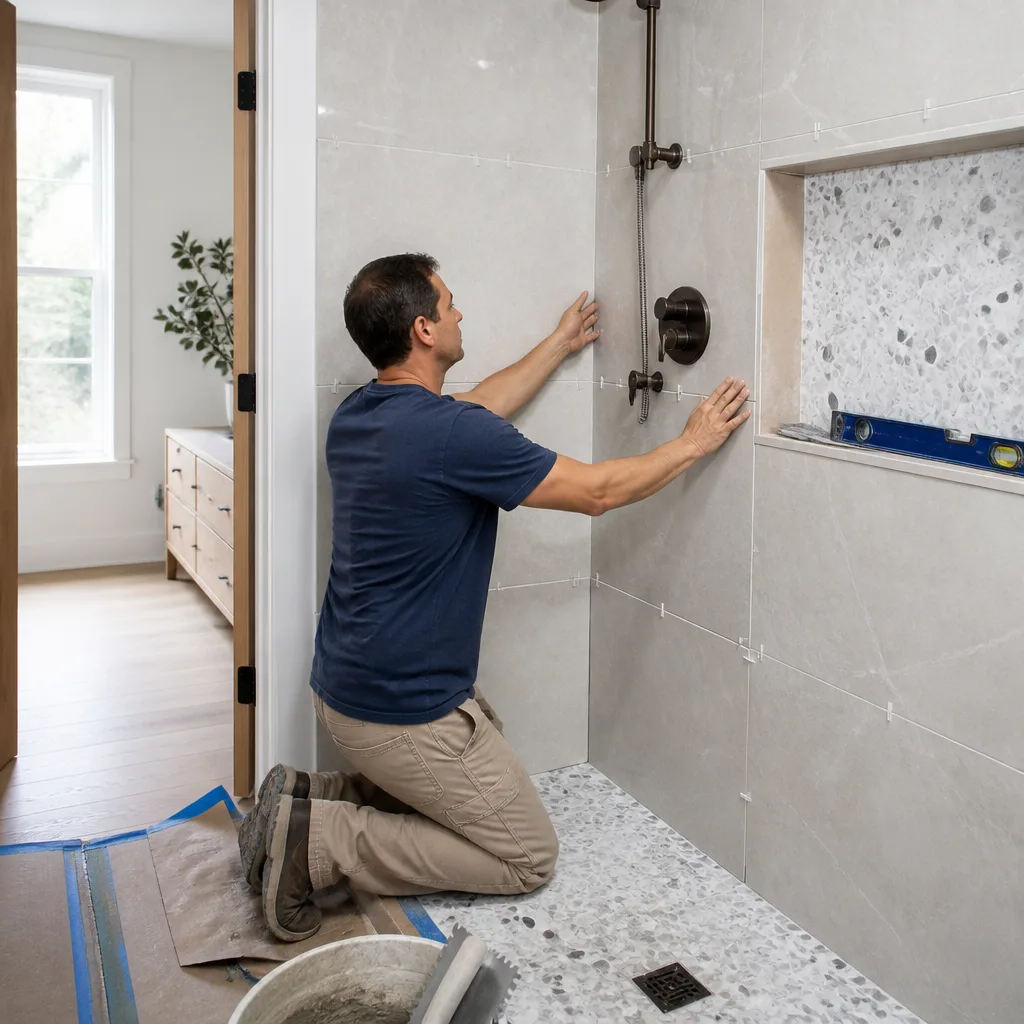
The most expensive bathroom problems were once a one-afternoon opportunity to look. Inspect at rough-in, waterproofing, tile set, and fixture install. Know the five desert failures – grout, caulk, fan condensation, hard water etching, and seal failure – and their root causes. Document with dated photos and a written timeline. And read your guarantee for the specifics, not the slogan. If something is failing now, get it looked at before water finds the framing. For a free written estimate, see Mason Remodeling Sunrise Manor home and call (855) 606-6122.
Written by the team at Mason Remodeling Sunrise Manor.