


Free written scope consultation - allowances, timeline, and change-order rules on paper before a single trade is scheduled
James Hardie Bathroom Remodeling: The Sunrise Manor Owner’s Guide
Bathroom remodeling built around James Hardie materials in Sunrise Manor typically runs $9,000 – $28,000 installed, and we schedule an on-site assessment rather than promising same-day installs – a wet-area remodel deserves a plan, not a rush. The “part” that usually fails first isn’t a fixture: it’s the substrate behind the tile. James Hardie fiber-cement backer board and HardieBacker shower panels are what keep water away from the wall framing, and when they’re installed over greenboard, nailed instead of screwed, or left unsealed at the seams, you find out through a soft spot underfoot, a hairline crack that keeps returning, or grout that stains dark and won’t come clean. If you’re seeing any of that, the finish is telling you what’s happening behind it.
Which James Hardie Models This Applies To
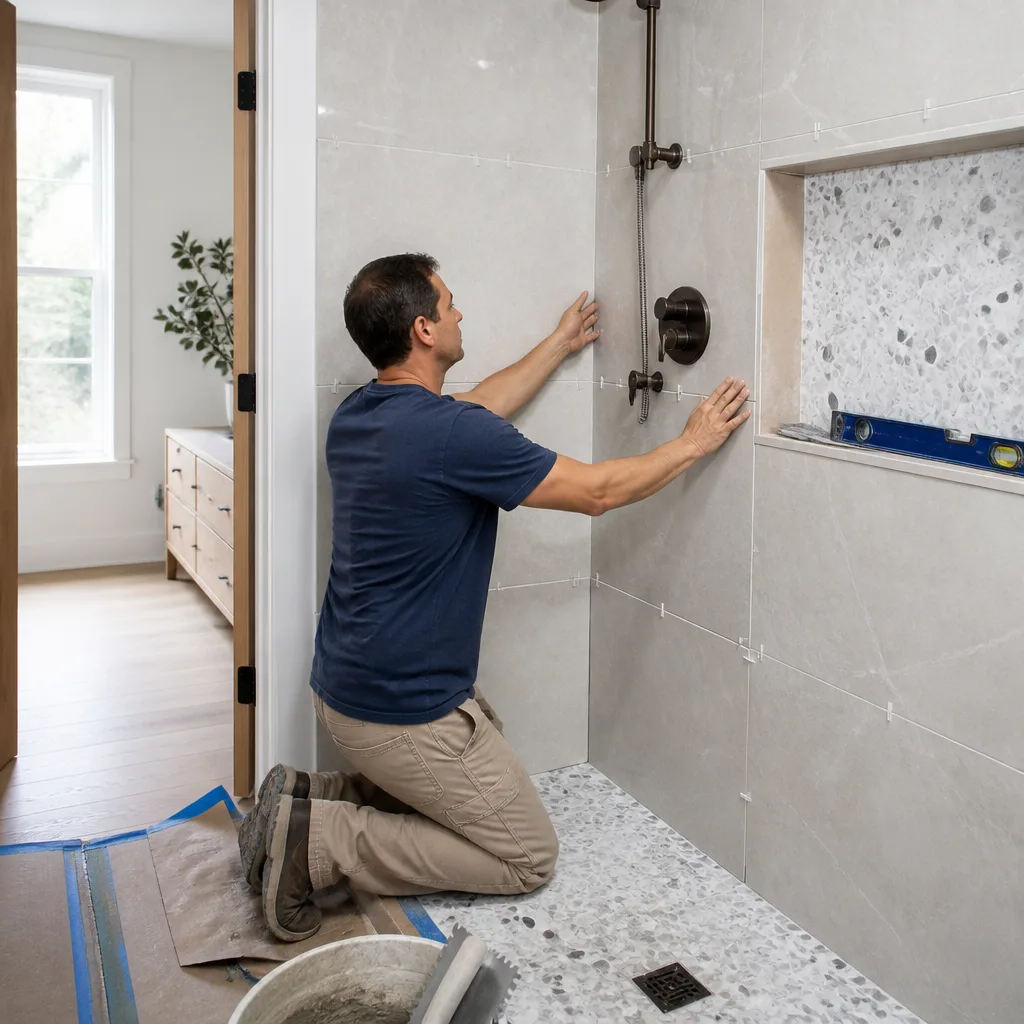
James Hardie’s bathroom line is narrower than most homeowners expect, and that’s where matching gets tricky. The two products you’ll actually encounter in a Sunrise Manor bathroom are HardieBacker cement board (sold in 1/4-inch, 1/2-inch, and 1/2-inch with a built-in moisture barrier, in 3×5 and 4×8 sheets) and HardieBacker brand shower panels. Older remodels may have used HardieBacker 500, which is a thicker floor-grade board – useful under tile on a bathroom floor, overkill on a wall.
To identify what you have, pull the trim ring off a shower valve or look at the exposed edge of the board where tile has already come loose. HardieBacker has a distinct gray fiber-cement face and a stamped edge marking on the back. Measure the thickness at an exposed edge with a tape – a true 1/4-inch reads thin and flexes slightly; 1/2-inch is stiff enough that it barely bows under hand pressure. If your board is paper-faced (you’ll see a gypsum core when you scratch it), it isn’t James Hardie at all, and that changes the whole conversation.
OEM versus equivalent matters less here than it does for, say, a cabinet hinge. HardieBacker is a commodity substrate with real competitors (USG Durock, Schluter Kerdi-Board), and a quality fiber-cement board from a known manufacturer will perform identically when installed to spec. What you should not accept is thin 1/4-inch board on a shower wall, or any substrate installed without the manufacturer’s required fastener pattern and seam treatment.
We’re an independent remodeling company and not affiliated with James Hardie – we install to the manufacturer’s published specifications and pull the permit for wet-area work where Sunrise Manor requires it.
Styles & brands we work with
- Kitchen remodeling
- Bathroom remodeling
- Home additions & ADU
- Roofing
- Windows & doors
- Driveway & pavers
- Fence
Signs Your James Hardie Bathroom Remodeling Is Failing
- Grout that darkens and won’t scrub clean. Water is getting past the tile face and sitting against the backer board. Grout stain is the visible symptom; the moisture behind it is the cause.
- A soft or spongy spot on the shower floor or the wall behind the toilet. Fiber-cement board that has been saturated loses its bond to the framing. If you can press a thumb in and feel give, the substrate is compromised.
- Tile that pops loose in a straight line along a seam. That pattern usually traces to a seam that wasn’t taped and thinset-bedded – the joint moved, and the tile above it gave way first.
- A musty smell that returns within weeks of cleaning. In Sunrise Manor’s dry climate, a persistent damp smell in a bathroom points to trapped moisture, often where the board meets the shower pan or tub lip. That junction is the most common installation failure we correct.
- Cracks that reappear in the same place after you regrout. Movement or a failed bond behind the tile. Regrouting buys a season at best; the substrate underneath is what needs attention.
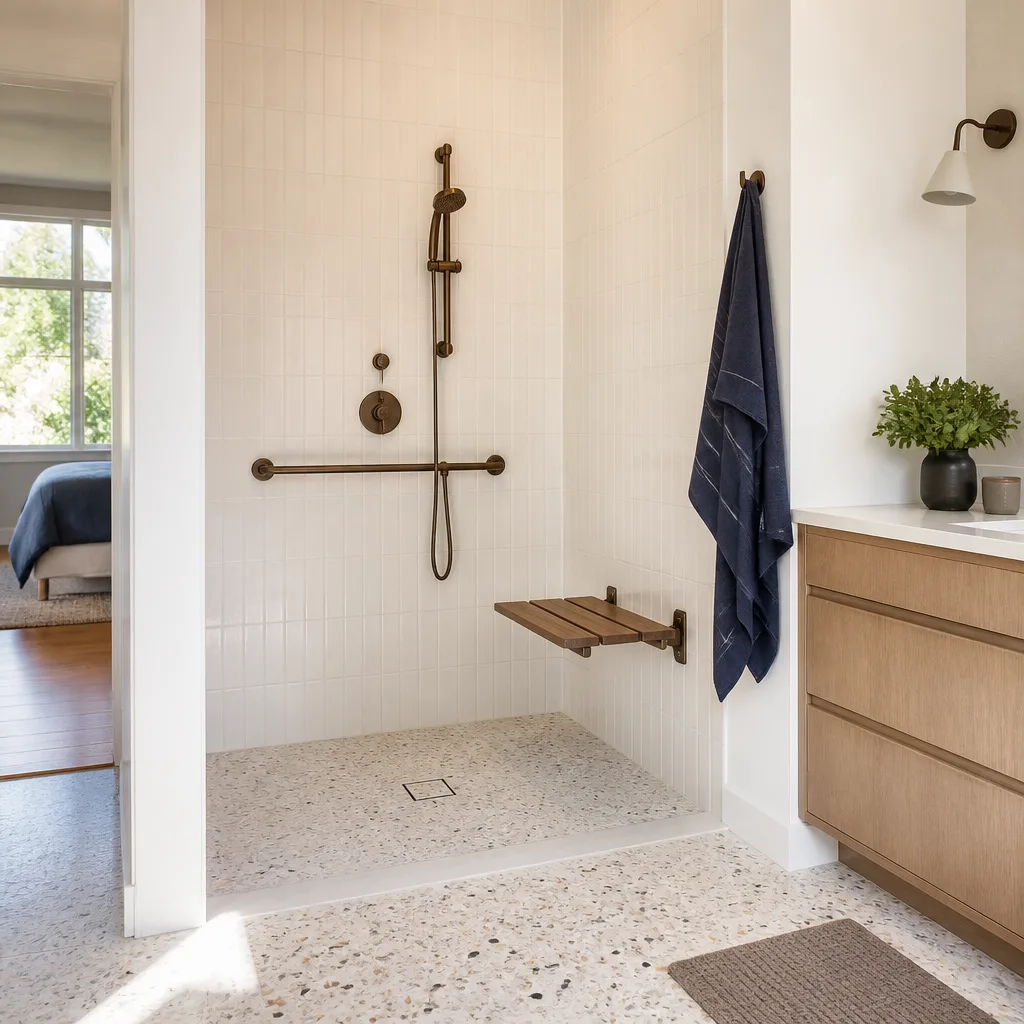
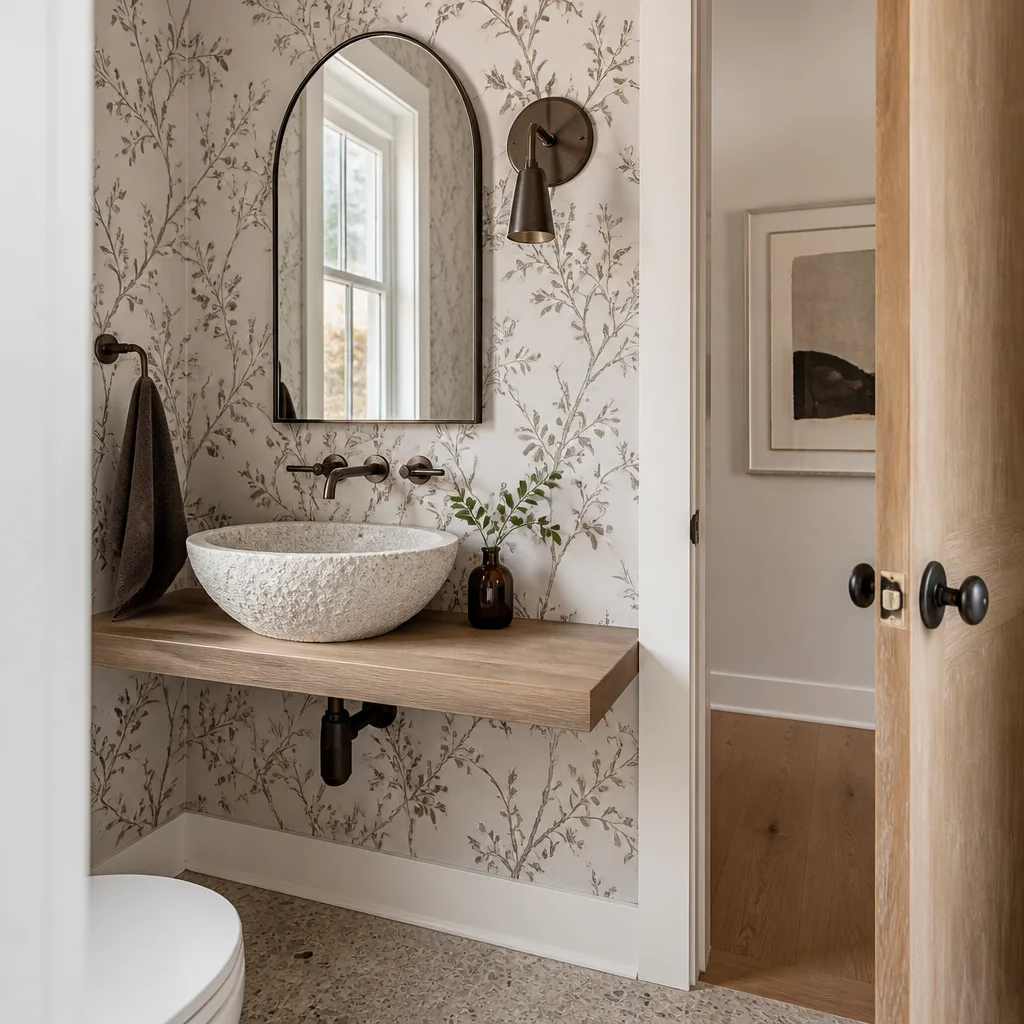
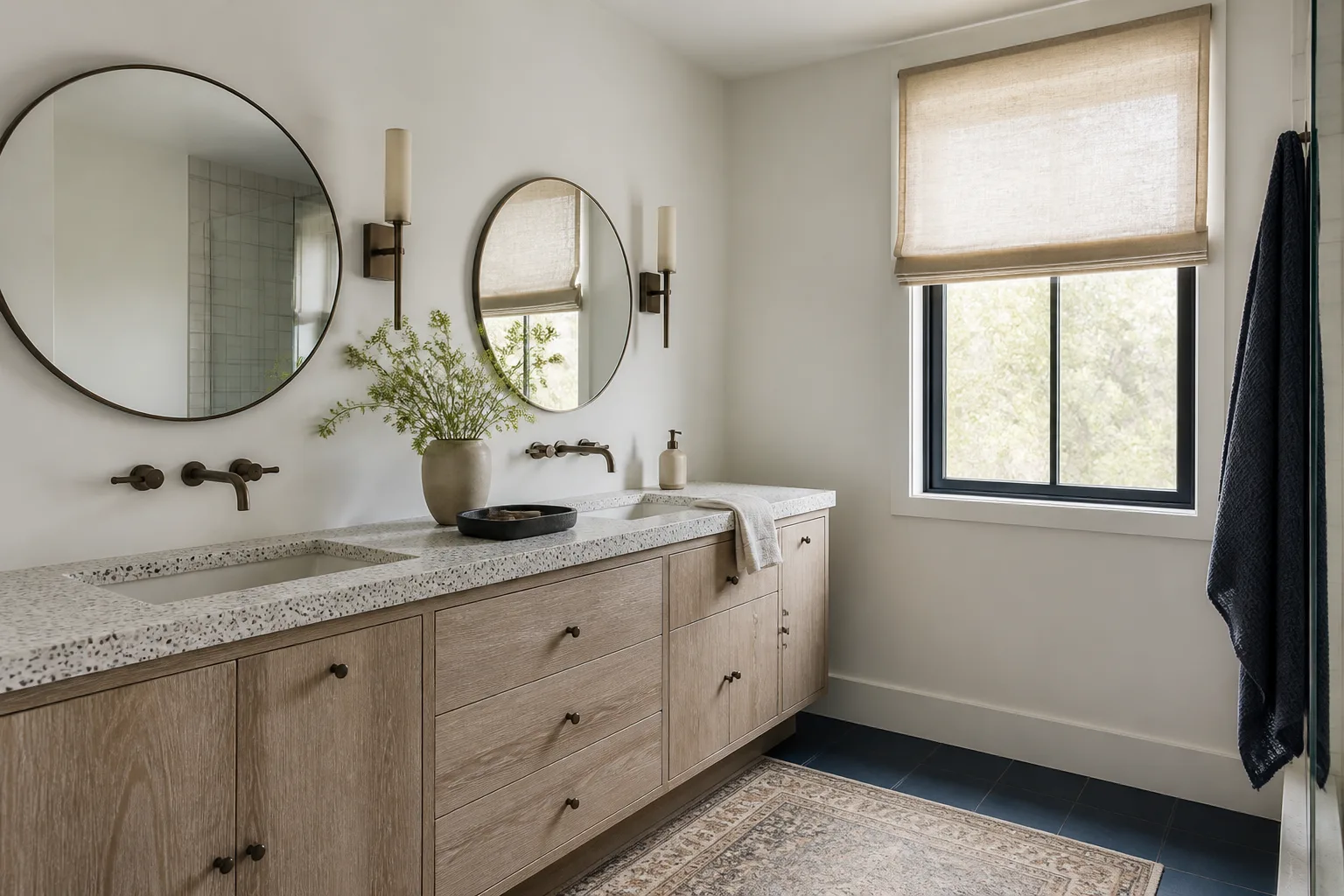
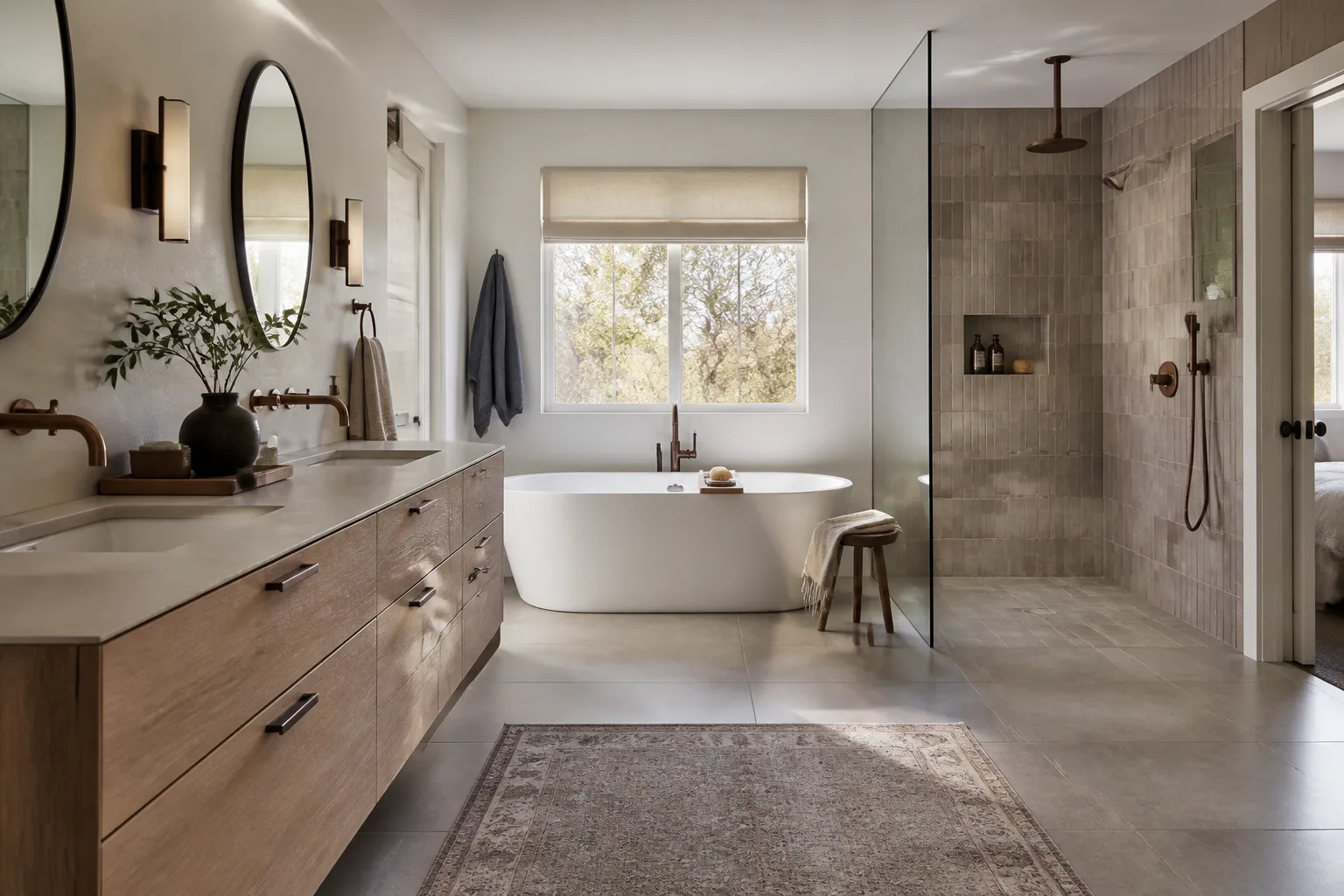
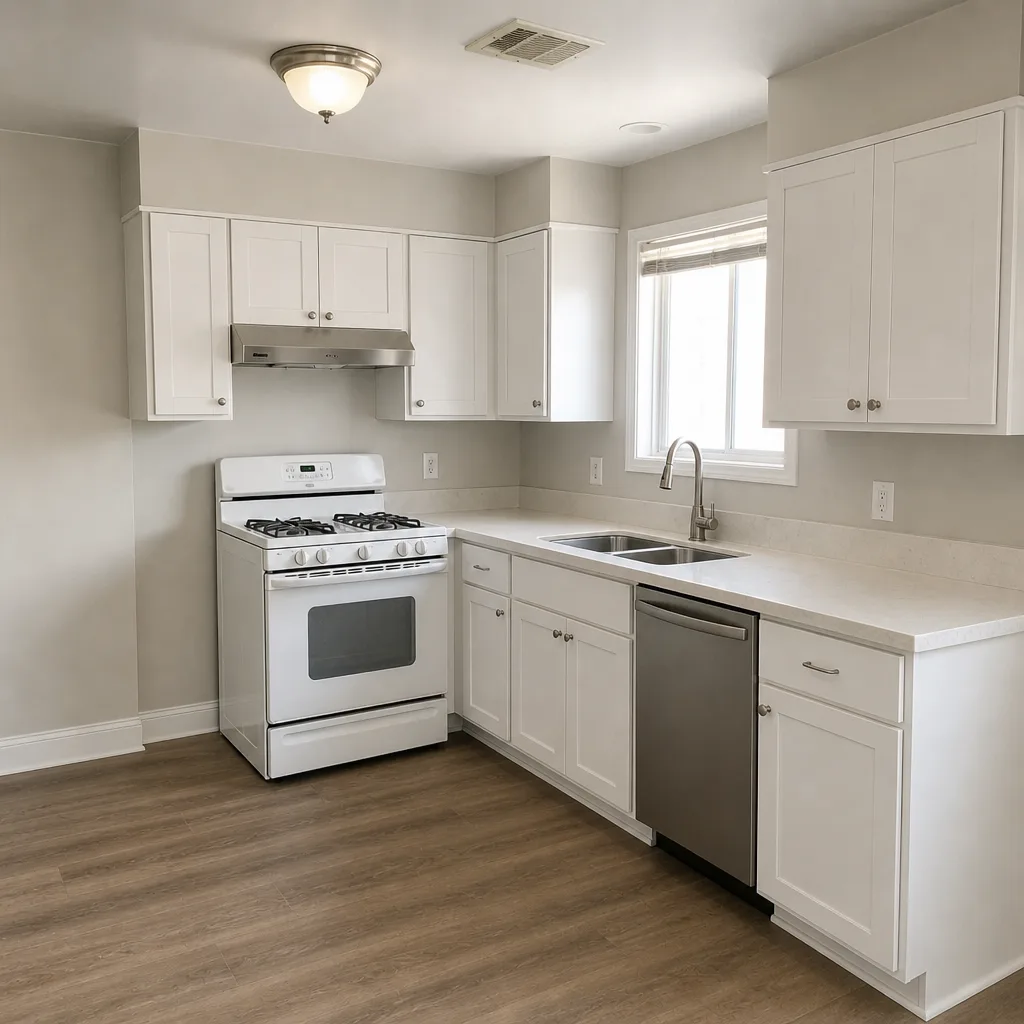
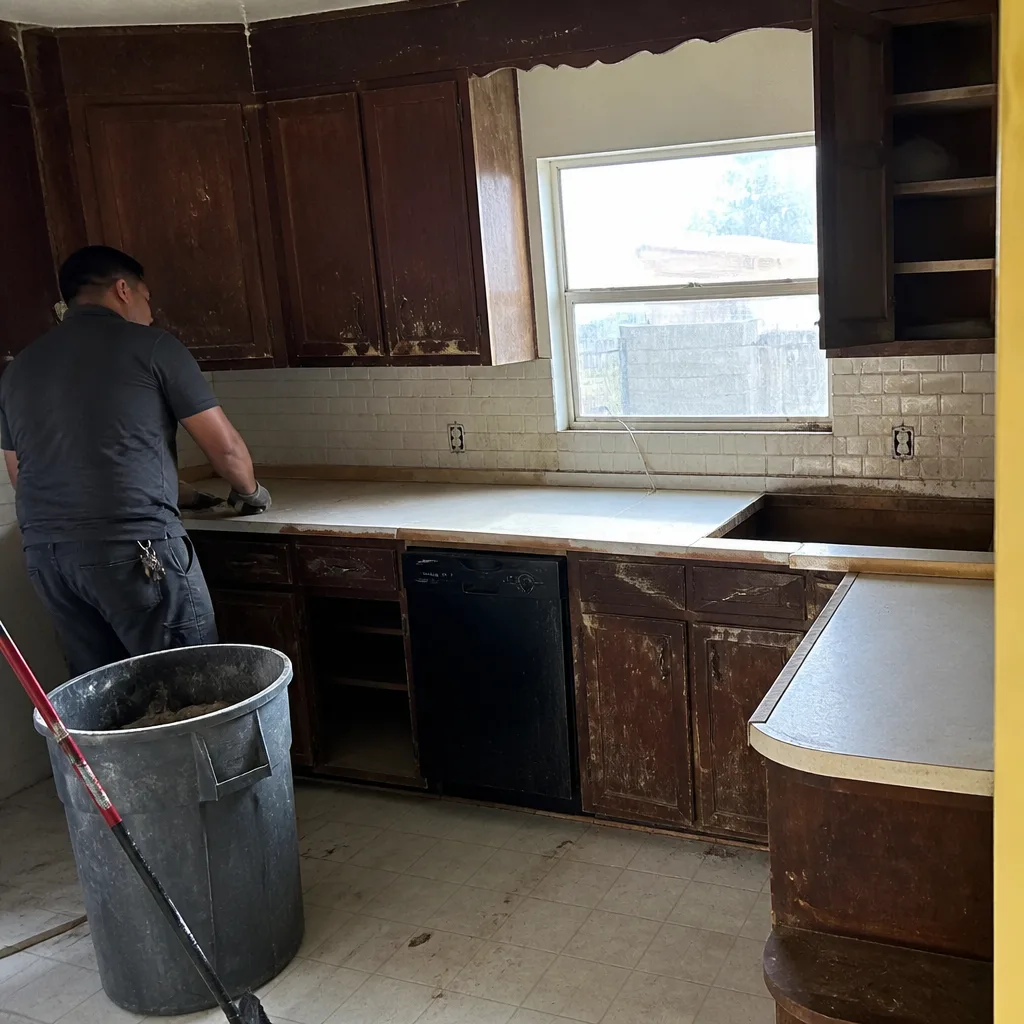
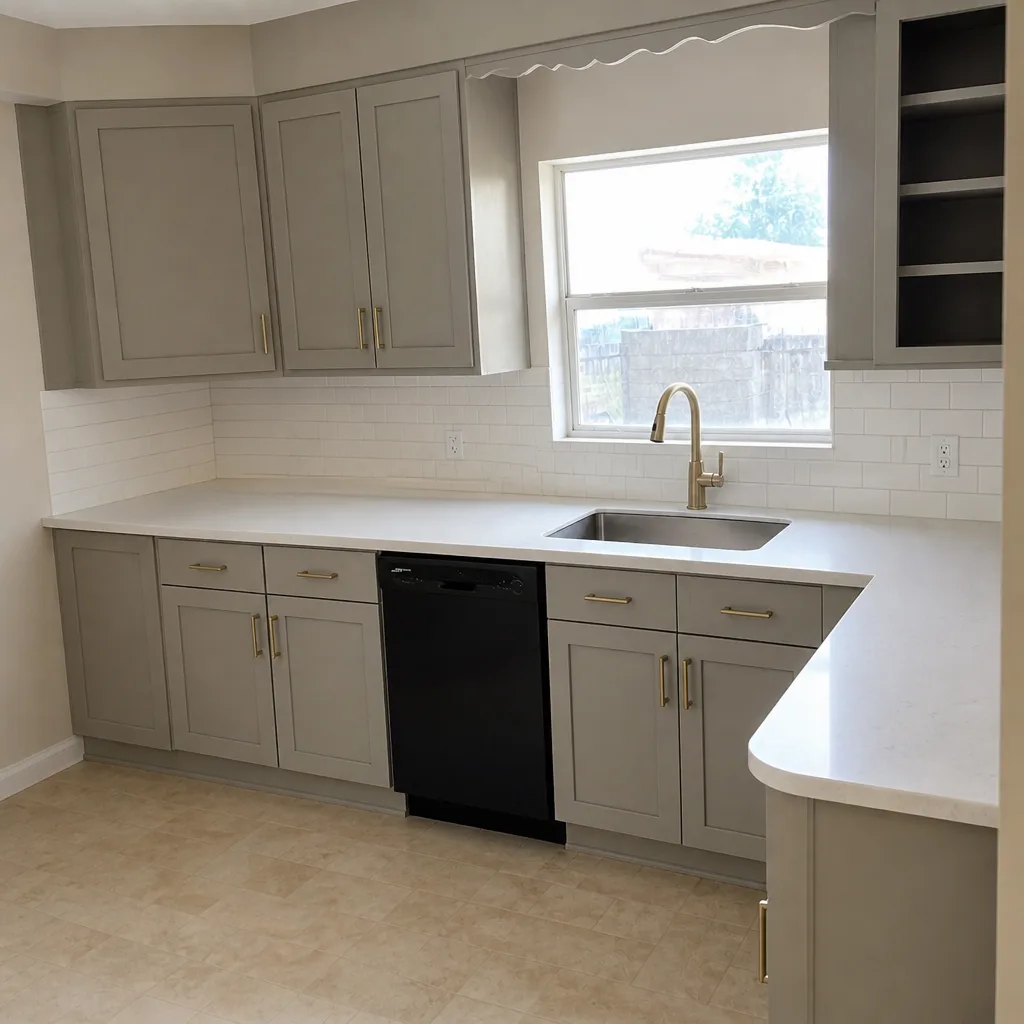
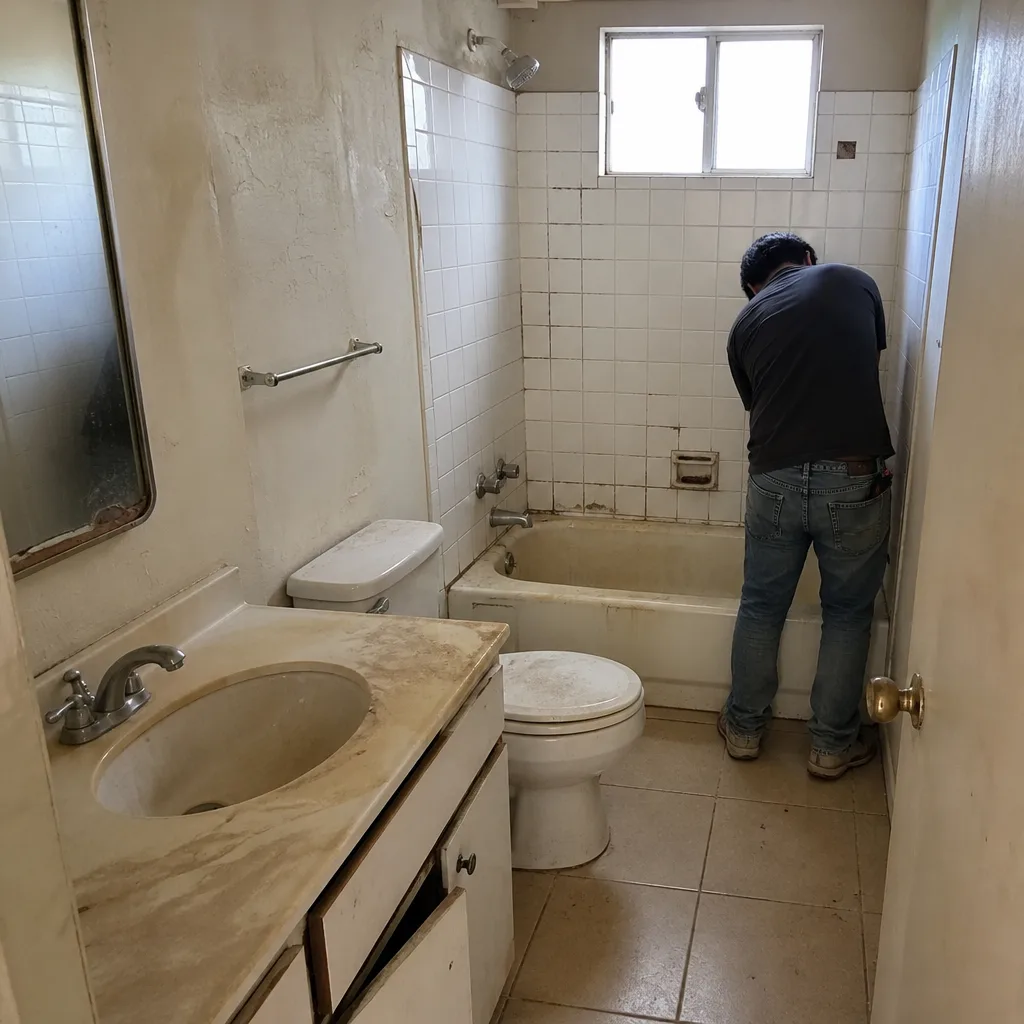
See the difference
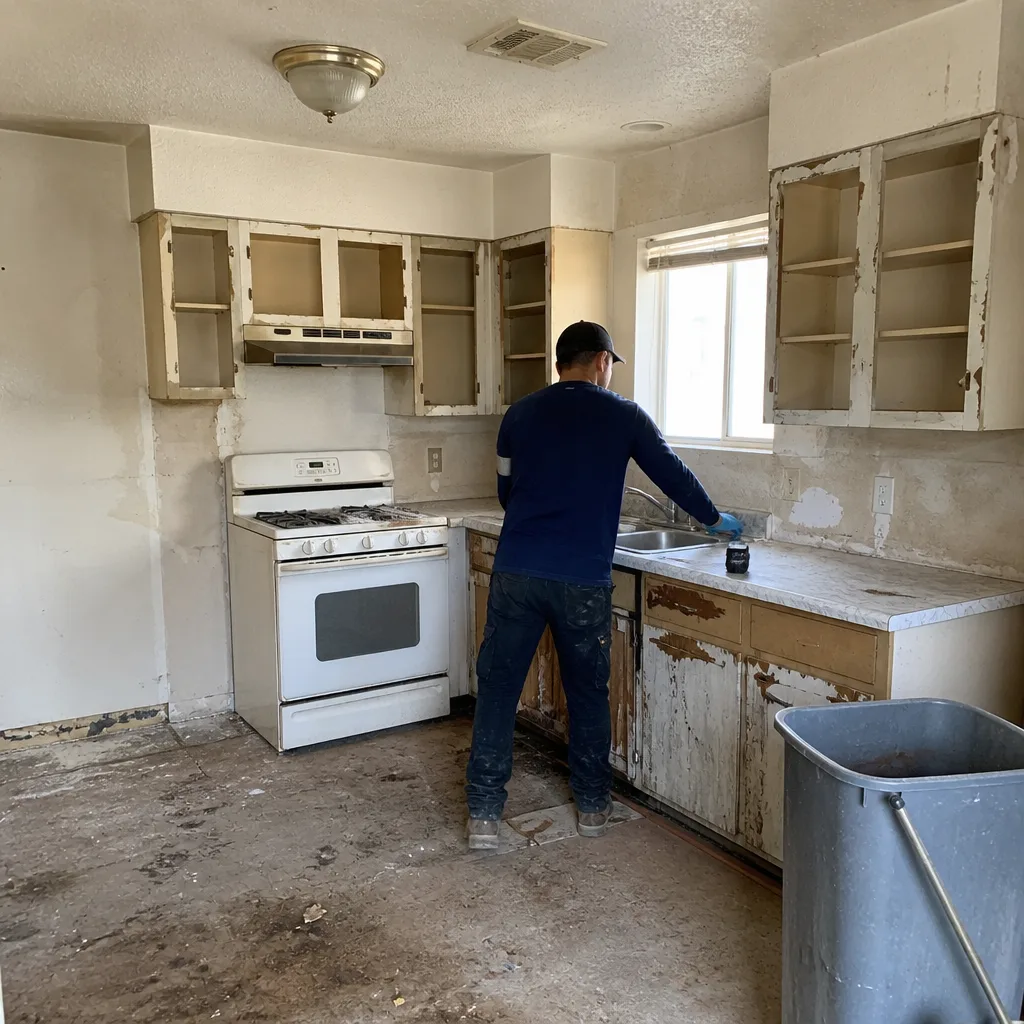 Before
 After
 Before
 After
 Before
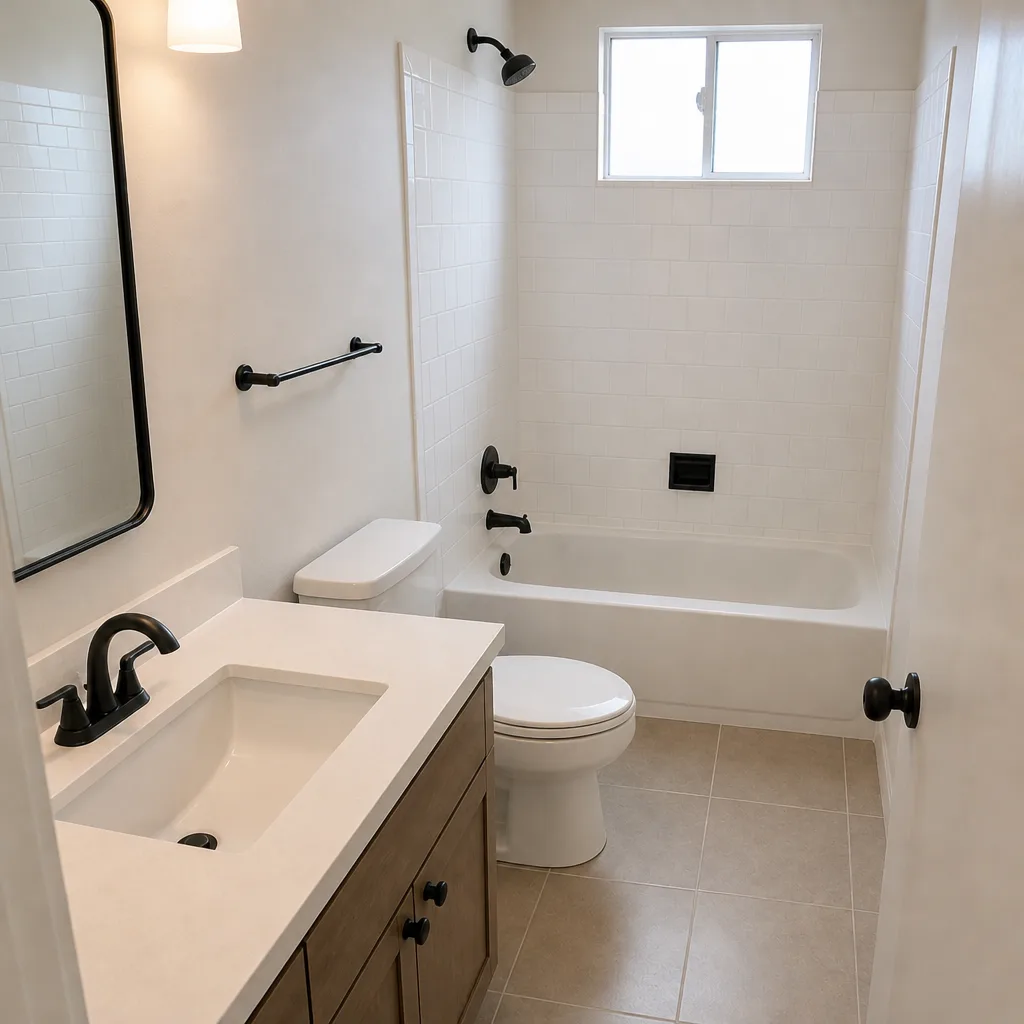 After
Replacement Cost & What’s Included
For Sunrise Manor, a bathroom remodel with James Hardie substrate runs $9,000 – $28,000. A small bathroom remodel lands $5,000 – $12,000, a walk-in shower installation $4,500 – $12,000, a tub-to-shower conversion $3,500 – $10,000, and a shower replacement $3,000 – $8,500. A bathroom vanity installation is $800 – $3,000 if that’s all you’re doing.
What moves you up or down the range: how much tile has to come out to reach the framing, whether plumbing has to be relocated (the single biggest driver), the tile you choose, and whether the shower pan is sound. We give you a written price before any work starts – not a verbal estimate that grows on the final bill – and line-item it so you can see the substrate and waterproofing separately from the tile.
Our technicians have up to 22 years of experience with wet-area work, and every project carries a written guarantee: 365 days from completion, if the work isn’t right, we return and make it right at no cost to you.
DIY or Call Us?
You can safely check a few things yourself. Press the shower wall and floor for soft spots. Look at the caulk line where the board meets the pan or tub. Pull a loose tile grout line with a plastic scraper and see what’s under it. Snap a photo of the back of the board if you can reach an edge – that photo tells us more than a phone description.
What you shouldn’t do is re-tile over failing substrate, or pull tile off a wall yourself if the home is older, since a wet wall can hide wiring and plumbing you don’t want to meet with a pry bar. Waterproofing is also unforgiving: a missed seam or a fastener driven without the required seal is invisible until it fails months later. We’d rather see the wall before you spend on tile.
Every crew member who comes to your door is background-checked, identity-verified, and introduced to you by name and photo before the visit, with a photo ID badge at arrival – The Threshold Standard, and it holds on every job. Call (855) 606-6122 for a free estimate, and a live person answers, day or night.
FAQs
Installed to spec, fiber-cement backer board should outlast the tile on it by decades. The realistic failure point in Sunrise Manor isn’t the board itself – it’s the waterproofing at the seams and the shower pan, which is where we see failures at the 8-to-15-year mark when the original install skipped proper seam treatment.
Sometimes, yes. If the damage is isolated to one wall section or a shower pan junction, we can often replace just the affected board and re-tile that area. Full replacement makes sense when water has reached the framing or when the original install used paper-faced board throughout. We’ll tell you honestly which one you’re looking at before you commit a dollar.
A shower replacement or tub-to-shower conversion typically runs one to two weeks depending on tile and whether plumbing moves. A full bathroom remodel sits in the two-to-four week range. We give you the schedule in writing with the price.
Through professional-grade distributors – the same supply channels that carry KraftMaid and Wellborn cabinetry, Cambria and Silestone surfaces, and Kohler and Moen fixtures. We order to your specific specs, we don’t substitute thinner board to save a margin, and the material is on the written price before anything is ordered.
Call (855) 606-6122 for a free estimate and a written price on your Sunrise Manor bathroom, and we’ll show you exactly what’s behind that tile. If a repair or installation fails, we come back at no charge, and every project is covered by our 365-Day Done Right Promise.
Written by the team at Mason Remodeling Sunrise Manor, serving Sunrise Manor and nearby areas.